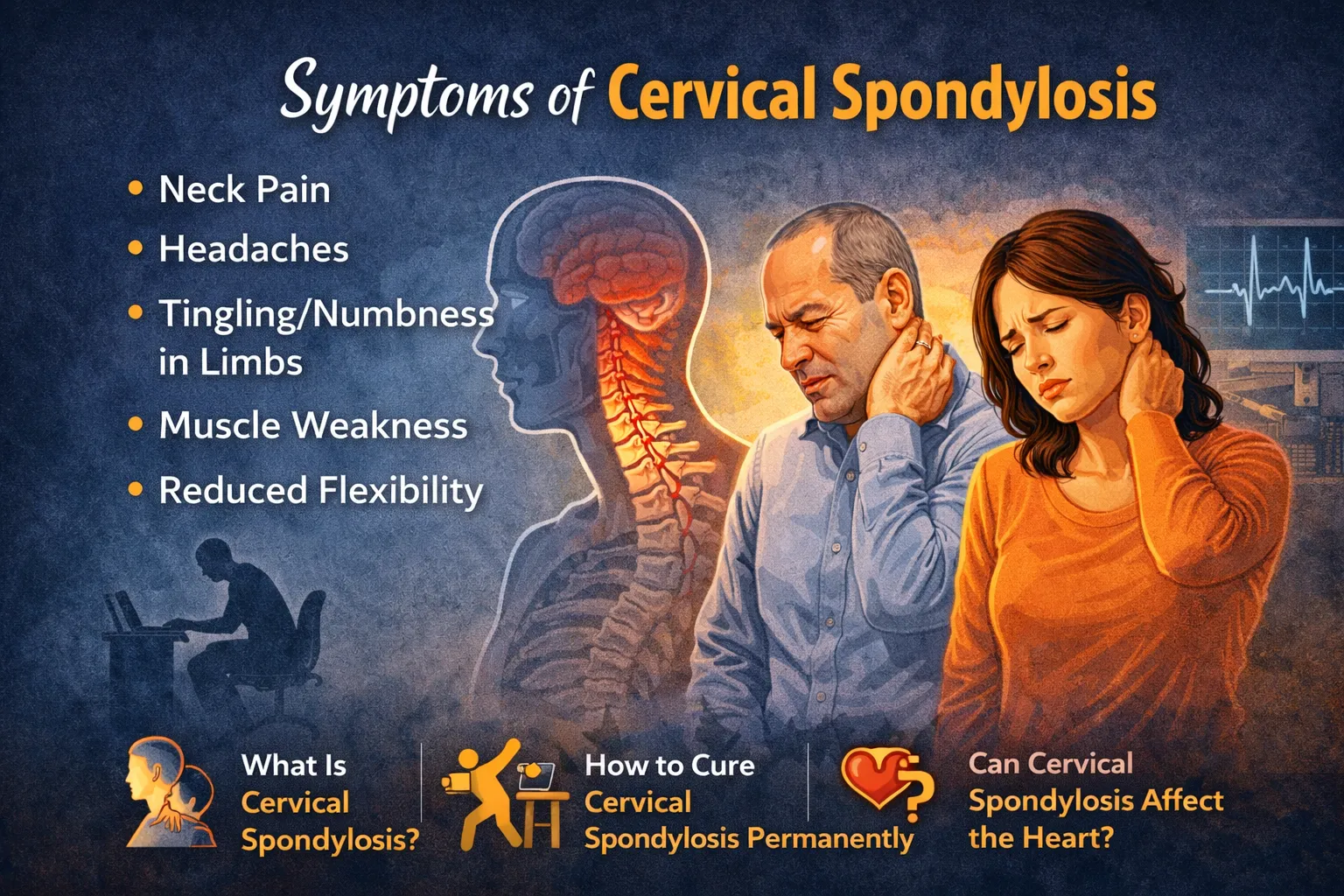

Neck pain has become a common complaint in today’s fast-paced, screen-focused lifestyle. Many people ignore it as temporary discomfort, but in some cases, it could be a sign of a deeper issue like cervical spondylosis. Understanding the condition early can help prevent long-term complications and improve quality of life.
In this blog, we’ll explore cervical spondylosis symptoms, causes, and effective treatment options in a simple and practical way.
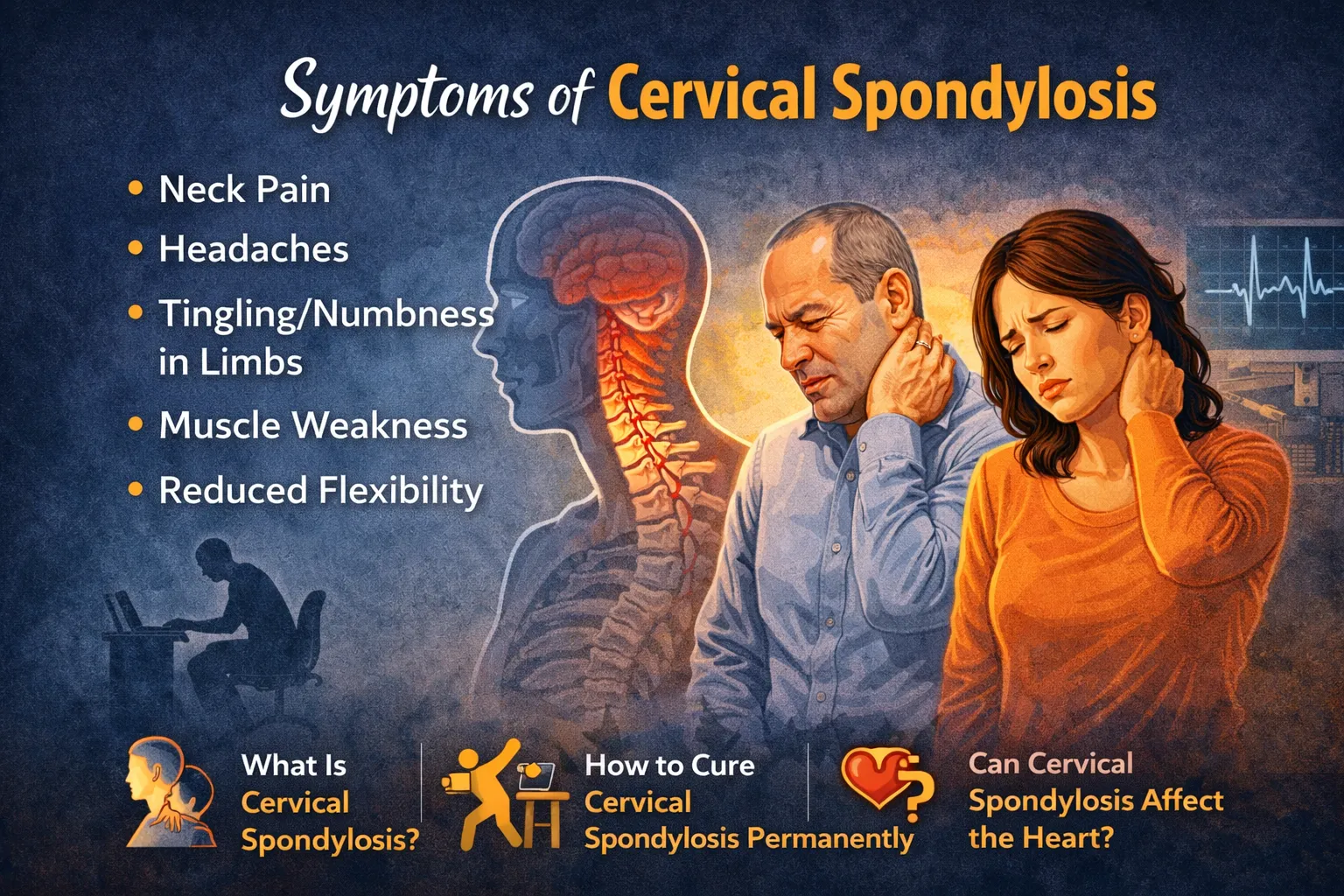
What is Cervical Spondylosis?
Before diving into symptoms and treatment, it’s important to understand what is cervical spondylosis.
Cervical spondylosis is an age-related degenerative condition affecting the cervical spine (neck). It involves the wear and tear of spinal discs, joints, and bones. Over time, this degeneration can lead to stiffness, pain, and nerve compression.
Although it is more common in older adults, younger individuals are increasingly affected due to poor posture, excessive mobile usage, and sedentary lifestyles.
Cervical Spondylosis Symptoms
Recognizing cervical spondylosis symptoms early can help manage the condition effectively and avoid complications.
Common Symptoms:
- Persistent neck pain
- Stiffness in the neck
- Headaches, especially from the back of the head
- Pain radiating to shoulders and arms
- Tingling or numbness in hands and fingers
- Muscle weakness
These symptoms may start mild but gradually worsen if not treated.
What are the Early Symptoms of Cervical Spondylitis?
Many people ask, What are the early symptoms of cervical spondylitis? Early detection is key to preventing serious complications.
Early Signs Include:
- Mild neck stiffness, especially after waking up
- Occasional neck pain after long screen use
- Reduced flexibility while turning the neck
- Slight headaches originating from the neck
- Feeling of tightness in shoulder muscles
At this stage, symptoms are manageable and can often be improved with lifestyle changes and exercises.
Advanced Symptoms
If ignored, cervical spondylosis may progress and affect nerves or the spinal cord.
Severe Symptoms:
- Loss of balance
- Difficulty walking
- Poor coordination
- Severe weakness in arms or hands
- Bladder or bowel issues (rare cases)
These symptoms require immediate medical attention.
Causes of Cervical Spondylosis
Understanding the causes helps in prevention and management.
1. Aging
Natural wear and tear of spinal discs is the most common cause.
2. Poor Posture
Sitting in the wrong position for long hours strains the neck.
3. Sedentary Lifestyle
Lack of exercise weakens muscles supporting the spine.
4. Repetitive Strain
Continuous use of smartphones and computers increases pressure on the neck.
5. Injury
Past neck injuries can contribute to early degeneration.
Risk Factors
Certain factors increase the likelihood of developing cervical spondylosis:
- Long working hours on computers
- Poor sleeping posture
- Lack of physical activity
- Obesity
- Smoking
Modern lifestyle habits are a major contributor to this condition.
Treatment of Cervical Spondylosis
Many people search for how to cure cervical spondylosis permanently, but it’s important to understand that while it may not be completely reversible, it can be effectively managed.
1. Exercise and Physiotherapy
Regular exercise is one of the best treatments.
- Neck stretching exercises
- Strengthening exercises
- Posture correction training
2. Lifestyle Changes
- Maintain proper posture
- Use ergonomic chairs and desks
- Take breaks during long working hours
3. Pain Management
- Hot and cold therapy
- Over-the-counter pain relievers (with medical advice)
4. Yoga and Relaxation
Yoga helps improve flexibility and reduce stress, which can worsen pain.
5. Medical Treatment
In severe cases:
- Prescription medications
- Steroid injections
- Surgery (rare and only when necessary)
Home Remedies for Relief
Simple home remedies can help reduce discomfort:
- Apply warm compress to the neck
- Practice daily stretching
- Avoid using high pillows
- Stay hydrated
- Maintain a healthy weight
Consistency is key to seeing results.
Prevention Tips
Preventing cervical spondylosis is possible with small lifestyle changes:
- Keep your screen at eye level
- Sit with proper back support
- Avoid long hours of continuous sitting
- Exercise regularly
- Use a supportive pillow while sleeping
These habits can significantly reduce the risk.
When to See a Doctor
Seek medical help if you experience:
- Persistent or worsening pain
- Numbness or tingling
- Weakness in arms
- Loss of coordination
Early treatment can prevent serious complications.
Conclusion
Understanding cervical spondylosis symptoms and knowing What are the early symptoms of cervical spondylitis? can help you take timely action. While cervical spondylosis is a common condition, especially with modern lifestyles, it can be managed effectively with the right approach.
By adopting healthy habits, staying active, and seeking medical advice when needed, you can maintain a healthy spine and live pain-free.
FAQ (Frequently Asked Questions)
1. How to cure cervical spondylosis permanently?
There is no permanent cure, but it can be managed with exercise, physiotherapy, and lifestyle changes.
2. What is cervical spondylosis?
It is a degenerative condition affecting the neck due to wear and tear of spinal discs.
3. Can cervical spondylosis cause death?
No, it is not life-threatening, but severe untreated cases can cause complications.
4. Is cervical spondylosis a disability?
In most cases no, but severe conditions affecting mobility may be considered a disability.
5. Can cervical spondylosis affect the heart?
No, but symptoms like chest or shoulder pain may sometimes be confused with heart issues.
6. What are the early symptoms of cervical spondylitis?
Early symptoms include mild neck stiffness, occasional pain, and reduced flexibility.
7. Can young people develop cervical spondylosis?
Yes, due to poor posture and excessive screen time.
8. Is exercise effective for cervical spondylosis?
Yes, it is one of the most effective ways to manage symptoms.
9. Can cervical spondylosis be reversed?
No, but its progression can be slowed.
10. What is the best sleeping position?
Sleeping on your back with proper neck support is recommended.






























Sign in to leave a comment.