

Choosing footwear manufacturing equipment involves more than simply looking at the machine itself. A practical setup needs a clear understanding of the material being processed, the type of footwear required, the production sequence, operator involvement, and the level of consistency expected from one pair to another. This is where a Chappal Making Machine and an Automatic Slipper Making Machine become relevant for manufacturers planning or improving a footwear production operation.
Although the terms chappal machine and slipper machine are often used interchangeably, the actual equipment configuration can vary according to the manufacturing process and finished product requirements. Understanding this relationship helps a business evaluate machinery with greater clarity instead of selecting equipment based only on a product name.
Understanding the Role of Chappal Manufacturing Equipment
A Chappal Making Machine is industrial equipment used to support different stages involved in producing chappals or slippers. Depending on the machine configuration, the manufacturing workflow may involve operations associated with shaping, cutting, forming, pressing, finishing, or preparing footwear components.
An Automatic Slipper Making Machine places greater emphasis on mechanised operation within the production sequence. Automation can reduce the amount of repetitive manual intervention required for particular operations, while helping operators maintain a more organised workflow.
The exact process depends on the machine design and the type of slipper or chappal being manufactured. Therefore, buyers should understand what a particular machine is designed to perform rather than assuming that every slipper machine follows an identical production method.
From Raw Material to Finished Footwear
A useful way to understand footwear machinery is to look at the production chain as a series of connected stages.
1. Material Preparation
The first consideration is the material used for the footwear component. Manufacturing requirements can differ depending on the material type, thickness, density, finish, and product design.
Before production begins, materials generally need to be prepared according to the intended manufacturing process. Proper preparation helps create a smoother transition into subsequent machine operations.
2. Shaping and Cutting
The next stage involves developing the basic form of the footwear component. Cutting or shaping determines the outline and dimensions of the relevant part.
Consistency becomes important here because variations in shape can affect later assembly and the appearance of the finished product. Appropriate tooling and machine settings therefore play an important role in maintaining repeatable results.
3. Forming and Processing
Once the basic components are prepared, further processing can be required to achieve the intended footwear structure. Depending on the equipment, this may involve pressing, forming, drilling, punching, or other production operations.
An automatic setup can organise certain repetitive operations into a more systematic workflow. The operator's role remains important for material handling, machine monitoring, setup, and quality checks.
4. Assembly and Finishing
The final stages bring the individual components together to create the finished chappal or slipper. Finishing checks can include examining shape, surface condition, alignment, and overall appearance.
A clearly organised workflow makes it easier to identify where a quality issue originates. Instead of treating the entire production line as one operation, manufacturers can evaluate each stage separately.
Why Automation Matters in Slipper Production
Automation is not simply about making a machine operate faster. Its practical value can also come from creating a more structured and repeatable production process.
For example, when an operation involves repeated movement or processing, machine-assisted work can provide a consistent operating sequence. This may help reduce unnecessary variation caused by repeated manual handling.
An automatic slipper production setup can also make workflow planning easier because operators can focus on machine supervision, material handling, inspection, and other supporting activities rather than performing every repetitive operation manually.
However, automation requirements should be evaluated according to the actual manufacturing process. A machine should be selected based on the operations it performs, the product design, material requirements, and the level of operator involvement expected.
What Should Be Considered Before Selecting a Slipper Machine?
The right equipment depends on the manufacturing objective. Before comparing a Slipper Manufacturing Machine or automatic footwear equipment, manufacturers can examine several practical factors.
Product type: Identify whether the intended output is a particular style of chappal, slipper, or related footwear product.
Material compatibility: Confirm that the machine is appropriate for the materials and material characteristics involved in the planned production process.
Process requirements: Determine which stages need mechanisation and which operations will remain manual.
Ease of operation: Operators should be able to understand the machine's controls, working sequence, adjustment requirements, and routine procedures.
Maintenance access: Regular inspection and maintenance become easier when important working areas can be accessed and checked systematically.
Production workflow: Consider how raw materials will enter the process, how semi-finished components will move between stages, and how finished footwear will be collected and inspected.
These considerations are more useful than selecting machinery based on a single specification in isolation.
Creating a More Organised Manufacturing Workflow
A footwear manufacturing unit can benefit from treating the machine as one part of a broader production system. Material storage, preparation, machine placement, operator movement, inspection, and finished-product handling all influence how smoothly work progresses.
For a small or medium manufacturing setup, this approach can be particularly useful. Instead of concentrating only on purchasing a machine, the manufacturer can first map the complete process:
Raw Material → Preparation → Cutting/Forming → Processing → Assembly → Finishing → Quality Inspection → Finished Chappal/Slipper
This simple process map creates a clear relationship between the machine, its inputs, its operations, and the finished product. It also makes it easier to identify where additional equipment or manual work may be required.
Maintenance and Everyday Operation
Routine machine care is an important part of maintaining a dependable manufacturing process. Operators should follow the manufacturer's operating and maintenance instructions and regularly observe working areas for unusual wear, loose components, contamination, or other operational issues.
Cleaning should be performed according to the machine's requirements, while moving and working components should receive appropriate attention as specified by the manufacturer.
Operator training also matters. A properly understood operating sequence can help prevent avoidable handling errors and make it easier to identify irregularities during production.
Maintenance should not be treated only as a response to a machine problem. Regular inspection can help manufacturers identify potential issues before they interrupt the wider production workflow.

Chappal Machine and Automatic Slipper Machine: How Are They Related?
The two terms describe closely connected machinery concepts within footwear manufacturing. A Chappal Making Machine generally refers to equipment used for manufacturing chappals, while an Automatic Slipper Making Machine describes equipment where selected production operations are mechanised or automated.
The terminology used by manufacturers and suppliers can differ, so it is useful to examine the actual machine process rather than relying on the product name alone.
For businesses evaluating footwear manufacturing equipment, questions about material compatibility, production stages, automation level, tooling, operator requirements, and intended product design provide a clearer basis for comparison.
A Practical Approach to Footwear Manufacturing
Successful machine selection begins with understanding the product and working backwards through the manufacturing process. A manufacturer can first define the footwear type, then identify the required material and production stages, and finally determine which operations should be handled by machinery.
This approach helps connect equipment selection with an actual manufacturing objective.
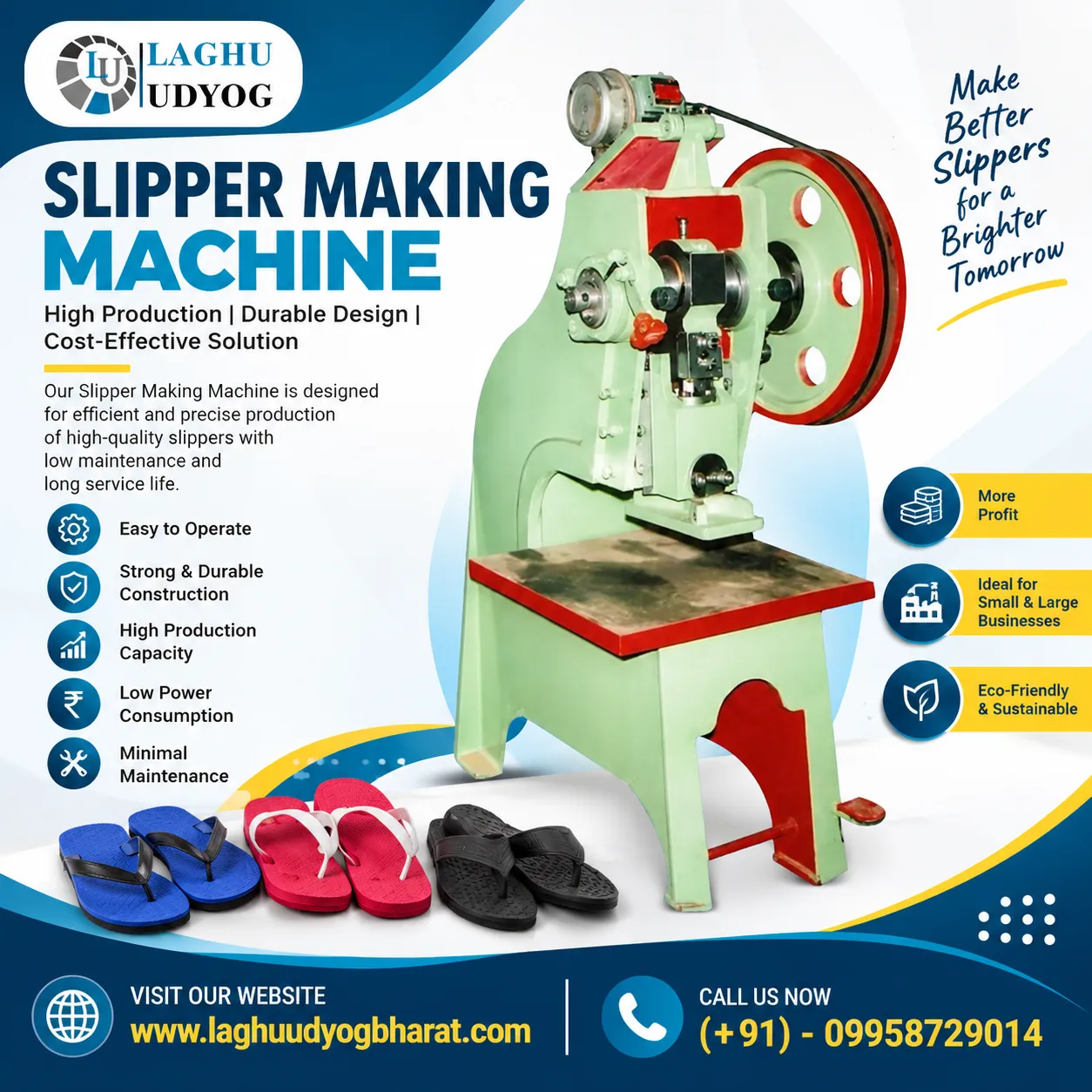
Laghu Udyog provides information about its Chappal Making Machine for businesses exploring footwear manufacturing equipment and related production requirements. Readers can review the product information to better understand the equipment and discuss their specific requirements. For direct enquiries, Laghu Udyog can be contacted at (+91) - 09958729014.
Frequently Asked Questions
1. What is a Chappal Making Machine used for?
A Chappal Making Machine is used to support manufacturing operations involved in producing chappals and slippers. The exact operations depend on the machine configuration and the type of footwear being produced.
2. What is an Automatic Slipper Making Machine?
An Automatic Slipper Making Machine is footwear production equipment designed to mechanise selected operations within the slipper manufacturing workflow. The degree of automation depends on the particular machine and process.
3. What materials can be used for chappal manufacturing?
Material selection depends on the footwear design and the manufacturing process. Manufacturers should verify material compatibility with the specific machine and intended production method before starting regular production.
4. Is automatic machinery useful for a small manufacturing unit?
It can be considered for small and medium manufacturing operations when the machine's process, operating requirements, product type, and workflow are appropriate for the business. The suitability should be evaluated against the actual production plan rather than unit size alone.
5. What should be checked before purchasing a slipper manufacturing machine?
Important considerations include the intended footwear type, material compatibility, production operations, machine controls, maintenance requirements, tooling or process requirements, and how the equipment will fit into the complete manufacturing workflow.
6. Why is routine maintenance important for a slipper machine?
Routine maintenance helps operators monitor the machine's working condition and identify wear, contamination, adjustment issues, or other irregularities. Maintenance should always follow the manufacturer's instructions.
7. What products can be manufactured using footwear-making equipment?
Depending on the machine configuration and process, footwear-making equipment can support the production of different chappal and slipper designs. The specific product range should be confirmed according to the machine's intended application.
Conclusion
A Chappal Making Machine is best understood as part of a complete footwear manufacturing workflow rather than as an isolated piece of equipment. Material preparation, shaping, processing, assembly, finishing, inspection, operation, and maintenance all contribute to the final production process.
For manufacturers considering automation, an Automatic Slipper Making Machine can be evaluated by looking at the operations it mechanises and how those operations fit into the intended production setup. Clear product requirements and process planning can make machinery evaluation more practical and informed.
To explore the available Chappal Making Machine information and discuss your manufacturing requirements, visit the official product page or contact Laghu Udyog at (+91) - 09958729014.
For More Information Visit Here:
www.laghuudyogbharat.com






















Sign in to leave a comment.