

Introduction to Chappal Manufacturing Machinery
Chappals and slippers are widely used types of everyday footwear. Manufacturing them involves several considerations, including the product design, material selection, component preparation, finishing requirements and production workflow. A Chappal Making Machine is industrial equipment intended to support particular operations involved in producing chappals, depending on the machine's design and capabilities.
For people planning a footwear manufacturing unit, selecting suitable machinery is an important part of preparing the business. Buyers should understand the products they intend to manufacture, the materials they plan to use and the operations they need the equipment to perform before making a purchasing decision.
Laghu Udyog is a manufacturer, trader and supplier of industrial machinery and manufacturing equipment based in Noida, Uttar Pradesh, India. Operating since 2008, the business provides machinery-related product information for people exploring equipment for small-scale manufacturing activities.
What Is a Chappal Making Machine?
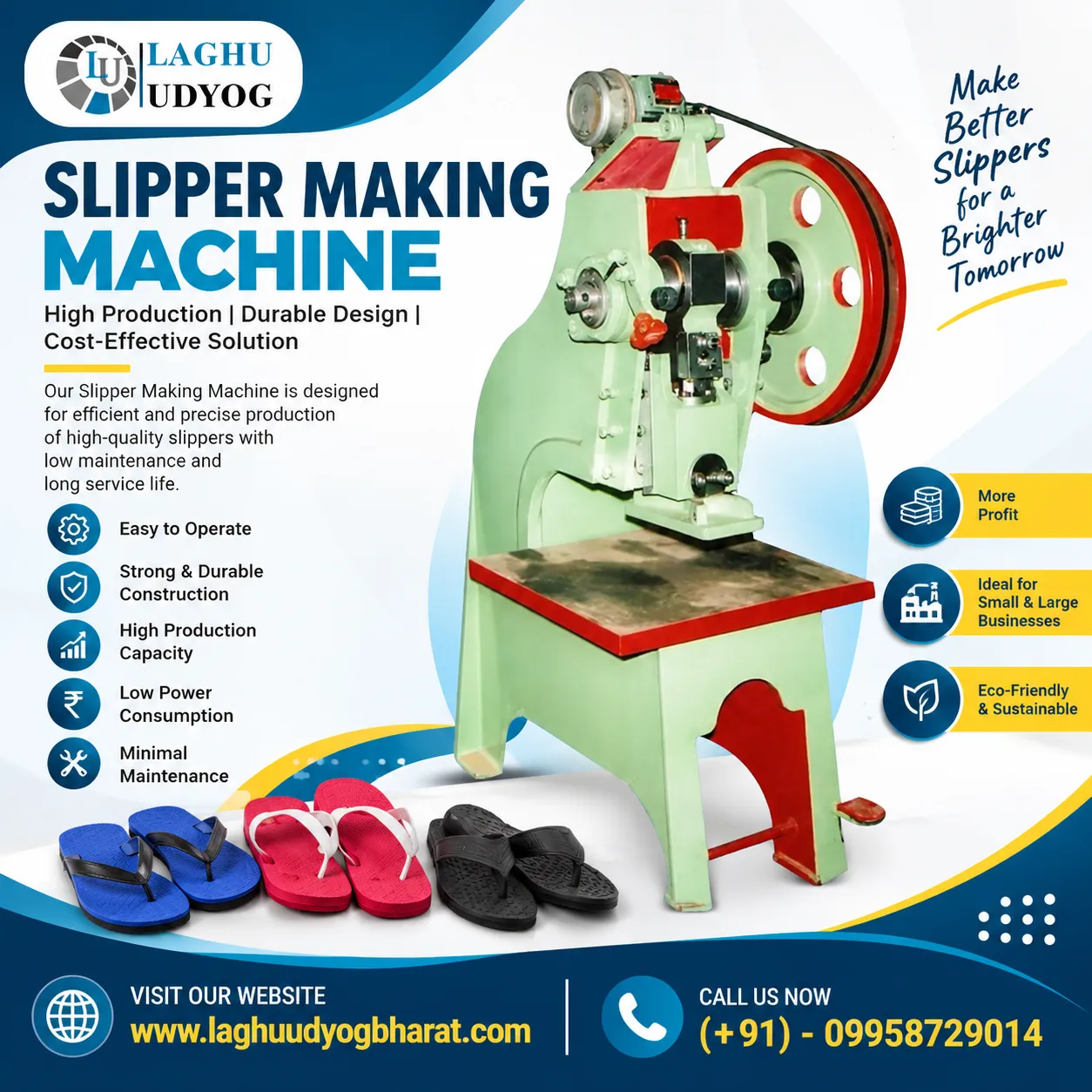
A Chappal Making Machine is designed to perform specific tasks associated with chappal production. Depending on its configuration, footwear manufacturing equipment may support operations such as shaping components, cutting material, forming parts or carrying out other production-related tasks.
The exact functions vary between machine models. Therefore, buyers should not assume that every chappal machine performs all manufacturing stages or supports every footwear design.
The term Slipper Making Machine is also used when searching for machinery intended for slipper production. Although chappals and slippers are related footwear products, their shapes, construction methods and material requirements can differ. Choosing equipment according to the intended product is more useful than relying on the product name alone.
How Machinery Supports the Chappal Production Process
A planned production workflow helps a manufacturing business understand which equipment it needs and how each operation fits into the overall process.
Common planning considerations include:
- Product design: Decide which styles, sizes and types of chappals the business intends to produce.
- Material preparation: Identify the materials required for the intended footwear and confirm that the proposed equipment is compatible with them.
- Component processing: Determine which cutting, shaping, forming or other operations are needed and which must be handled by separate equipment.
- Assembly and finishing: Establish how components will be joined, finished and checked, according to the selected product design.
- Quality checks: Plan inspections for dimensions, appearance, component fit and overall product consistency.
These stages are general manufacturing considerations, not a claim that every machine carries out each operation. A suitable production setup depends on the selected footwear design and the capabilities of the equipment.
Factors to Consider When Selecting a Chappal Manufacturing Machine
1. Intended Product and Design
Start by identifying the footwear products you want to manufacture. Basic chappals, different slipper styles and specialized footwear may require different processing arrangements. Share the intended product design with the machine supplier so that the available equipment can be assessed against your actual requirements.
2. Material Compatibility
Material compatibility is an important purchasing consideration. Rubber and EVA, for example, have different material characteristics and may require different processing arrangements. A Rubber Chappal Making Machine or EVA Slipper Making Machine should only be considered suitable when its documented capabilities match the intended material and production process.
Ask the supplier which materials and thickness ranges are supported. Do not assume that one machine can process every material or footwear design.
3. Machine Functions and Operating Requirements
Understand the operations performed by the proposed machine, the tasks that require separate equipment and the operating procedures involved. Ask for available technical specifications, power requirements, operating instructions and maintenance information before finalizing the purchase.
If you are comparing an Automatic Chappal Making Machine with another type of machine, request a clear explanation of the automation provided and which tasks still require manual involvement.
4. Available Workspace
Measure the space available for the machinery and consider the working area needed for material storage, product handling, operator movement and finished goods. Also check the electrical arrangements and other site requirements against the machine's documented specifications.
A realistic workspace plan helps reduce difficulties when arranging equipment and organizing day-to-day production.
5. Budget and Ongoing Costs
Consider more than the initial purchase price. Your planning should account for raw materials, electricity, labour, maintenance, tools or accessories where applicable, packaging and other operating expenses.
Before estimating profitability, prepare a basic cost calculation using realistic material consumption, expected selling prices and production assumptions. Do not base financial decisions on an unverified production-capacity figure or a general claim about potential earnings.
Planning a Small-Scale Chappal Manufacturing Business
A small-scale footwear manufacturing business benefits from a clear plan before machinery is purchased. Begin with market research to understand the types of chappals potential customers want, the price range they expect and the competition in your intended market.
Next, prepare a product plan. Identify the styles, sizes, materials and finishing requirements that will guide your equipment selection. Compare the proposed production process with the functions of the machinery under consideration.
Create a preliminary budget covering equipment, workspace preparation, raw materials, labour, utilities, packaging and routine maintenance. The actual investment will depend on the selected equipment, business location, production arrangement and operating needs.
It is also useful to plan inventory management and quality checks from the beginning. Suitable raw materials, organized production records and consistent inspection procedures can help a business identify avoidable waste and maintain a more controlled workflow.
Why Consult a Chappal Making Machine Manufacturer, Supplier or Dealer?
A Chappal Making Machine Manufacturer, Supplier or Dealer can help buyers obtain information about available equipment and determine whether a particular option matches their requirements. However, the services and technical knowledge available may differ between businesses, so buyers should request clear, product-specific answers.
When evaluating a Footwear Machinery Supplier or Industrial Machinery Supplier, ask for the machine's specifications, supported materials, intended applications, installation requirements, maintenance guidance and details of any included accessories. Also confirm what documentation, operating instructions and after-sales assistance are available before placing an order.
A useful supplier discussion should address the buyer's actual production needs rather than relying solely on general promotional descriptions. Comparing documented features and requirements makes it easier to evaluate machinery on a consistent basis.
Explore Chappal Making Machine Options at Laghu Udyog
Laghu Udyog operates in the industrial machinery and manufacturing equipment sector and has been in business since 2008. Based in Noida, Uttar Pradesh, the company serves buyers researching machinery for manufacturing applications.
Readers can explore the Chappal Making Machine product page to review the available product information. Buyers should confirm the current model details, specifications, supported materials and operating requirements directly with the company before selecting equipment.
Whether you are planning a new footwear unit or reviewing machinery for an existing operation, define your product requirements first. A clear understanding of the production process will help you ask more relevant questions and assess whether the available machinery is appropriate for your business.
FAQ Section
Q1. What is a Chappal Making Machine used for?
A Chappal Making Machine is industrial equipment used for specific operations involved in manufacturing chappals. Its functions depend on the machine's design, configuration and supported materials.
Q2. What should buyers check before purchasing a chappal manufacturing machine?
Buyers should check the intended footwear design, material compatibility, machine functions, technical specifications, workspace requirements, power needs, maintenance requirements and available supplier support.
Q3. Are a Chappal Making Machine and a Slipper Making Machine the same?
The terms are sometimes used interchangeably, but the intended products and manufacturing requirements can differ. Buyers should confirm whether the machine supports their preferred footwear style, material and production process.
Q4. What information should I request from a Chappal Making Machine supplier?
Ask for the machine's technical specifications, supported materials, intended applications, operating requirements, maintenance guidance, included accessories and details of any available installation or after-sales support.
Q5. How can I enquire about a Chappal Making Machine from Laghu Udyog?
Visit the Chappal Making Machine product page or contact Laghu Udyog at (+91) - 09958729014 for information about the available machinery.
Conclusion
Choosing suitable chappal manufacturing equipment requires attention to product design, material compatibility, machine functions, workspace and ongoing operating costs. Buyers should verify technical details and understand which production stages the equipment can support before making a decision.
For information about the available Chappal Making Machine, contact Laghu Udyog at (+91) - 09958729014 or visit the product page to review the details and make a product-specific enquiry.
















Sign in to leave a comment.