

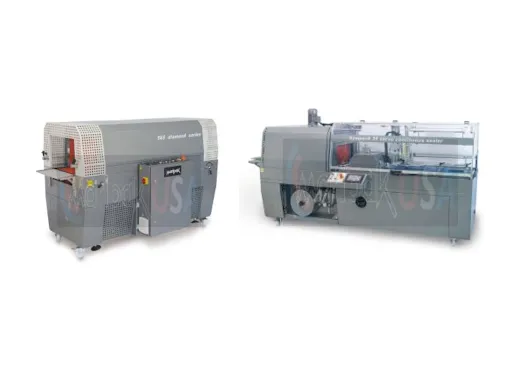
Small businesses, online sellers, and workshops share a common packaging need: a clean, protective finish without the cost of a full production line. A shrink wrapping sealer answers that need by sealing film around an item so it can pass through a heat source and tighten into a neat, tamper-evident pack. It works well for boxed goods, books, games, and mixed products of varying sizes. The sections below explain how these units operate, what to compare before buying, and how to keep results consistent.
What the Sealing Bar Actually Does
The sealing bar is the heart of the machine. When the arm lowers, a heated wire or blade presses through folded film, cutting away the excess and fusing the edges in a single motion. Most units use an L-shaped design that seals two sides at once, while the folded film supplies the remaining edges. The product is then sealed inside a loose pouch, ready for the tunnel. Seal quality depends on temperature, dwell time, and pressure, so good machines let operators adjust each setting. A clean, narrow seal line looks professional and holds up during shipping.
Manual, Semi-Automatic, and Automatic Styles
Manual models rely on the operator to lower the arm, making them suitable for low volumes and occasional use. Semi-automatic versions add a motorized or pneumatic arm and a conveyor, which improves speed and repeatability. Fully automatic systems feed, seal, and move products without handling, but they need more space and investment. When comparing each shrink wrapping sealer, match the style to daily output rather than peak demand, since oversizing wastes budget and undersizing creates bottlenecks.
Sealing Length and Product Size Limits
Every unit lists a maximum seal length, commonly between 12 and 30 inches, and a maximum product height. Measure your largest item, including box corners, and add room for the film to fold and drape. A short seal cannot close a wide package, while an oversized machine takes up bench space you may not have. Also check clearance beneath the arm, since tall items must fit without pressing on the film. Planning for future products avoids replacing the machine within a year.
Selecting Film That Suits Your Products
Film choice matters as much as the machine. Polyolefin is the most popular option, offering clarity, strong seals, and dependable shrink across many products. PVC is economical but can produce odor when sealed, and polyethylene suits heavier bundles. Gauge should match weight and shape, with thicker film for sharp edges. Centerfold film is common for L-style units, and it must be loaded evenly so both layers feed smoothly. Testing a small batch before a large run confirms seal strength and shrink.
Fixing Weak Seals and Film Problems
Most problems have simple causes. Weak or stringy seals often point to a dirty wire, low temperature, or a worn silicone pad. Burned edges mean too much heat or too long a dwell. Trapped air can cause ballooning, so pinholes or a vented film help air escape during shrinking. Operators who understand their shrink wrapping sealer settings can correct these issues in minutes. Keeping a written chart of temperature and time for each product removes guesswork and keeps quality steady between shifts.
Daily Care and Safety Habits
Wipe the sealing wire and pad at the end of each shift to remove residue, and replace the wire when it shows discoloration or kinks. Check the arm's spring or cylinder for smooth movement, and keep spare wire and pads nearby. Never touch the sealing area while hot, and keep loose sleeves and hair clear of moving parts. Good ventilation around the workstation also reduces fumes and heat buildup.
Conclusion
Good results come from matching machine style, seal length, and film to the products you actually pack. Reviewing options such as shrink machines can help buyers see what configurations exist, though every supplier deserves the same checklist. Combined with steady maintenance and documented settings, the right shrink wrapping sealer delivers neat, protective packs day after day.
















Sign in to leave a comment.