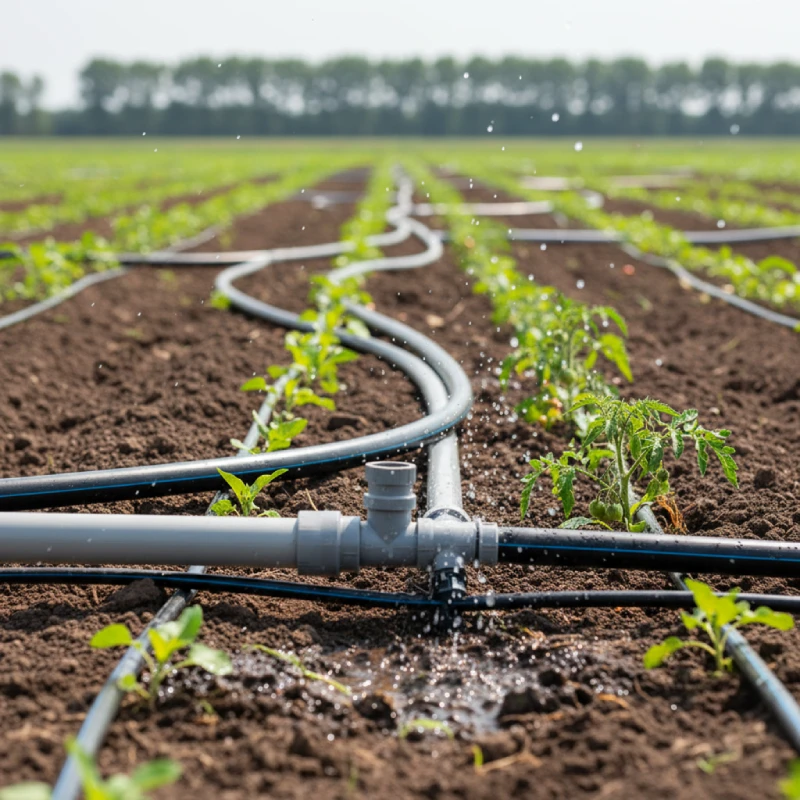
In the world of modern, sustainable agriculture, few technologies have been as transformative as drip irrigation. It's a method that promises a future of increased yields, significant water conservation, and enhanced crop health, all by delivering water and nutrients precisely where they are needed: at the plant's root zone. While the tiny emitters and drippers often receive all the credit for this precision, the true success of any drip irrigation setup is contingent on its unseen, robust, and reliable foundation—the intricate network of pipes that makes the entire system work flawlessly.
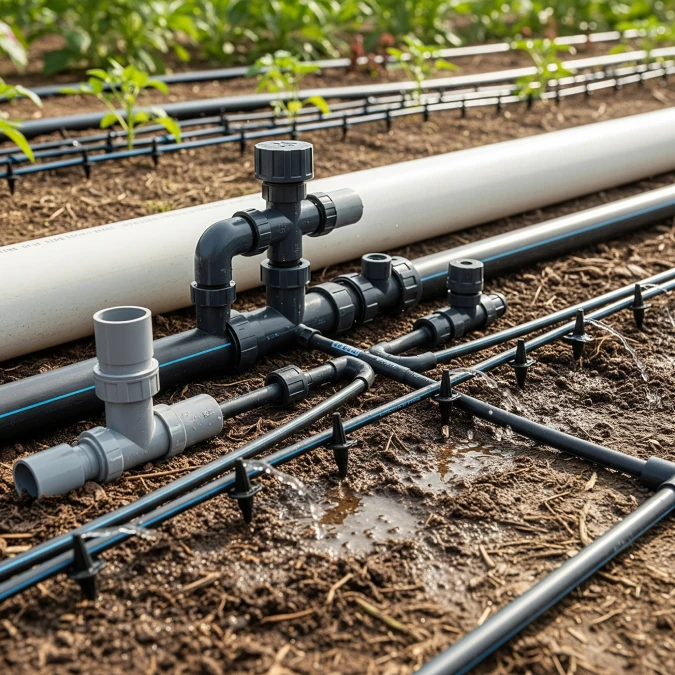
This intricate infrastructure, responsible for carrying water from the source to every single plant, is what makes the entire system work flawlessly. A farmer's choice of pipes for this crucial network is a foundational decision that impacts everything from installation costs to system longevity and overall crop health. This article will explore the different types of pipes available, their unique properties, and their collective impact on building an effective and enduring drip irrigation setup.
The Unseen Network: The Critical Role of Pipes in Drip Irrigation
Before diving into the specifics of materials, it is essential to understand the fundamental and often overlooked role of pipes in a drip irrigation system. They are the circulatory system of the entire operation, responsible for transporting water from the pump and filter to every plant on the farm. This network must maintain consistent water flow and pressure across the entire field, regardless of topography or distance.
Any failure in this system—be it a leak, a blockage, or a pipe bursting—can lead to inconsistent watering, wasted resources, and a compromised crop. The right pipes must be able to withstand constant water pressure, resist environmental factors like UV radiation and chemical fertilizers, and be flexible enough to handle the contours of the land.
This is where the distinction between a cheap, short-term solution and a quality, long-term investment becomes clear. A high-quality drip irrigation setup relies on a network that minimizes friction, resists degradation, and maintains its structural integrity over years of continuous use.
A Closer Look: The Main Types of Drip Irrigation Pipes
When building a drip irrigation setup, farmers have several excellent material choices for their piping network. Each material offers a unique set of advantages and is best suited for specific parts of the system. A reliable manufacturer like Ori-Plast provides a complete range of these components, ensuring a cohesive and durable system.
Polyvinyl Chloride (PVC) Pipes
PVC pipes are a staple in irrigation for their rigidity and durability. They are the go-to choice for mainlines and sub-mainlines, which are the larger, permanent pipes that run from the water source to the different sections of the field.
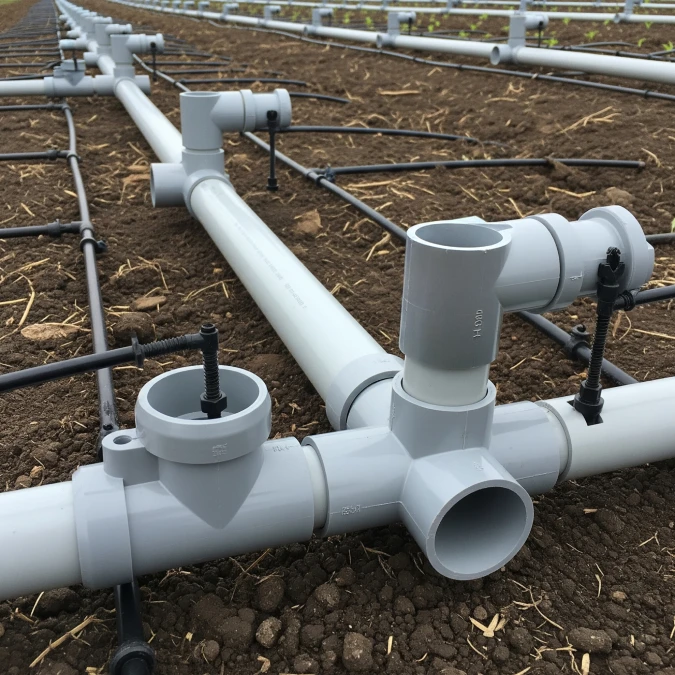
- Rigidity and Strength: The rigid nature of PVC gives it excellent structural integrity, allowing it to withstand high pressure and external loads. This makes it ideal for underground installations or long, open-field runs where it needs to maintain a straight path.
- Smooth Interior: The smooth bore of a PVC pipe minimizes friction, ensuring that water flows with minimal pressure loss. This is crucial for maintaining uniform pressure and flow to all parts of the system, a key factor in ensuring every plant receives the same amount of water and nutrients.
- Chemical Resistance: PVC is highly resistant to a wide range of chemicals, including fertilizers and pesticides that may be dissolved in the irrigation water. This prevents the pipes from degrading over time, ensuring the purity of the water and the longevity of the system.
- Cost-Effectiveness: Generally, PVC pipes are more economical than other materials, making them a budget-friendly choice for many farmers and large-scale projects.
High-Density Polyethylene (HDPE pipes)
HDPE pipes are an increasingly popular choice for drip irrigation due to their exceptional flexibility, durability, and resistance to environmental stressors. Unlike rigid PVC, HDPE is a flexible pipe material that can be supplied in long rolls, reducing the need for numerous joints.
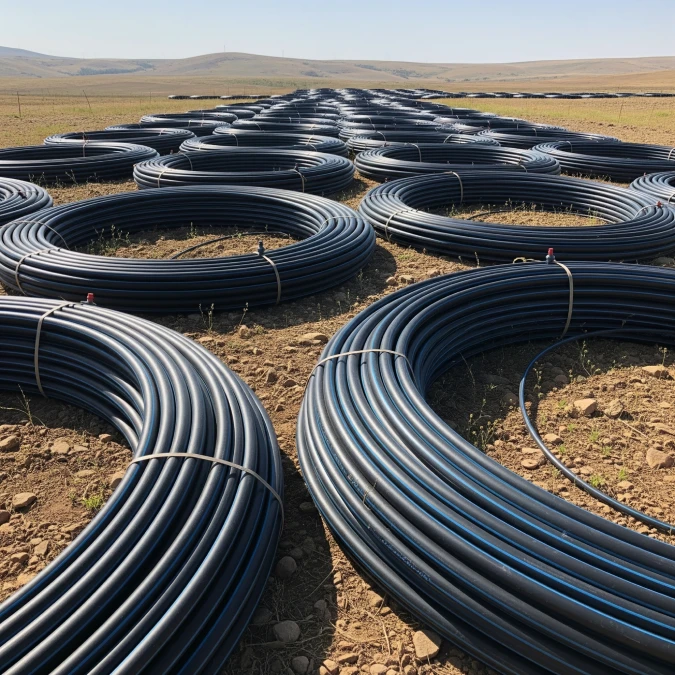
- Flexibility and Ease of Handling: The inherent flexibility of HDPE pipes makes them ideal for rolling out across uneven terrain and around obstacles without the need for additional fittings. This significantly reduces installation time and minimizes potential leak points.
- UV and Impact Resistance: HDPE is highly resistant to UV radiation, making it suitable for both above-ground and underground installations without the risk of becoming brittle over time. It also boasts superior resistance to impact, which is a major advantage in agricultural settings where heavy machinery is often in use.
- Heat Fusion Joining: Instead of solvent cement, HDPE pipes are joined using a heat fusion process. This creates a strong, monolithic joint that is as strong as the pipe itself, eliminating common failure points found in other systems. This fusion method is a key reason for their long lifespan.
Low-Density Polyethylene (PE pipes for drip irrigation)
While PVC and HDPE are typically used for the mainlines, Low-Density Polyethylene (PE pipes for drip irrigation) are the most common material for the lateral lines and driplines that run along each row of plants.
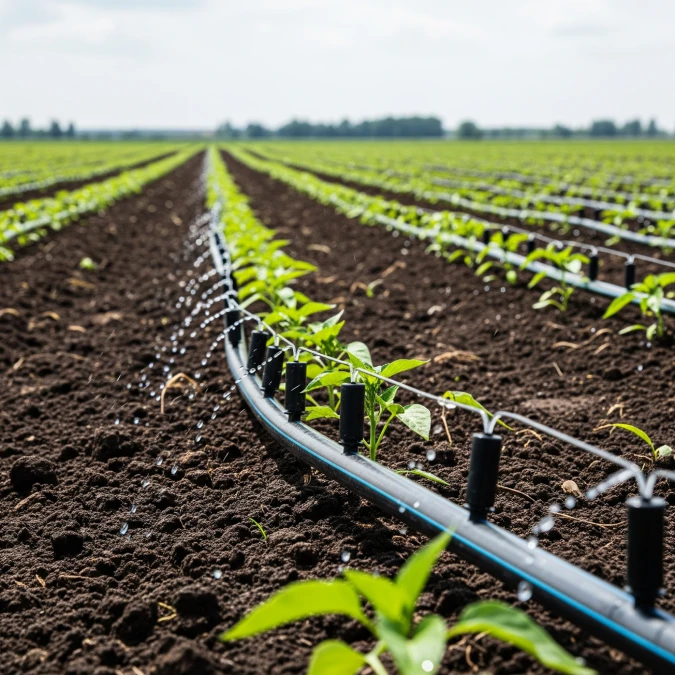
- Ultimate Flexibility: LDPE is more flexible than HDPE, making it incredibly easy to work with in the field. It can be bent and curved to fit around plants and rows, and emitters and drippers can be punched into the pipe wherever needed.
- Ideal for Drip Emitters: The softness of LDPE allows for the easy insertion of various drip irrigation components and emitters, creating a simple and adaptable system. This flexibility is what makes it the go-to choice for direct plant-level watering.
- Cost and Portability: LDPE pipes are generally very affordable and lightweight, making them easy to transport and install, especially on small- to medium-sized farms.
Building a Smart System: The Synergy of Different Pipe Materials
An effective drip irrigation setup rarely uses just one type of pipe material. Instead, the best irrigation systems in India often leverage the unique strengths of each material to create a hybrid, highly efficient network. A holistic solution from a trusted brand like Ori-Plast would include a combination of these pipes to ensure maximum efficiency. For example, a typical modern system might be built with:
- Mainline (PVC or HDPE): A rigid PVC or durable HDPE pipe is used to carry water from the pump to the field. Its strength ensures high pressure can be maintained over long distances.
- Sub-Mainlines (PVC or HDPE): These are also made of the same durable material as the main line, but in a smaller diameter, to branch off into different sections of the field.
- Lateral Lines (PE): The sub-main lines then feed into flexible PE pipes for drip irrigation, which run along the crop rows, with emitters or drippers placed at regular intervals.
This layered approach ensures that the high-pressure mainlines are secure and durable, while the low-pressure lateral lines are flexible and easy to customize for specific crops and plant spacing.
Key Considerations for Your Drip System in India
For farmers in India, choosing the right drip irrigation setup involves more than just selecting a pipe material. It's about a holistic approach that considers the unique challenges of the region. Factors such as a farm's topography, soil type, and the crop's water requirements all influence the system design. The wide range of irrigation systems in India caters to these diverse needs, from small-scale farms to massive agricultural projects. The system must also be able to withstand the climate, from intense summer heat to the heavy rains of the monsoon season. A reliable manufacturer like Ori-Plast understands these local conditions and offers products designed to endure.
Proper installation is also a non-negotiable part of the process. Pipes must be laid with a slight slope to ensure gravity carries the water to the tank efficiently. Filters and first-flush diverters should be installed at strategic points to keep debris and pollutants out of the system. Regular maintenance is also essential to ensure the system remains clean and functional. This includes cleaning gutters, flushing pipes, and checking for any signs of leaks or damage. Given the specific challenges of urban environments, seeking out expert advice on irrigation systems in India can be a wise investment. Professionals can design a system that maximizes water collection in a limited space and can withstand the harsh urban environment, providing a reliable source for your water management needs.
The Foundational Investment: Why It Pays Off
The initial investment in a quality drip irrigation setup may seem significant, but it is a foundational decision that pays for itself many times over. The cost of a well-designed system is quickly offset by the tangible benefits:
- Reduced Water Costs: Drip irrigation's high efficiency dramatically lowers water consumption, leading to significant savings on utility bills.
- Increased Crop Yield: Consistent and precise watering reduces plant stress, promoting healthier growth and a higher, more uniform yield.
- Lower Labor Costs: Automated systems reduce the need for manual watering and weeding, freeing up valuable labor for other farm tasks.
- Environmental Sustainability: By conserving a precious resource, farmers are doing their part to ensure a more sustainable future for agriculture.
Choosing the right drip irrigation pipes is a foundational decision that impacts the longevity and efficiency of the entire system. By understanding the unique properties of PVC, HDPE, and PE pipes, and how they work together, farmers can build a resilient and highly effective irrigation network that will serve them for years to come.




























Sign in to leave a comment.