

Imagine walking into your workplace tomorrow morning and trying to have a quick, normal conversation with a teammate standing just an arm’s length away. If you find yourself leaning in close, cupping your hand over your ear, or shouting just to be heard over the background hum, your environment is dropping a massive hint. Excessive background volume is one of the most widespread yet frequently ignored occupational hazards in modern business environments. Whether it is the sharp, repetitive metal clang of a manufacturing plant, the roaring engine rumble of a busy logistics terminal, or even the persistent, high-velocity whir of heavy climate control systems in a commercial office complex, ambient volume shapes our daily well-being. Because hearing damage happens incrementally over long periods, it is easy to ignore until the effects become permanent. Taking control of this hidden hazard requires a structured approach rooted in professional sound level testing to accurately measure, track, and mitigate environmental volume.
The True Human and Operational Impact of Chronic Volume
When a workspace remains consistently loud, the damage extends far beyond basic ear strain or a minor afternoon headache. Human hearing relies on tiny, incredibly sensitive nerve endings inside the inner ear called hair cells. When exposed to continuous, high-decibel pressure, these delicate cells become overworked and fatigued. If the exposure stops, they can occasionally recover, resulting in that familiar, muffled, clogged ear sensation after leaving a loud space. However, if the sound pressure continues day after day without interruption, those hair cells flatten and die completely. Once they are gone, they never grow back.
Beyond the physical risk of hearing loss, high noise levels create severe cognitive friction for employees. In a noisy facility, workers experience higher baseline levels of stress, elevated blood pressure, and faster mental fatigue. Concentration drops significantly, making it much harder to focus on complex, technical tasks. Furthermore, excessive sound masks critical audio cues, meaning a worker might miss a shouted safety warning, a backup alarm on a forklift, or the subtle change in a machine’s pitch that signals a mechanical failure. Investing in comprehensive testing is fundamentally about protecting human safety, keeping minds sharp, and preventing accidents before they occur.
How Specialised Field Assessments Work in Practice
You cannot manage what you do not measure, and you certainly cannot fix an invisible acoustic hazard by guessing how loud a room feels. Professional testing relies on highly calibrated instruments to map out a building's true sound landscape. The evaluation process generally uses two distinct types of field testing to gather actionable data: area sound level mapping and personal dosimeter tracking.
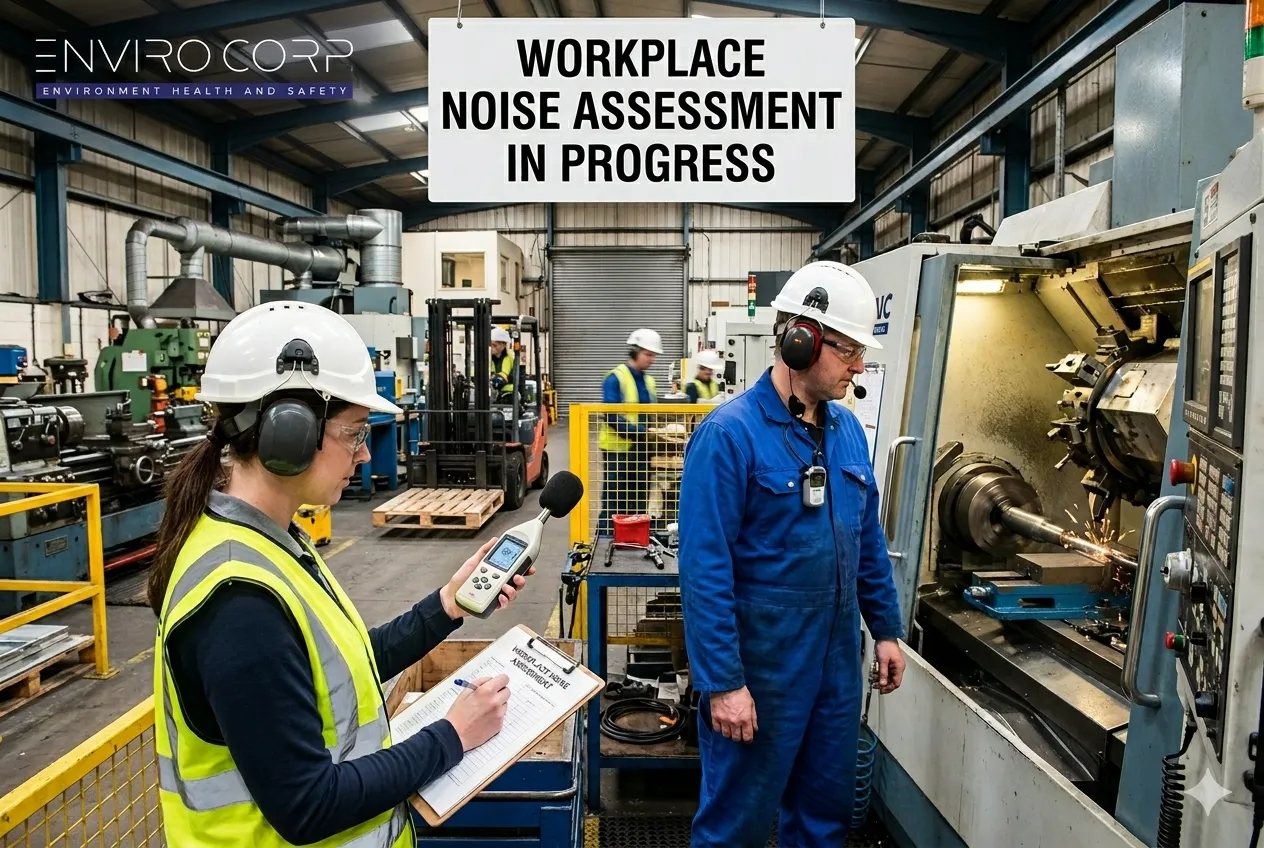
Area sound level mapping involves an occupational specialist walking your facility using a handheld instrument called a sound level meter. They hold the device at ear level across various points in the building, recording immediate sound pressure levels while machinery runs under standard workloads. This data allows the consultant to draw a literal noise map of your building, clearly highlighting which specific zones cross dangerous thresholds. Because people move around throughout the day, static room measurements do not capture the whole story. To track real exposure, workers wear a small, lightweight device called a noise dosimeter on their shoulder close to their ear. This device logs every single decibel fluctuation over a full eight-hour shift, calculating an accurate time-weighted average to see exactly what an individual's ears experience during a standard workday.
Understanding the Scientific Numbers and Regulatory Limits
When looking at a final data report, the numbers are measured in decibels using an A-weighting filter. This specific filter adjusts the meter's sensitivity to mirror the human ear, which naturally picks up certain high and low pitches differently. Global safety frameworks, including international workplace guidelines and regional environmental protection departments, mark eighty-five decibels as the critical point for action.
If a workspace hits or crosses an eight-hour average of eighty-five decibels, employers are legally and ethically required to step in and set up a formal hearing conservation program. This includes providing regular safety training, offering proper ear protection options, and arranging annual hearing checkups for the team. If the volume climbs past ninety decibels, immediate structural engineering changes or strict staff rotation schedules must be used to bring that personal exposure back down to safe levels. Staying on top of these numbers protects businesses from costly compliance fines and insurance claims while ensuring long-term health.
Practical Engineering Steps to Quiet Your Workplace
Once professional testing pinpoints your facility's exact sound issues, you can begin making changes. The most effective approach is always to address the sound directly at its source through smart engineering fixes, rather than simply handing out earplugs and hoping for the best.
Routine machine maintenance is often the easiest place to start, as a major source of noise is simply mechanical friction. Regularly lubricating dry bearings, tightening loose casing panels, and replacing worn-out drive belts can instantly drop a machine’s volume by several decibels. If a specific pump, compressor, or fan is causing the issue, you can build a dedicated acoustic enclosure around it to block the sound. Hanging dense, sound-absorbing curtains or installing rubber dampening pads under heavy equipment stops vibrations from traveling through the floor and echoing off the walls. In wide, open spaces with hard concrete floors and metal ceilings, sound bounces around and multiplies. Installing fabric-wrapped acoustic panels or hanging soft baffles from the ceiling absorbs that traveling sound energy, stopping echoes and lowering the overall room volume significantly.
Choosing the Right Approach for Long-Term Safety
Creating a truly safe, comfortable workspace is a continuous journey that requires regular attention. Building layouts change, old machinery wears down, and new production equipment gets installed, all of which can instantly shift the acoustic balance of your facility.
Scheduling a professional field assessment is a proactive step that protects your business while showing your team that you value their health. The data gathered from a sound survey gives you a clear, actionable roadmap to make smart upgrades, choose the right safety gear, and design a calm, highly productive environment where people can communicate clearly and work without risk.
























Sign in to leave a comment.