
Think about the sounds that fill your facility every single day. There is the steady thrum of heavy machinery, the sharp hiss of pneumatic valves, or perhaps the constant clatter of warehouse forklifts. When you are exposed to these sounds day in and day out, they quickly blend into the background. Your ears adjust, and the noise simply becomes a normal part of doing business.
However, your ears adjusting to loud sounds is actually the first warning sign of permanent hearing damage. This is precisely where a professional workplace noise assessment becomes critical. It is not just about ticking a compliance box or satisfying an insurance inspector; it is a systematic check on the health of your physical environment. By taking the time to map out your sound levels, you can pinpoint exactly where things get dangerous, protect your crews from lifelong hearing issues, and build a safer, more productive operation.
Understanding the True Risk of Industrial Noise
Hearing loss rarely happens overnight. Instead, it is a slow, quiet process that steals a person's hearing decibel by decibel. By the time a team member notices that they are struggling to hear conversations at home, the damage to the delicate nerve cells inside their ears is already permanent.
Beyond the personal toll on health, excessive noise introduces severe immediate safety hazards to your job site. When a facility is too loud, workers cannot easily hear spoken warnings, emergency alarms, or the approach of heavy equipment. This breakdown in clear communication significantly increases the risk of accidents. Furthermore, constant exposure to high decibel levels triggers physical stress, elevates blood pressure, and causes mental fatigue, directly leading to costly human errors and lower daily productivity.
The Practical Steps of Measuring Sound
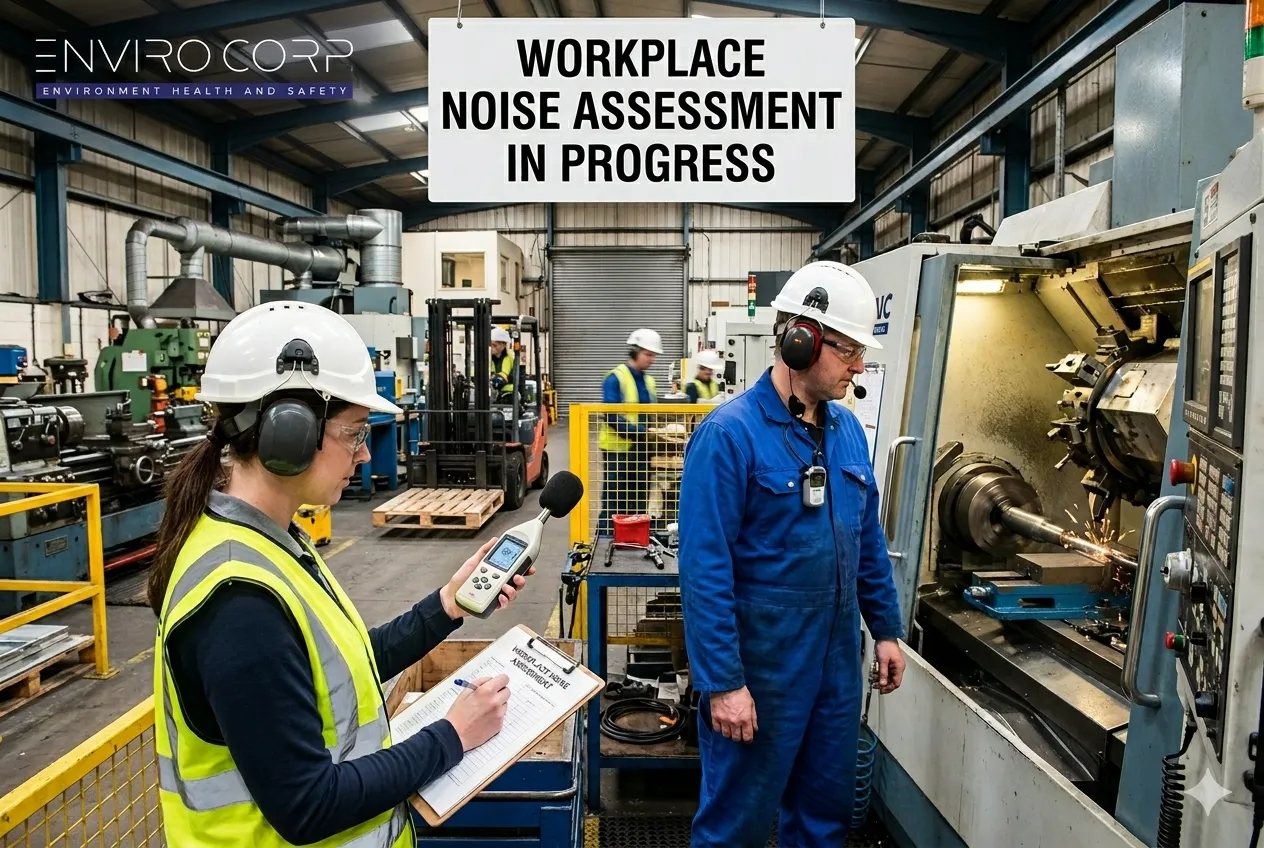
A proper sound study is a methodical process that evaluates how sound travels through your unique space and tracks the exact levels your team encounters during a typical shift. The process begins with an initial walk through to map out your facility and locate the primary sound sources, such as heavy manufacturing lines or compressor rooms.
Next, static sound level meters are placed in specific zones to measure general environmental volume. Because people move around during the day, selected team members wear small devices called personal dosimeters on their collars. These devices record the real-world, shifting noise levels an individual encounters throughout a standard eight-hour shift, providing an accurate picture of true daily exposure.
Practical Ways to Quiet Your Operation
Once the assessment results point out your problem areas, the next goal is finding practical ways to bring those numbers down. The most effective approach follows a structural hierarchy, looking for physical engineering fixes before relying solely on personal protective equipment (PPE).
- Engineering Controls: Look for ways to damp the noise at the source. This can mean placing vibrating machinery on rubber isolation pads, installing acoustic baffles on high ceilings, or building soundproof enclosures around loud pumps.
- Administrative Controls: Change the way your shifts are structured. You can rotate workers out of high-volume zones to limit their total daily exposure time, or schedule the loudest tasks for times when fewer people are on the floor.
- Personal Protection: When engineering fixes cannot fully solve the issue, provide high-quality hearing protection. Ensure your team has access to properly rated earplugs or earmuffs, and train them on how to wear them correctly.
Executive Summary: Prioritizing Hearing Health with Enviro Corp
A quiet workplace is a productive workplace. Partnering with Enviro Corp to conduct regular physical testing keeps your business fully compliant with regional safety laws, protects management from costly workers compensation claims, and creates an environment where your team can work comfortably. Protecting your crew from lifelong hearing damage starts with understanding the true sound footprint of your facility. By trusting Enviro Corp to take a proactive approach to acoustic health, you can eliminate hidden safety hazards, lower daily stress levels, and build a lasting culture of safety that benefits your entire operation.
Frequently Asked Questions
What exactly is a workplace noise assessment?
It is a comprehensive study of the sound levels across your facility. It uses specialised meters to measure environmental volume and personal devices to track the actual noise exposure an individual worker experiences during their regular shift.
How often should a company test its workplace noise levels?
It is best practice to conduct a formal assessment every two years. However, you should schedule a new test immediately if you install new machinery, alter your building layout, or modify your daily production schedules.
At what volume level does noise become hazardous?
Action is generally required when continuous noise levels reach 85 decibels averaged over an eight-hour shift. If your workers have to raise their voices to speak to someone standing just an arm's length away, the environment is likely over this limit.
What is the difference between area testing and personal dosimetry?
Area testing measures the noise in a fixed location, like a specific generator room. Personal dosimetry uses wearable sensors to track the actual noise an individual worker encounters as they move through different areas of the plant during their day.
Can earplugs replace the need for physical noise controls?
Earplugs are an essential safety backup, but they should not be your only solution. Safety regulations require employers to first attempt to reduce noise through physical engineering adjustments or scheduling changes before relying on earplugs alone.

























Sign in to leave a comment.