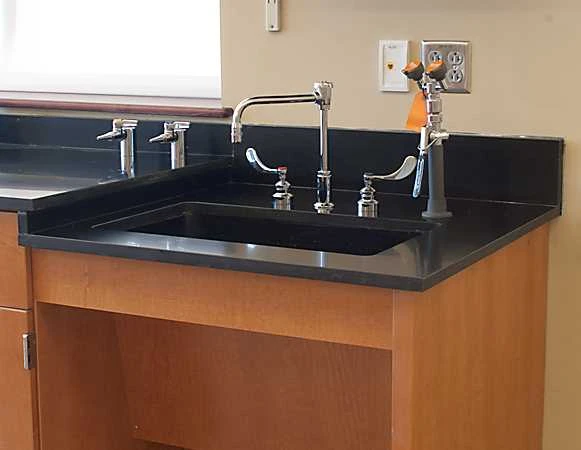

Laboratory sinks are not just fixtures; they are critical components of your research environment. The right sink supports safety and efficiency even when exposed to harsh chemicals and extreme temperatures. Factors to consider when choosing a new lab sink should include material, drainage, and easy-to-clean designs. Kewaunee offers a variety of lab sinks designed to meet safety standards and the demands of laboratory environments.
The Chemistry of Safety: Kemresin vs Other Materials
Kemresin: The Standard of Chemical Resistance
Kemresin is regarded as the gold standard when it comes to laboratory sinks, due to its superior chemical resistance. Not only does it stand up to hazardous substances, it’s also thermal shock resistant, meaning it withstands sudden temperature changes. Kemresin is a great option for demanding lab conditions where safety is non-negotiable.
Stainless Steel: Durable and Practical
Stainless steel is another great material choice for science lab sinks. A seamless die-drawn sink manufactured from nickel bearing type 304, 18-8, 18-gauge stainless steel is high quality. It is durable, resistant to stains and rust, and designed to stand up to heavy-duty lab use. Kewaunee stainless steel sinks are also thoroughly sound deadened with environmentally safe compounds to ensure proper sound insulation, and reduce condensation.
Cupsinks: Compact and Versatile
Cupsinks are a good solution for labs with specific drainage requirements. These are smaller fixtures that help dispose of fluids efficiently, without taking up extra space. They are available in various materials, including epoxy resin, polyethylene, and stainless steel, shapes include oval, rectangular, and round.
Key Features of Laboratory Sink Design
Efficient Drainage and Cleanliness
A safe and functional laboratory sink must be well-drained. A sloped bottom guides liquids towards the drain to prevent build-up, reduce chemical hazards, and keep your sink area clean.
Coved Corners for Easy Cleaning
Laboratory sinks can be difficult to clean, particularly those with sharp interior angles that can trap debris and chemicals. Coved corners eliminate this problem. Without sharp corners, the cleaning process is quicker and more thorough, this is essential for maintaining a healthy and safe laboratory environment.
Installation and Layout Options
The installation of a laboratory sink can have a great impact on the usability and durability of the sink. Ensure that you choose a design that will work in your space and that it is properly installed.
Drop-In Sinks
These sinks are installed directly on the countertop and fixed using self-rimming designs. Drop-in sinks provide a sleek, functional look with easy installation.
Under-Mount Sinks
For a seamless appearance, under-mount sinks are installed beneath the counter. Because they require additional structural support underneath, installation is more involved than with drop-in models. However, the absence of a visible rim gives under-mount sinks a sleek, contemporary appearance.
Conclusion
When it comes to laboratory sinks, your choice of material and design impacts safety, cleanliness, and workflow. Manufacturers like Kewaunee design sinks that meet the highest standards for durability and chemical resistance, whether you choose Kemresin or stainless steel. Features like sloped bottoms and coved corners help prevent hazards and simplify cleaning and maintenance. By selecting a high-quality sink and looking at the available Specifications and Safety Data Sheets (SDS), laboratories can make safe, informed decisions that keep their environments productive.



























Sign in to leave a comment.