
Building software is not difficult. Building the right product with the right decisions at every stage of development, though, is often difficult.
Many companies choose a development partner after just comparing portfolios and pricing—but neither a polished website nor an impressive proposal can tell you how a team will respond when priorities change, customers request new features, or the first version needs improvement.
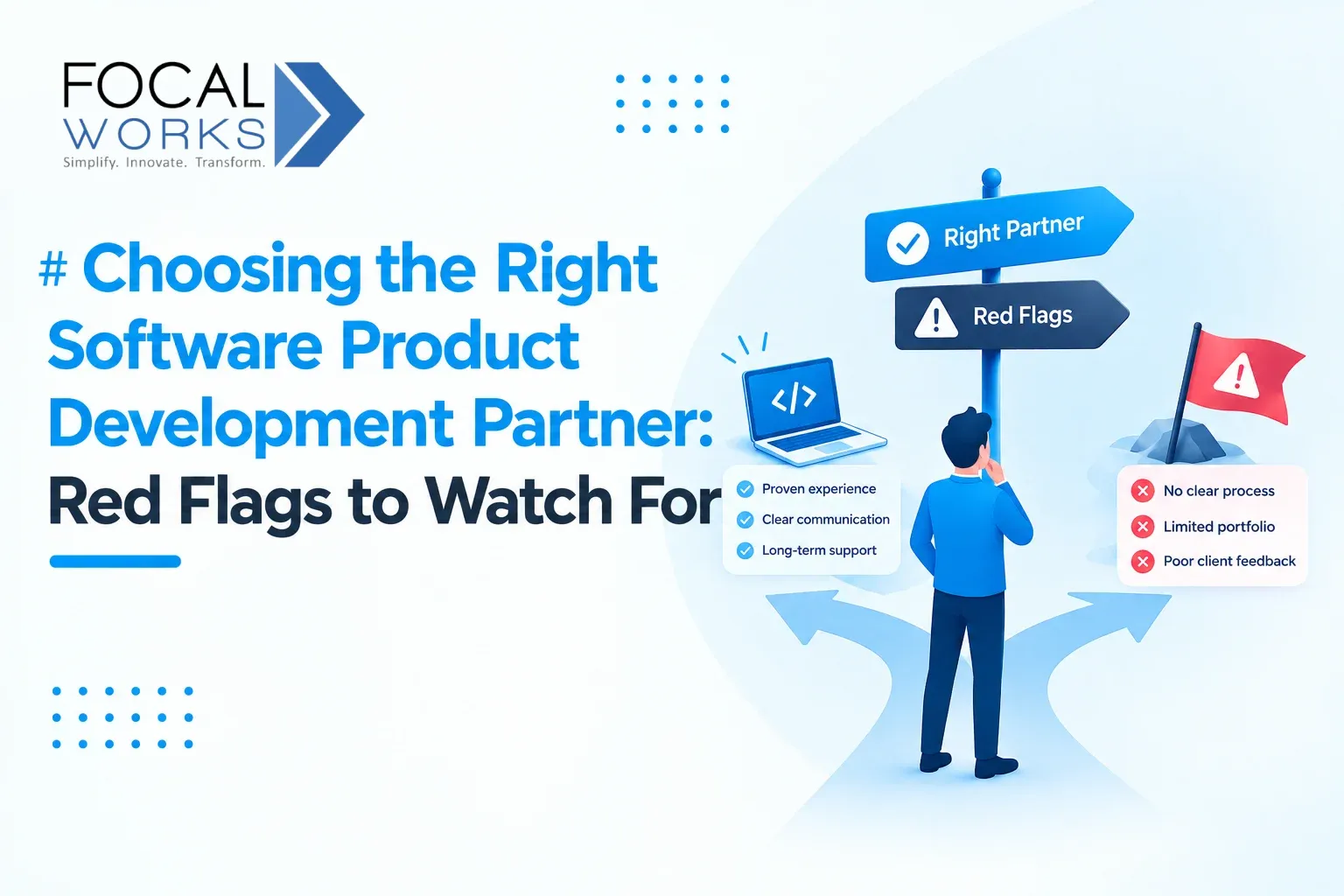
This article looks at the red flags that signal the wrong agency—and the qualities that define a dependable partner.
The Product Lifecycle Is Bigger Than Development
Building a successful software product does not begin with coding, and it does not end on launch day. The process starts with understanding a certain problem. From there, a team must validate ideas, shape the user experience, release an early version, and iterate based on customer feedback. As the market shifts, the software must evolve to stay ahead.
A development agency that treats a project purely as a technical hand-off will miss this bigger picture. A true product partner, however, guides your strategic decisions throughout the journey—questioning assumptions, reducing wasted effort, and ensuring the software delivers long-term business value.
Stage One: Discovery Should Feel Like a Conversation
The first meetings with a potential partner reveal more than their technical ability.
Some agencies move into pricing and timelines after one or two calls. They ask for a feature list, produce a proposal, and move quickly towards a contract. It’s an approach that sounds efficient, but it ignores the questions that matter most.
A good partner spends time understanding your business before discussing solutions.
What bad agencies do
- Quote before understanding the product
- Treat discovery as a delay
- Assume every requirement is final
What good agencies do
- Explore business goals before discussing features
- Challenge assumptions with constructive questions
- Help define priorities instead of accepting every request as stated
Focalworks follows this consultative approach; early planning creates a foundation for every stage that follows.
Stage Two: Don’t Accept Black-Box Development
Few things are more frustrating than watching a project disappear into a development black box. When the finished product emerges months later, it might not match the original vision—and this leads to expensive, late-stage revisions. A collaborative partner maintains continuous visibility and makes small adjustments along the way:
| “Black-box” agency | Collaborative partner |
| Long periods without meaningful updates | Regular reviews with shared progress |
| Clients see the product near completion | Clients contribute throughout development |
| Feedback arrives too late | Feedback shapes each milestone |
| Surprises at delivery | Shared decisions reduce misunderstandings |
Stage Three: Beware of Contracts That Resist Change
Change is a normal part of product development: Customer interviews reveal new ideas; market conditions shift; teams discover better ways to solve problems. But some agencies build contracts around rigid scope—so every adjustment becomes a problematic negotiation between the client and the development team.
A strong partner expects products to evolve. This means reviewing priorities together, assessing the impact of changes, and adapting the roadmap in a transparent way.
This flexible mindset is central to successful software product development services. It allows businesses to improve their products without losing sight of budget or long-term goals.
Stage Four: Launch Is a Milestone, Not the Finish Line
Launch does not mark the end of a project because once customers begin using the product, insights emerge quickly. Some features become more popular than expected while others end up needing refinement.
A healthy post-launch approach includes:
- Monitoring how customers use the product
- Prioritising improvements based on feedback
- Planning future releases around business objectives
- Providing ongoing maintenance
Warning Signs You Shouldn’t Ignore
It helps to choose a partner by looking at patterns rather than promises.
They promise everything immediately: Fast answers are usually helpful—but instant certainty about budgets, timelines, and complex requirements is not.
They don’t ask about your customers: A product built without an understanding of its users often solves the wrong problem.
They seem to focus on delivery: If every conversation centres on finishing features rather than improving outcomes, the relationship may remain transactional.
They don’t have a defined maintenance strategy: Every software product requires updates, improvements, and ongoing support. A partner should discuss this before launch.
What Businesses Should Expect From a Development Partner
A dependable partner brings structure without rigidity. They provide guidance without taking away ownership from the client.
| What to expect | Why it matters |
| Collaborative discovery | Better decisions before development begins |
| Early prototypes | Shared understanding of product vision |
| Regular milestone reviews | Fewer surprises at delivery |
| Flexible planning | Easier adaptation when priorities change |
| Long-term maintenance | Continual improvement after launch |
Rather than wondering “how quickly they can build this,” think about how they’ll help the product succeed over the next few years.
Long-Term Thinking Leads to Better Products
Businesses benefit from working with a team that understands their product, industry, and growth plans. New ideas move faster because the context already exists. Product improvements become more strategic because every decision builds on previous knowledge.
This is one of the reasons organisations choose Focalworks for long-term product partnerships rather than one-off development projects. The company combines collaborative consulting with agile product delivery and ongoing maintenance, which creates continuity across the lifecycle.
Choose a Partner That Stays for the Journey
The right development partner is one that values collaboration, communicates openly, understands that products evolve over time, and provides support after launch.
If you’re planning a new digital product or replacing an existing platform, contact Focalworks to discuss how a collaborative product development approach can help your business.























Sign in to leave a comment.