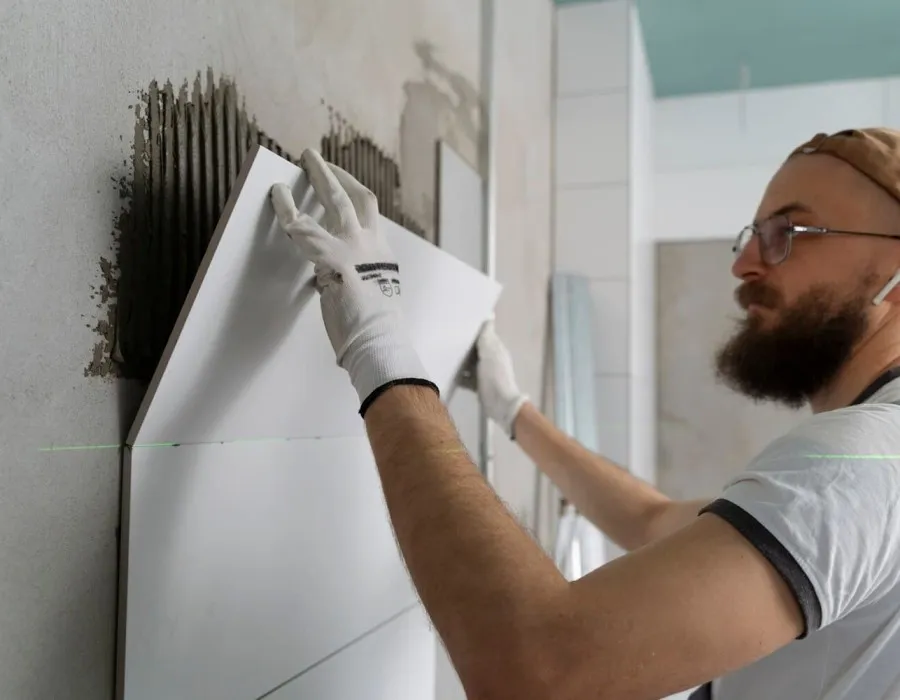

Tile adhesive manufacturing requires careful control of formulation, mixing, air incorporation, and additive distribution to achieve reliable performance. Foam can develop during production and after water is added to dry formulations, particularly when high speed mixing and surface active additives are involved. Excessive foam may influence density, workability, adhesion, surface appearance, and application consistency. Selecting the right tile adhesive defoamer can help manage unwanted foam while supporting stable product quality. The selection process should consider formulation chemistry, mixing conditions, dosage, compatibility, storage stability, and the performance requirements of the finished adhesive.
Understanding Foam in Tile Adhesive Production
Sources of Foam
Foam can develop when air becomes incorporated into tile adhesive during blending, mixing, dispersion, and application. Cement, fillers, polymers, cellulose based additives, dispersing agents, and other formulation components can influence bubble formation. High speed mixing can introduce additional air and distribute bubbles throughout the adhesive. After water is added, these bubbles may become more stable depending on the formulation and mixing conditions. Understanding the causes of foam is important because the selected defoamer must provide effective control without negatively affecting the other characteristics of the adhesive.
Problems Caused by Excessive Foam
Excessive foam can increase unwanted air content and influence the internal structure of tile adhesive. High levels of trapped air may affect density, adhesion, mechanical strength, spreadability, and surface appearance. Foam can also make mixing less predictable and contribute to variations between production batches. During application, excessive bubbles may create pinholes or uneven surfaces. Effective foam control can help reduce these problems and support more consistent adhesive performance. However, the objective should be controlled foam reduction rather than complete elimination of all air from the formulation.
Importance of Defoamer Selection
Supporting Adhesive Quality
A suitable defoamer should provide effective foam reduction while maintaining the desired characteristics of the tile adhesive. Important properties may include workability, open time, adhesion, slip resistance, setting behavior, and surface finish. The defoamer should not interfere with the functions of polymers, cement, fillers, or other additives. Testing the complete formulation is therefore essential. A product that performs well in another construction material may not necessarily provide the same results in tile adhesive because formulation chemistry and application conditions can differ significantly.
Maintaining Batch Consistency
Consistent foam control can help manufacturers maintain similar material properties from one production batch to another. Variations in air content may cause differences in density, flow, application behavior, and adhesion. A properly selected defoamer can reduce these variations when used at an appropriate dosage. Consistency also simplifies quality control because production teams can work with more predictable material characteristics. Regular testing and monitoring can help identify changes caused by raw material variations, equipment adjustments, or changes in formulation composition.
Factors Affecting Foam Formation
Mixing Speed and Time
Mixing conditions have a major influence on foam formation. High speed mixers can introduce substantial amounts of air into tile adhesive, while prolonged mixing may increase bubble dispersion. Equipment design and mixing sequence can also affect foam stability. The selected defoamer should therefore be tested under conditions that reflect actual manufacturing practices. Evaluating different mixing speeds and durations can help determine whether the formulation provides sufficient foam control throughout the production cycle. This information can also assist in selecting an appropriate addition point and dosage.
Water Addition
Water addition can significantly change the behavior of dry tile adhesive. The water to powder ratio affects flow, hydration, dispersion, and bubble stability. Different adhesive grades may require different water levels, meaning that foam behavior can vary between formulations. A suitable defoamer should remain effective across the expected range of water addition. Testing with actual water ratios can help identify whether foam control remains consistent. This evaluation also helps determine whether dosage adjustments are required for different product grades.
Formulation Components
Tile adhesives may contain cement, mineral fillers, polymer powders, cellulose ethers, plasticizers, dispersing agents, and other additives. Some components can increase surface activity and stabilize bubbles. The defoamer must work alongside these ingredients without interfering with their intended functions. Compatibility testing with the complete formulation can reveal potential changes in setting, adhesion, flow, workability, or surface characteristics. Evaluating individual components separately may not provide enough information because interactions between ingredients can significantly influence foam behavior.
Impact on Tile Adhesive Performance
Adhesion
Adhesion is one of the most important properties of tile adhesive. Excessive trapped air can reduce effective contact between the adhesive and substrate, potentially affecting bonding performance. By controlling unwanted foam, a suitable defoamer can help promote a more uniform adhesive structure. However, adhesion depends on many factors, including polymer content, substrate condition, water ratio, curing conditions, and application technique. Foam control should therefore be evaluated alongside these factors to confirm that the selected formulation supports the overall performance requirements of the adhesive.
Workability
Workability influences how easily tile adhesive can be mixed, spread, combed, and applied. Excessive foam can change the feel and flow of the material and may create inconsistencies during application. A suitable defoamer can help reduce unwanted bubbles while maintaining the desired workability. However, excessive foam reduction may also change rheological characteristics in some formulations. Testing should therefore consider both foam control and application behavior. A balanced formulation can provide suitable handling characteristics without allowing excessive air to remain in the adhesive.
Surface Appearance
Surface appearance can be affected by air bubbles that remain within the adhesive. When the material is applied, excessive foam may contribute to pinholes, cavities, or uneven surfaces. This can become particularly noticeable when adhesive is used in applications requiring controlled coverage and consistent thickness. Effective foam management can help reduce unwanted surface defects. Evaluation should include visual inspection after application and curing. This provides useful information about whether the selected defoamer and dosage support the desired finish.
Optimizing Defoamer Dosage
Avoiding Insufficient Treatment
Insufficient defoamer dosage may leave excessive foam within the adhesive and reduce the benefits of foam management. Under treatment can result in inconsistent density, reduced adhesion, surface defects, and repeated production adjustments. The correct dosage should be established through testing rather than relying solely on general recommendations. Manufacturers can compare different application rates and evaluate foam reduction alongside workability, adhesion, and other relevant properties. This process helps identify a dosage that provides reliable performance without unnecessary material use.
Preventing Over Application
Over application can increase formulation costs and may affect other characteristics of the adhesive. Excessive defoamer may influence setting, flow, adhesion, surface appearance, or interactions with polymer and cement components. More product does not necessarily provide proportionally better foam control. Dosage optimization is therefore important for balancing performance and formulation efficiency. Testing a range of concentrations can help identify the practical point at which foam control is sufficient while other adhesive properties remain within the desired range.
Evaluating Compatibility
Interaction With Cement and Polymers
Cement and polymer components play important roles in determining the strength, flexibility, adhesion, and workability of tile adhesive. The selected defoamer should remain compatible with these materials and should not interfere with hydration or polymer performance. Testing should include the complete adhesive formulation because interactions may occur between several ingredients. Monitoring setting time, adhesion, flow, and mechanical characteristics can help identify potential issues. A compatible formulation should control foam while preserving the functions of other components.
Effects on Application Properties
A defoamer can influence how tile adhesive behaves during mixing and application. Changes in rheology, flow, spreadability, or open time may affect installation performance. These characteristics should therefore be evaluated alongside foam reduction. Application testing under realistic conditions provides more useful information than laboratory observations alone. By considering the complete application process, manufacturers can determine whether the selected defoamer supports both efficient foam management and the practical requirements of tile installation.
Powder and Liquid Formulations
Powder Defoamers
Powder defoamers can be particularly suitable for dry mix tile adhesive formulations because they can be incorporated during dry blending. Uniform distribution is important to ensure that foam control becomes consistent when water is added. Powder characteristics such as flowability, particle distribution, and storage stability should be evaluated. Moisture exposure during storage may affect powder behavior, making suitable packaging and handling important. Testing can confirm whether the powder disperses effectively throughout the dry formulation and provides the expected foam control during mixing.
Liquid Defoamers
Liquid formulations may be appropriate for certain wet adhesive systems or production processes where controlled liquid addition is practical. They can provide effective foam control when properly dispersed throughout the material. However, liquid formulations may require different handling, storage, and dosing arrangements from powder products. Compatibility with the adhesive system should be carefully evaluated. The choice between powder and liquid forms should depend on formulation design, production equipment, application requirements, and the preferred method of incorporating the foam control material.
Testing Before Full Scale Production
Laboratory Testing
Laboratory evaluation allows manufacturers to compare formulations and dosage levels under controlled conditions. Tests can examine foam knockdown, persistence, density, flow, setting, adhesion, and surface characteristics. Using the actual adhesive formulation provides more relevant results because interactions between ingredients influence performance. Laboratory testing can identify potential compatibility concerns early and help narrow down suitable options. This step reduces uncertainty before production scale trials and provides a foundation for selecting an appropriate formulation.
Application Trials
Application trials provide a practical assessment of adhesive performance under realistic conditions. The material can be mixed using typical equipment and applied to representative substrates. Operators can evaluate workability, spreadability, open time, adhesion, surface appearance, and foam behavior. These trials may reveal issues that are not visible during laboratory testing. Recording application conditions and results helps manufacturers refine dosage and production procedures. A successful trial should demonstrate that foam control supports the overall performance requirements of the tile adhesive.
Building a Reliable Foam Control Strategy
Foam control should be treated as part of the broader tile adhesive formulation and quality management process. Manufacturers should monitor raw materials, mixing conditions, water ratios, additive concentrations, and equipment performance because each can influence foam behavior. Regular testing can identify changes before they affect product quality. Dosage may also need adjustment when formulations are modified or new raw materials are introduced. A structured approach allows manufacturers to maintain consistent performance and respond effectively when foam related challenges occur.
Conclusion
Choosing the right tile adhesive defoamer requires careful evaluation of formulation chemistry, mixing conditions, water ratio, additive compatibility, dosage, storage stability, and final application performance. Effective foam control can support consistent density, workability, adhesion, surface appearance, and overall product quality. Laboratory testing and realistic application trials are valuable for confirming suitability before full scale production. A balanced approach ensures that foam is controlled without compromising the important properties of the adhesive. PMC Ouvrie can support tile adhesive manufacturing requirements with application focused foam control expertise designed around specific formulation and processing conditions.
























Sign in to leave a comment.