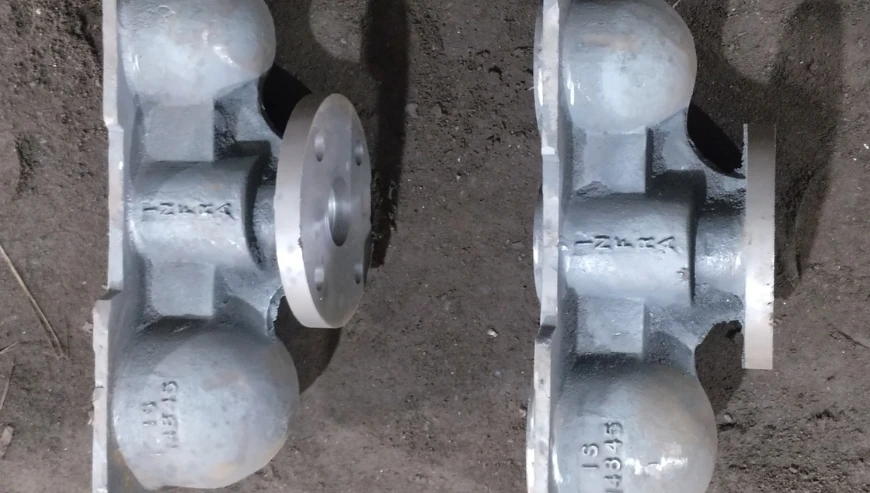

If you spend enough time around foundries or fabrication units, you’ll notice one thing quickly — CI Castings are everywhere. They’re not talked about much because they’re not flashy. But they quietly hold machines together, absorb vibration, and take abuse day after day without complaining.
When clients visit us at Shree Krishna Industries, many already know they need cast iron. What they usually don’t know is which type, why, or how it compares with options like Cast Iron Steel Castings or Stainless Steel Castings. That’s what this guide is for. No theory overload. Just the stuff that actually matters when you’re choosing a casting.
What CI Castings Actually Mean
CI Castings simply mean Cast Iron Castings. Cast iron is an iron alloy with a higher carbon content than steel. That extra carbon changes everything — strength behavior, vibration control, wear resistance, and machinability.
You melt iron, adjust the carbon and silicon levels, pour it into molds, and let it cool. The structure that forms during cooling decides how the casting behaves in real use. That’s why cast iron isn’t “one material.” It’s a family.
And yes, we’ve seen many projects fail simply because the wrong cast iron grade was chosen.
Why Industries Still Depend on CI Castings
Despite newer alloys and materials entering the market, CI Castings remain in demand for a few simple reasons.
First, cast iron handles vibration extremely well. That’s why machine bases, engine blocks, and heavy housings still use it. Steel transmits vibration. Cast iron absorbs it.
Second, it machines cleanly. Tool wear is lower, surfaces come out smoother, and production stays predictable.
Third, it’s cost-effective. For large, heavy components, cast iron often gives better value than steel.
These are practical reasons. Not marketing claims.
Main Types of CI Castings You Should Know
Here’s where things get important. Choosing the wrong type of cast iron can cause cracking, excessive wear, or unexpected failure.
1. Grey Cast Iron Castings
This is the most commonly used cast iron.
- Excellent vibration damping
- Good machinability
- Moderate strength
You’ll see grey iron used in machine beds, pump housings, gearboxes, and engine blocks. If vibration control matters, this is usually the first option we suggest.
2. Ductile (SG) Iron Castings
Ductile iron behaves differently. The graphite structure is spherical, not flake-like.
- Higher tensile strength
- Better impact resistance
- More flexibility under load
When clients need strength closer to steel but still want cast iron benefits, ductile iron makes sense.
3. White Cast Iron Castings
This one is hard. Very hard.
- Excellent wear resistance
- Poor machinability
- Brittle nature
Used mainly in abrasion-heavy environments like liners and grinding parts.
Each type exists for a reason. None of them are interchangeable without consequences.
CI Castings vs Cast Iron Steel Castings
This comparison causes confusion, so let’s clear it up properly.
CI Castings are based on cast iron alloys.
Cast Iron Steel Castings (often just called steel castings) have lower carbon content and behave very differently.
Where CI Castings Perform Better
- Vibration absorption
- Machinability
- Cost for heavy sections
- Thermal stability
Where Steel Castings Perform Better
- High tensile loads
- Shock-heavy applications
- Structural components needing flexibility
We often tell customers this:
If the part mainly supports, holds, or dampens, CI castings work well.
If the part must stretch, bend,
CI Castings vs Stainless Steel Castings
Now this is a different comparison altogether.
Stainless Steel Castings are chosen mostly for corrosion resistance, hygiene, and chemical stability. They cost more, and not without reason.
Choose CI Castings When
- The environment is dry or controlled
- You need vibration damping
- Budget efficiency matters
- Large, heavy components are involved
Choose Stainless Steel Castings When
- Corrosion is unavoidable
- Moisture, chemicals, or salt exposure exists
- Clean surfaces are mandatory
- Long-term appearance matters
In short, stainless steel solves environmental problems. Cast iron solves mechanical problems.
How CI Castings Are Manufactured
From the outside, casting looks simple. Inside a foundry, it isn’t.
The basic steps include:
- Pattern preparation
- Mold making (usually sand molds)
- Metal melting and composition control
- Pouring at the correct temperature
- Controlled cooling
- Fettling and surface cleaning
- Machining if required
The cooling rate and composition control matter more in cast iron than many people realize. Slight changes can alter strength and brittleness significantly. This is where foundry experience counts.
Common Applications of CI Castings
Over the years, Shree Krishna Industries has supplied CI castings for many industries. Some uses never change:
- Machine tool beds
- Pump and valve housings
- Gearbox bodies
- Automotive engine components
- Agricultural machinery parts
- Infrastructure hardware
These parts don’t need shine. They need reliability.
Why Clients Work With Shree Krishna Industries
We don’t approach CI Castings as a catalog item. Every application behaves differently in the field.
Clients usually stay with us because:
- We recommend grades based on usage, not convenience
- Our castings are dimensionally consistent
- Surface quality stays reliable
- We handle CI, Cast Iron Steel Castings, and Stainless Steel Castings under one roof
- Communication stays clear — no unnecessary promises
Foundry work rewards patience and experience. We’ve built both over time.
FAQs
1. What does CI Castings stand for?
CI Castings means Cast Iron Castings.
2. Are CI castings stronger than steel castings?
Not in tensile strength. But they perform better in vibration control and compressive loads.
3. Can CI castings be used outdoors?
Yes, though protective coatings are recommended to prevent corrosion.
4. When should I choose stainless steel instead of CI?
When corrosion, hygiene, or chemical exposure is a major concern.
5. Are CI castings customisable?
Yes. Grades, dimensions, and machining can be customised as per drawings.











Sign in to leave a comment.