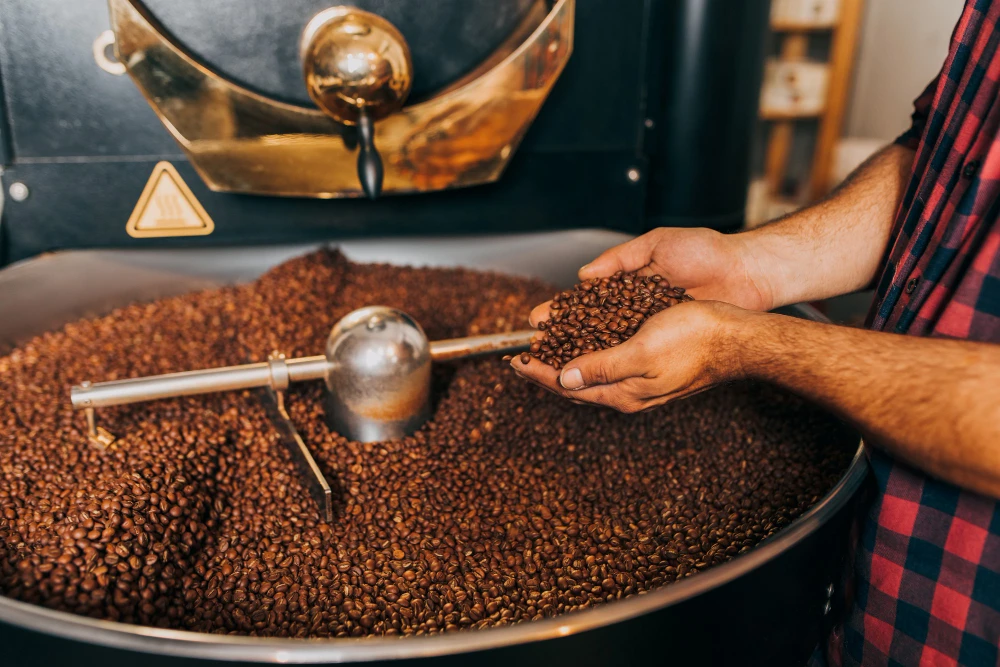

In the past, we looked at where coffee is grown, how it is processed, packaged, and ultimately exported in bags to consumer countries, including ours. Along this entire chain, green coffee gets to coffee factories, where it needs to be roasted so that drinks can be made from the beans. But how is this done? In this article, we will talk about exactly that.
Why do you need to roast coffee?
Raw coffee beans are dense green seeds, consisting of approximately half carbohydrates in various forms and half a mixture of water, proteins, lipids, acids and alkaloids. Green coffee tastes and smells most like peas and is just as hard in structure. It is not recommended to drink green coffee in its pure form and those who say that you can lose weight from it are very wrong, you can get literally "adventures on the ass" - but you are unlikely to lose weight. Therefore, green beans need to be heat treated in order to change the structure of the grain and its biochemistry during the roasting process.
What is coffee roasted on?
Roasting coffee is essentially “cooking” and the goal here is obvious - to make the product as tasty as possible, to reveal the maximum potential of the raw material. “Cooking” is not done in the kitchen, but on professional technical equipment - roasters , the roast master acts as the chef, and it is he who decides what and how to roast.
A coffee roaster is, simply put, a stove that transfers heat to the beans by convection, conduction, and radiation. There are two main types of roasters: some roast coffee in a pseudo-fluidized bed, mainly by convection, while others primarily transfer heat by conduction of the drums. Each of them works differently, but is good in its own way, and any of them can roast coffee perfectly; the "cook" is more important here than the equipment.
How Coffee is Roasted
Roasting green coffee creates countless chemical changes, creating and breaking down thousands of compounds, but if you could simply and briefly describe the coffee roasting process, it would be like this:
First, you need to prepare the equipment and choose a recipe (profile) for roasting coffee. At what temperature will we load green coffee into the roaster, how long will we roast, how and when will we increase the temperature.
The green coffee is then loaded into a heated roasting chamber where it goes through the first stage, the “drying phase.” During the first few minutes, the beans lose most of their moisture, and the change in chlorophyll causes the beans to change color from green to yellow.
The next important stage is the Maillard reaction, a chemical reaction between amino acid and sugar that occurs when heated. We often encounter this reaction in life when we fry meat, bake bread or boil condensed milk. During this time, the coffee beans first change color from yellow to yellow-brown, and then to light brown.
After 75-80% of the total roasting time, the first "crack" (professional term) occurs, which from a common point of view is similar to the popping of popcorn. The first "crack" mainly occurs because the moisture inside the grain heats up, expands, and when it has nowhere to go, it comes out, destroying the cellulose structure. During this period, the coffee acquires a brown color, but already due to the caramelization of sugars.
From the beginning of the first “crack” until the end of roasting, the so-called “development time” occurs; during this period, the taste and aroma of the coffee are finally formed.
If you continue to roast the coffee, you can bring it to the second "crack" which occurs due to the burning of sugars and cell walls. The color of the coffee during the second "crack" will be closer to black, and oils will come out on its surface.
The final stage in coffee roasting is unloading it onto a cooling table, where it is very important to stop all processes inside the grain, quickly cooling it to room temperature.
How Coffee Changes When Roasted
Roasting green coffee causes many changes, both internal and external:
It changes color from green to yellow, then to yellow-brown, then to brown, and then to black. It depends on how you fry it.
Increases almost twice in size.
On the contrary, its density is reduced by half, and the grain becomes more fragile.
It loses from 12 to 24% of its weight, depending on the initial moisture content and the degree of roasting.
Over 800 aromatic compounds are produced inside the coffee bean.
The article has come to an end, in it we tried to explain as simply as possible how coffee is roasted , and if you read it to the end and understood, then for us it is commendable. And if you are not satisfied and want to continue pumping up coffee literacy, then the next article about " Degrees of coffee roasting " should please you.





























Sign in to leave a comment.