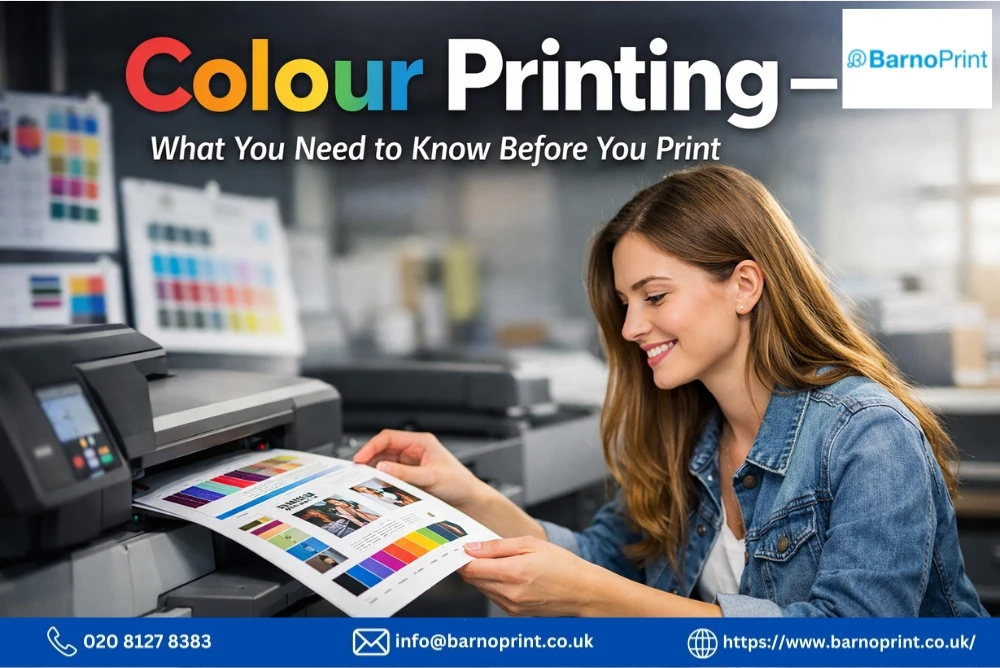
Colour printing delivers accurate, consistent, and high-impact visual communication for business and personal materials. Brands rely on colour printing to produce marketing assets that reflect identity, maintain brand consistency, and attract attention. Quality colour reproduction increases readability, improves visual hierarchy, and strengthens brand recall.
Modern colour printing combines calibrated equipment, controlled colour management systems, and precise file preparation. Print accuracy depends on correct colour models, paper selection, ink density, and production method. Businesses that understand these fundamentals reduce waste, avoid reprints, and control costs.
This guide explains colour printing in clear, direct terms. Each section answers a specific question, then expands with practical detail. Readers gain technical clarity, cost insight, and professional guidance before placing any order.
What is Colour Printing?
Colour printing is the process of reproducing full-colour images and text using layered inks. Commercial printers use the CMYK colour model to create accurate colour blends on paper.
Process begins with digital artwork converted into separations. Printer applies cyan, magenta, yellow, and black inks in controlled percentages. Combined layers produce photographs, gradients, logos, and branded designs with precise tonal balance. Professional colour printing ensures sharp detail, stable ink coverage, and consistent reproduction across batches.
What Are the Types of Colour Printing:
Colour printing includes digital printing and offset lithographic printing.
CMYK vs RGB:
CMYK is the standard colour model for print production. RGB is the standard model for digital screens.
RGB uses red, green, and blue light to create colour on monitors. CMYK uses four ink plates to reproduce colour on paper. RGB files produce dull or inaccurate colours if sent directly to print. Conversion to CMYK ensures predictable output. Professional printers calibrate presses using ICC colour profiles to maintain consistent brand tones.
Digital Colour Printing:
Digital colour printing uses toner or liquid ink technology without printing plates. Digital presses print directly from file to paper.
Digital printing suits short runs between 1 and 1,000 copies. Setup time remains minimal. Turnaround often ranges between 24 and 72 hours. Variable data printing allows personalisation such as names, codes, or targeted messaging. Cost per unit remains stable across low volumes.
Offset Colour Printing:
Offset printing uses metal plates and rubber blankets to transfer ink onto paper. Offset presses deliver precise colour matching and superior consistency.
Offset suits medium to large print runs above 1,000 copies. Unit cost decreases as quantity increases. Large format posters, catalogues, and magazines benefit from offset precision. Pantone spot colours integrate into offset workflows to ensure exact brand reproduction.
Which paper types produce the best results in colour printing?
Paper selection directly affects sharpness, vibrancy, and durability. Surface coating, thickness, and finish influence final output.
- Gloss Coated Paper: High shine enhances image contrast and colour vibrancy. Suitable for brochures, leaflets, and photo prints.
- Silk or Satin Paper: Balanced finish reduces glare while preserving colour clarity. Ideal for corporate reports and premium flyers.
- Uncoated Paper: Natural texture absorbs more ink and produces softer tones. Effective for stationery and letterheads.
- Recycled or FSC-Certified Paper: Environmentally responsible option with professional print quality. Suitable for brands prioritising sustainability.
Paper weight ranges between 90gsm for flyers and 350gsm for premium business cards. Heavier stock increases durability and perceived value.
What is the Cost of Colour Printing?
Colour printing cost depends on quantity, size, paper type, and finishing. Digital A4 flyers printed at 150gsm range between £0.08 and £0.25 per unit at 1,000 copies. Offset runs reduce cost to below £0.05 per unit at 10,000 copies.
Finishing processes increase pricing. Lamination adds £0.03–£0.10 per unit. Spot UV adds £0.08–£0.15 per unit. Perfect binding for catalogues ranges between £1.20 and £3.50 per book depending on page count. Artwork errors increase cost through reprints. Proper file setup prevents wasted production runs.
What should you look for when selecting a colour printing provider?
Reliable providers deliver accurate colour, clear pricing, and production transparency.
- Colour Calibration Standards: Provider uses ICC profiling and Pantone matching systems to maintain consistent output.
- Print Samples and Proofing: Supplier provides digital proofs or hard-copy proofs before full production.
- Equipment Capability: Modern presses support high resolution printing at 300dpi or above.
- Turnaround and Delivery Reliability: Clear production timelines and tracked delivery prevent delays.
Experienced print providers maintain quality control checkpoints throughout production.
Final Thoughts
Colour printing remains a critical tool for brand communication and marketing visibility. Correct colour model selection ensures accurate reproduction. Digital printing suits short runs and fast turnaround. Offset printing delivers cost efficiency and consistency for large volumes. Paper choice influences texture, durability, and visual impact. Cost depends on volume, materials, and finishing options.
Businesses that prepare files correctly and select reputable providers avoid production errors. Accurate colour, consistent output, and professional finishing strengthen brand perception and customer trust.
Colour printing delivers measurable value when planned with technical precision and professional execution.
Frequently Asked Questions (FAQs)
Q: What resolution is required for colour printing?
A: Resolution must be 300dpi at final print size to ensure sharp detail and clear imagery.
Q: Why do printed colours look different from screen colours?
A: Screens use RGB light. Printers use CMYK ink. Colour shift occurs without proper conversion and calibration.
Q: What bleed setting is required for print files?
A: Bleed must extend 3mm beyond trim edges to prevent white borders after cutting.
Q: How long does colour printing take?
A: Digital printing completes within 1–3 working days. Offset production ranges between 5–7 working days depending on volume.
Q: Which finish increases durability?
A: Matt or gloss lamination increases resistance to moisture, scratches, and handling damage.

























Sign in to leave a comment.