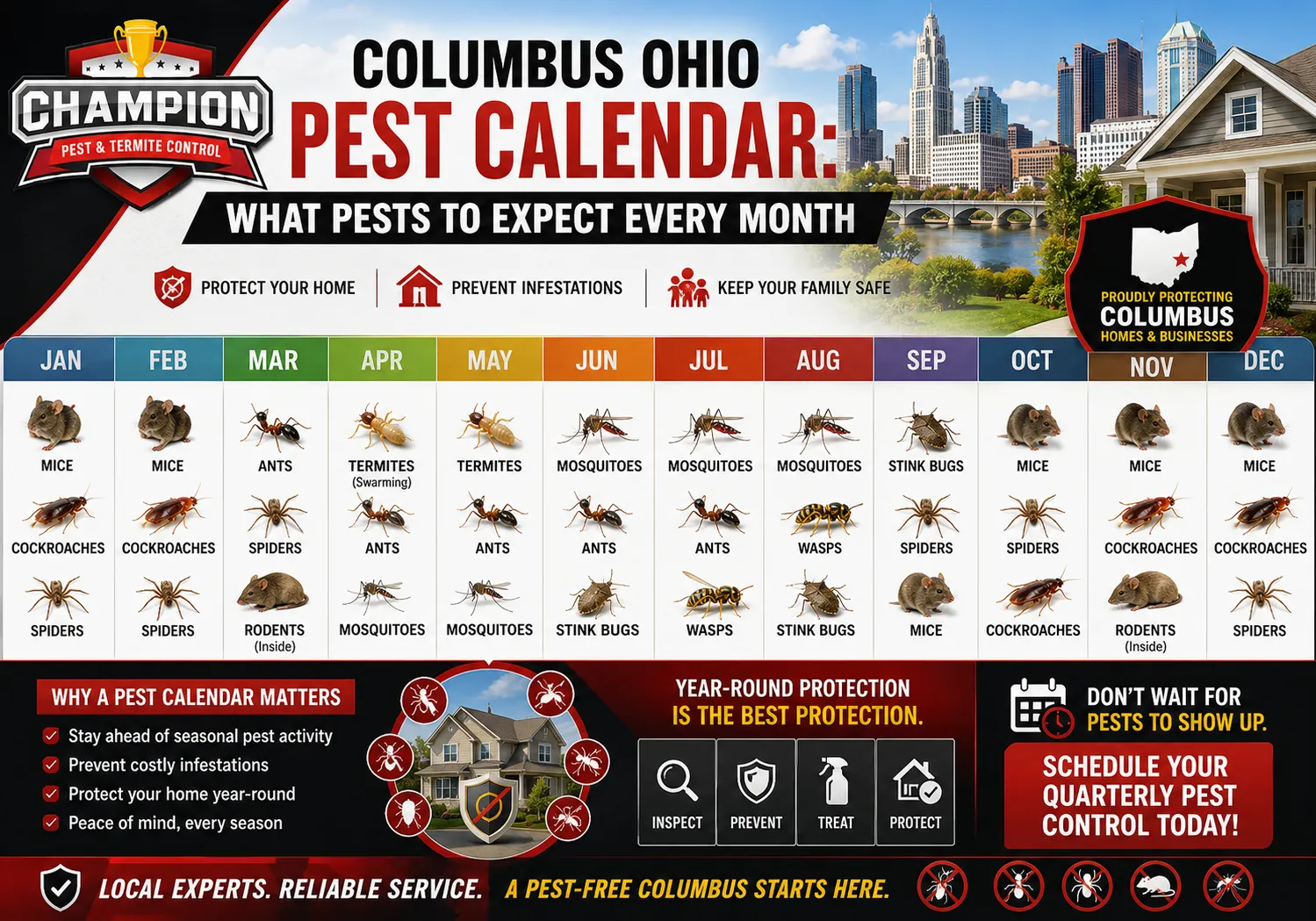

Many pest problems in Columbus follow predictable seasonal patterns. Termites become active in spring, mosquitoes thrive through summer, and rodents begin looking for warm shelter as temperatures drop. Knowing what to expect each month helps homeowners and commercial property managers take preventive action before a small issue turns into an expensive infestation.
A year-round pest control service focuses on prevention instead of reacting after pests have settled indoors. The calendar below explains when common Ohio pests are most active and what signs deserve immediate attention.
Why Do Pest Problems Change Throughout the Year in Columbus?
Ohio experiences four distinct seasons, and each one creates different conditions for pests. Temperature, rainfall, humidity, and food availability all influence when insects and rodents become active.
Spring encourages insects to reproduce. Summer brings ideal breeding conditions for mosquitoes and stinging insects. Cooler weather in fall sends rodents indoors, while winter pests remain hidden inside walls, crawl spaces, and basements.
For homeowners, understanding these seasonal changes makes preventive maintenance easier. For commercial properties such as hospitals, offices, restaurants, warehouses, and apartment communities, routine inspections help reduce health risks and protect buildings from avoidable damage.
What Pests Should You Expect Each Month?
January Through March
Winter may seem quiet, but pest activity continues indoors.
Common pests include:
- Mice
- Rats
- Cockroaches
- Spiders
Rodents search for warmth and dependable food sources during these months. Small openings around utility lines, doors, and foundations often become entry points.
Late winter is also a good time to schedule termite inspections before swarming season begins.
April Through June
As temperatures rise, insect activity increases across Central Ohio.
Common pests include:
- Eastern subterranean termites
- Carpenter ants
- Mosquitoes
- Wasps
- Bees
Spring rainfall keeps soil moist, creating favorable conditions for termite colonies. Homeowners may notice winged termites emerging near windows or doors, while carpenter ants become more active around damp wood.
Standing water left by spring showers also provides breeding sites for mosquitoes. Eliminating water from flowerpots, clogged gutters, birdbaths, and outdoor containers can help reduce mosquito populations before summer arrives.Top of Form
July Through September
Summer brings peak pest activity across Columbus.
Common pests include:
- Mosquitoes
- Wasps
- Hornets
- Fleas
- Ticks
- Spiders
Warm temperatures and high humidity allow mosquito populations to multiply quickly, especially after heavy rain. Besides being a nuisance, mosquitoes can carry diseases such as West Nile virus, which is reported in Ohio every year.
Wasps and hornets also become more aggressive as their colonies grow. Nests are commonly found under roof eaves, decks, sheds, and trees. Removing nests without proper equipment can increase the risk of painful stings.
If outdoor gatherings are becoming uncomfortable and you've started searching in Columbus for "mosquito control near me," or “pest control services near me”, professional treatments can reduce mosquito breeding areas and provide longer-lasting relief than store-bought sprays.
October Through December
As temperatures cool, many pests begin moving indoors.
Common pests include:
- Mice
- Rats
- Spiders
- Cockroaches
- Stink bugs
Rodents can squeeze through surprisingly small openings around foundations, garage doors, and utility lines. Once inside, they build nests, contaminate food, and may damage electrical wiring by chewing on insulation.
Fall is also an ideal time for preventative exterior treatments that help reduce winter pest activity before insects and rodents establish themselves indoors.
How Can You Identify Termites Before Serious Damage Occurs?
Termites often remain hidden until significant structural damage has already occurred. Knowing how to identify termites early can save thousands of dollars in repair costs.
Watch for these warning signs:
- Pencil-sized mud tubes along foundations or basement walls.
- Hollow-sounding or damaged wood.
- Swarms of winged termites during spring.
- Piles of discarded wings near windows and doors.
- Doors or windows that suddenly become difficult to open because damaged wood has begun to warp.
Unlike carpenter ants, termites consume wood from the inside out, making damage difficult to spot during routine cleaning. Annual professional inspections are one of the most effective ways to detect activity before repairs become extensive.
Expert Insight: Prevention Beats Costly Infestations
Preventive inspections are designed to catch pest activity before it causes structural damage or creates health concerns. This approach is especially valuable for homes, healthcare facilities, offices, restaurants, and other commercial properties where pest issues can quickly become disruptive.
| Industry Finding | Why It Matters |
| The National Pest Management Association estimates termites cause more than $5 billion in property damage annually in the United States, and most homeowner insurance policies do not cover termite damage. | Early termite inspections can help detect colonies before structural repairs become necessary. |
| The Centers for Disease Control and Prevention (CDC) states mosquitoes are the deadliest animals in the world because they spread diseases that affect millions of people globally each year. | Reducing breeding sites and scheduling seasonal mosquito treatments lowers exposure during peak activity. |
| Ohio experiences termite swarming primarily during spring when soil temperatures rise and moisture levels increase. | Scheduling inspections before or during spring improves the chances of finding colonies early. |
Professional Recommendation
Many property owners wait until pests become visible before calling for help. In practice, the best results come from seasonal inspections that match Ohio's pest activity. Spring inspections focus on termites, summer treatments target mosquitoes and stinging insects, while fall services help keep rodents from moving indoors before winter.
When Should Homeowners and Businesses Schedule Pest Control?
A single treatment rarely provides year-round protection because pest activity changes with the seasons.
A preventive schedule usually delivers better long-term results:
- Early spring: Inspect for termites and treat emerging insects.
- Summer: Control mosquitoes, ants, and stinging insects.
- Fall: Seal entry points and address rodents before temperatures drop.
- Winter: Monitor indoor pest activity and inspect vulnerable areas.
Routine service also helps businesses maintain a cleaner, safer environment while reducing the risk of interruptions caused by unexpected infestations.
Stay Ahead of Seasonal Pest Problems
Pests in Columbus follow predictable seasonal patterns, making prevention far more effective than waiting until an infestation becomes obvious. Understanding what pests are active each month allows homeowners and property managers to protect their property, reduce repair costs, and maintain a healthier environment throughout the year.
Champion Pest & Termite Control has more than 40 years of experience helping residential and commercial customers stay protected in every season. If you're in Columbus and have been searching for "termite pest control near me," or "local pest control near me," you can connect to them. Schedule a professional inspection today and take a proactive approach to year-round pest management.
Frequently Asked Questions
What month do mosquitoes go away in Ohio?
Mosquito activity usually begins to decline in late October after the first hard frost. During mild autumns, mosquitoes may remain active into early November, especially around standing water and sheltered areas.
What is the new invasive pest in Columbus, Ohio?
One of the newest invasive pests affecting Ohio is the Spotted Lanternfly. While it does not bite people or damage buildings, it feeds on many trees and ornamental plants and has become a growing concern across parts of the state. Residents are encouraged to report sightings to the Ohio Department of Agriculture.
What is the hardest pest to get rid of?
Termites, bed bugs, German cockroaches, and rodents are among the most difficult pests to eliminate because they reproduce quickly, hide in inaccessible areas, or live in large colonies. Successful control often requires professional treatment and ongoing monitoring.






























Sign in to leave a comment.