
When my cousin was setting up his gym three years ago, he called me one afternoon completely overwhelmed. He had already sorted out the squat racks, the cable machines, the flooring. But he kept going back and forth on benches. I remember thinking, how complicated can a bench really be? Then he walked me through what he was looking at and I completely understood why he was stuck.
Benches in a commercial setting are not a small decision. People will use them every single day. They will be dropped on, sat on hard, loaded up with heavy dumbbells, and adjusted hundreds of times a week. Getting this wrong means replacing them sooner than you planned, or worse, having something fail on a member mid-set.
Understand What "Commercial" Actually Means
Walk into any big box sporting goods store and you will find benches that look perfectly fine. Nice padding, clean finish, reasonable price. But those are built for someone using them three times a week in their garage. A commercial flat bench or commercial adjustable bench is an entirely different animal.
The Commercial Flat Bench: Underrated and Incredibly Useful
People sometimes dismiss the commercial flat bench as too basic. But talk to anyone who has managed a busy gym for a few years and they will tell you the flat bench earns its spot every single day.
There are no moving parts to maintain. No adjustment mechanism to loosen up over time. Members sit down, set up, and get to work. For bench press stations, that is exactly what you want. For dumbbell rows, step-ups, seated overhead work, tricep dips, the commercial flat bench handles all of it without any complaints.
In high traffic facilities especially, simplicity is an advantage. The fewer things that can go wrong, the fewer things that will go wrong.
The Commercial Adjustable Bench: Worth Every Extra Dollar in the Right Setting
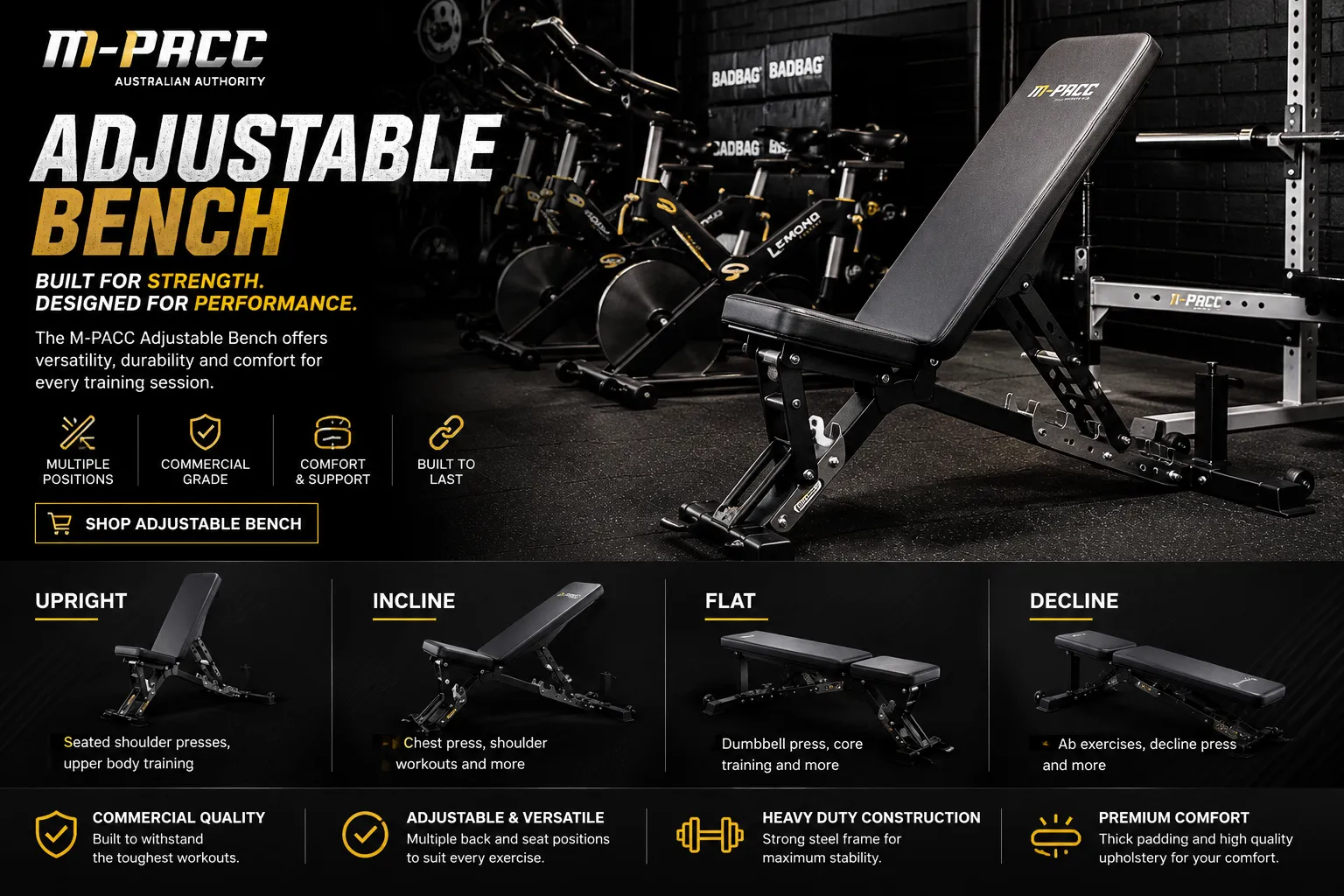
A commercial adjustable bench takes everything a flat bench offers and adds a whole lot more on top. Incline press, decline work, seated shoulder press at different angles, the range of movements you can program around an adjustable bench is genuinely impressive.
Personal training studios tend to love them for exactly this reason. A trainer can take a client through an entire upper body session without ever leaving one piece of equipment. For small group training setups or facilities with limited floor space, a commercial adjustable bench does a lot of heavy lifting in not a lot of square footage.
The one thing to be careful about is the quality of the adjustment mechanism. In a commercial environment that hinge or pop-pin system gets used constantly. You want it to lock in clean and stay locked at every single angle. If it starts to feel loose or slow after a year, that is a sign the bench was not truly built for commercial use regardless of what the label said.
Flat or Adjustable, Which One Does Your Facility Actually Need
Here is the honest answer. Most gyms need both. A handful of commercial flat benches at your dedicated pressing stations, and a good number of commercial adjustable benches spread through your free weights area gives members everything they could need.
If budget is tight and you genuinely have to choose just one to start with, think about your membership. A general population gym with beginners and intermediate lifters will almost always get more mileage out of the commercial adjustable bench simply because of how many different exercises it supports. A facility focused on powerlifting or serious strength training might actually prefer the rock-solid stability of a commercial flat bench at every station.
Buy It Right the First Time
Whatever direction you go, do not let price be the only thing driving the decision. Check the steel gauge. Look at the stated weight capacity and whether it is realistic. Ask the supplier how long the warranty covers the frame versus the upholstery.

























Sign in to leave a comment.