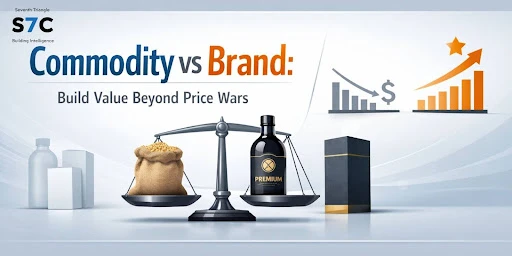

Understanding the difference between a commodity Vs brand is now essential for businesses operating in today’s highly competitive marketplace. Many businesses operate as commodities, primarily competing on price; meanwhile, some have established strong brands that enable them to build brand loyalty, charge premium prices, and maintain long-term trust with customers.
To achieve sustainable growth, you must first understand the Difference between a commodity and a brand, and then how to transition from being a commodity to being a brand.
Commodity Products vs Branded Products: What Sets Them Apart?
The main difference between a commodity product and a branded product is the customer’s perception of the products. A commodity product is interchangeable with other similar products, meaning the customer sees no difference between your product and your competitor’s product; therefore, price will determine which product will sell. This results in businesses having a very tight profit margin, making them constantly resort to discounting their products.
Branded product creates an emotional attachment with their customers and have a higher perceived value than commodity products. It is the emotional attachment and perceived value that separates a brand from a commodity. When customers purchase branded products, they are purchasing the trust, experience, reputation, and identity.
In conclusion, Brand Value is determined by a customer’s perception and level of loyalty to the brand. In contrast, Commodity Value is determined by the price and availability of the commodity.
The Risk of Competing as a Commodity
Companies that are in commodity pricing spaces will not usually have price options; they will use a lower price as a competitive advantage. This means they have to compete with each other based on low prices because there are no other points of difference between their products/services and those of their competitors. Therefore, understanding the difference between brand differentiation and commodity pricing will be essential.
Commodity pricing is about being cheaper than the competition; brand differentiation is about being a better product/service than the competition, being different from your competition and being remembered by customers.
When your business model is based on low pricing, the growth potential becomes minimal due to the lack of options. Because of this, many companies are reevaluating their go-to-market strategy regarding brand versus commodity marketing, in an attempt to get away from continually engaging in price wars.
Why Branding Is Important in Commodity Markets
Most entrepreneurs think about branding as only being in connection with luxury brands or lifestyle brands, but that is a misconception. Branding is probably one of the most powerful lessons of business today regarding why you should continue to pay attention to branding when you are operating in a commodity market. Overall, it is estimated that in several industries where the products are similar or standardised branding can:
- Increase the perceived value of the product
- Create trust and credibility with customers
- Lower customers' price sensitivity to the product
- Increase the likelihood that customers will buy from you again
- Create word-of-mouth marketing
When you create a brand, you are changing the way your customers think about your business and your product(s) from "how cheap am I able to get this" to "now that I've considered you, what is the value and why would I consider getting this from you?"
How to Turn a Commodity into a Brand
If you’re looking to create a brand from a commodity, you do so strategically based on your positioning and experience.
Practical Steps To Take:
- Clearly Identify Your Unique Positioning.
- Build An Emotional Connection.
- Create A Higher-Level Customer Experience.
- Establish Visibility & Authority as A Brand.
Applying Commodity Branding Techniques Will Transition The Market From Pricing-Based To Value-Driven Differentiation.
Escaping Commodity Competition Through Branding
Creating a strong brand through the use of a premium pricing strategy creates long-term profitability by allowing the business to escape from competing with other businesses on price only. As a result, when a customer sees you as unique, they are not simply comparing apples to apples when making a purchasing decision, but include a more holistic approach, including price and various other considerations.
Thus, the decision between premium brands, as opposed to commodity businesses, becomes strategic. The business model for commodities is volume-based and focused on minimal profits. In contrast, premium brands focus on maximising profits through loyalty and building brand equity.
While there are no guarantees that all customers will view you as a premium brand, you must separate yourself from your competitors to achieve this.
Commodity vs Brand Marketing Strategy: Making the Shift
Consistency is vital to creating a successful strategy; therefore, your business's visual identity, messaging, price points, and customer communications should all align with your overall brand positioning.
Branding is not just a logo; rather, it is the experience and feelings that individuals have when they interact with your company.
Final Thoughts
The discussion of commodities versus brands ultimately revolves around long-term vision. Competing as a commodity can help you generate short-term sales, but the real, long-term success is achieved through creating a brand. Creating a strong brand creates loyalty from consumers, allows you to charge more for your products, and provides you with sustained growth opportunities that commodities will never have.
If you want to enjoy higher margins, less price competition, and clear differentiation within your market, you must change from viewing your business and products from a commodity perspective to a branding perspective. Companies that create brands continue to outperform those that sell commodities. By investing in and creating brand equity, companies create the potential for lasting success.
At Seventh Triangle, this foundational principle drives everything we do. We partner with businesses to help them move away from competing solely based on price, and instead create powerful, differentiated brands rooted in a long-term growth strategy.




























Sign in to leave a comment.