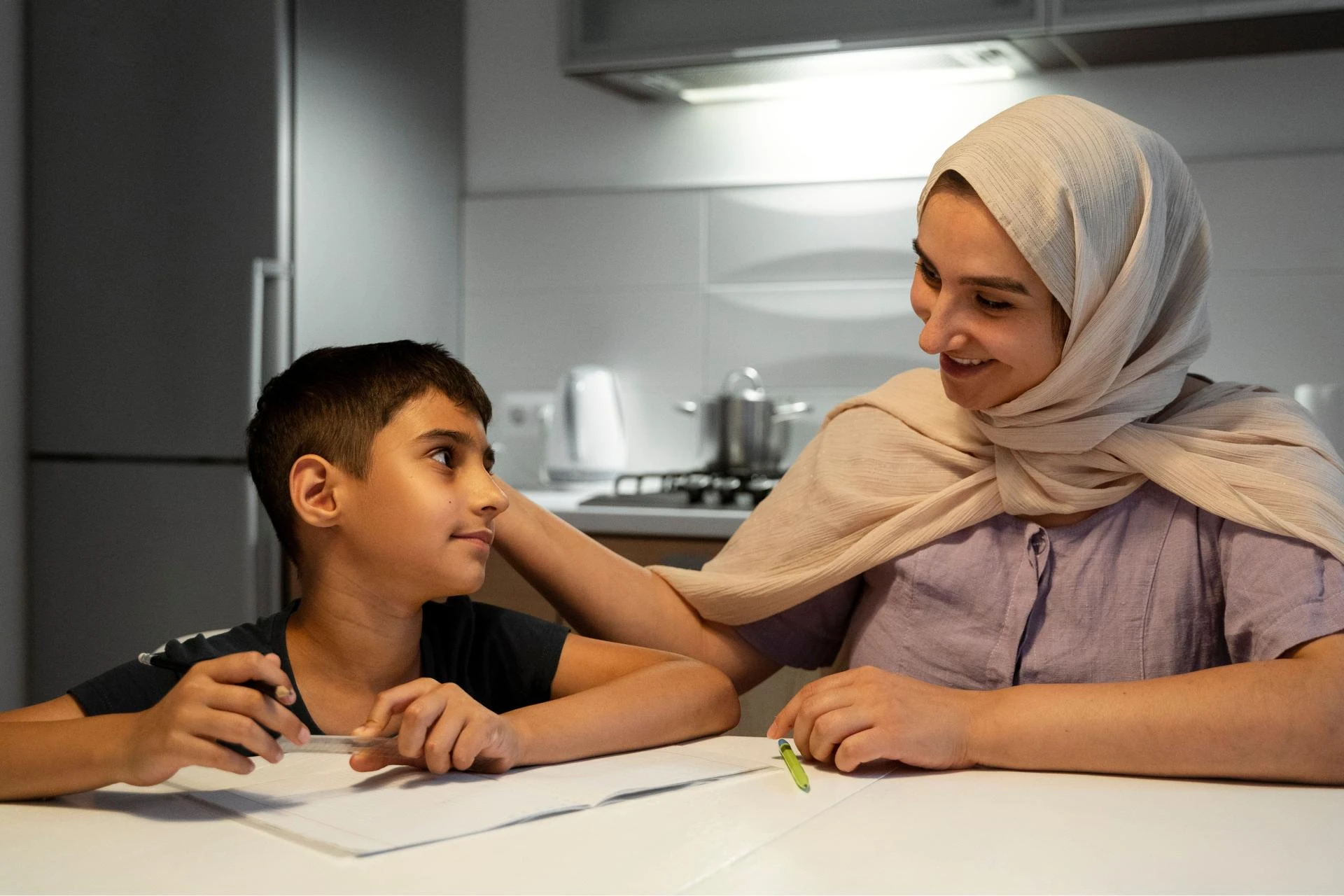

Arabic is one of the most beautiful, expressive, and historically rich languages in the world. It connects children to culture, identity, storytelling, and millions of speakers across continents. For many parents, introducing Arabic to their children represents more than education — it represents belonging, heritage, opportunity, and global awareness.
Yet, despite its value, many children struggle while learning Arabic. The language feels different, the script looks unfamiliar, pronunciation seems tricky, and the learning journey may feel overwhelming. Parents may also feel unsure about how to guide and support their children, especially if Arabic is not their first language.
The truth is simple: every language comes with challenges. What matters is not avoiding them, but understanding them — and approaching learning with patience, encouragement, creativity, and consistency.
This article breaks down the most common obstacles children face while learning Arabic and offers realistic, practical strategies parents can use at home to help them succeed with confidence and enjoyment.
Why Arabic Can Feel Challenging for Children
Arabic is deeply structured, phonetic, and logical, but it is different from English and many other widely spoken languages. These differences can create early learning hurdles.
Some include:
- A completely different alphabet system
- Unique pronunciation sounds
- Right-to-left reading and writing
- Verb-root patterns and grammatical rules
- Variations between spoken dialects and Modern Standard Arabic
However, none of these challenges are permanent barriers. Children are naturally adaptable — especially when the learning environment is supportive, interactive, and pressure-free.
Understanding the roadblocks is the first step toward overcoming them.
Challenge 1: The Arabic Alphabet Feels Difficult or Intimidating
Many children are familiar with the Latin alphabet from an early age. When they first encounter Arabic, the script may feel unfamiliar, complex, or confusing. Letters change shape depending on their position in a word, which can make recognition harder.
Some kids may lose confidence quickly if they feel they aren’t learning fast enough.
How to Overcome It
Start slowly and make the alphabet visual, tactile, and playful:
- Introduce two or three letters at a time
- Use alphabet puzzles, magnetic letters, clay modeling, or tracing
- Show how letters connect to form simple, familiar words
- Display the alphabet chart at home for daily exposure
Focus on recognition first, not perfect writing. With repetition and gentle practice, patterns start to make sense naturally.
Challenge 2: Pronunciation Feels Unfamiliar
Arabic includes several sounds that do not exist in English, such as ع (Ayn), غ (Ghayn), ص (Saad), and ق (Qaf). Children may feel shy, frustrated, or embarrassed if they cannot produce these sounds correctly.
Some may worry about being laughed at or corrected too much.
How to Overcome It
Make pronunciation a listening experience rather than a performance:
- Let children hear native speakers through songs, stories, and videos
- Repeat words together casually and playfully
- Avoid correcting mistakes harshly
- Practice in front of a mirror so they can observe mouth movement
- Turn pronunciation into a guessing or imitation game
Celebrate effort, not precision. Accuracy improves naturally with exposure, confidence, and time.
Challenge 3: Mixing Dialects and Modern Standard Arabic
Arabic is not a single spoken form. Children may hear Lebanese Arabic at a friend’s house, Egyptian Arabic in cartoons, Gulf Arabic in public spaces, and Modern Standard Arabic in books and classrooms. This variety can confuse them.
They may not understand why one word changes depending on region or situation.
How to Overcome It
Clarify that:
- Modern Standard Arabic (Fus’ha) is used for reading, writing, media, and formal speech
- Dialects are for everyday conversation
Choose one dialect or focus on Fus’ha for consistency, especially in early learning. Later, children can easily adapt to other varieties once they have a strong foundation.
Consistency reduces confusion — not exposure.
Challenge 4: Limited Daily Exposure to Arabic
Just like any language, Arabic requires regular interaction. If children only practice once a week, retention becomes harder. They may forget vocabulary, lose motivation, or feel disconnected from the language.
How to Overcome It
Short, daily exposure is more powerful than long, occasional lessons.
Examples:
- Use simple Arabic greetings at home
- Play Arabic songs during meals or car rides
- Introduce one new vocabulary word each day
- Read bedtime stories in Arabic
- Label household objects with Arabic words
When Arabic becomes part of family life, learning feels natural, effortless, and familiar.
Challenge 5: Learning Feels Boring, Repetitive, or Textbook-Heavy
Children disengage quickly if learning feels like memorization or pressure. Worksheets alone cannot sustain interest, especially for younger learners.
How to Overcome It
Make learning interactive:
- Use games, puzzles, crafts, matching activities, and storytelling
- Turn vocabulary into scavenger hunts
- Let children draw words they’ve learned
- Encourage acting out Arabic words or sentences
Children remember what they enjoy. Joy is a more powerful teacher than discipline.
Challenge 6: Lack of Confidence or Fear of Making Mistakes
Many children hesitate to speak Arabic because they worry about mispronouncing words or forgetting vocabulary. This fear blocks progress.
How to Overcome It
Create a safe, supportive learning environment:
- Praise attempts, not perfection
- Avoid correcting every mistake
- Encourage kids to try again without pressure
- Model curiosity by learning alongside them
Confidence grows when children feel respected, heard, and celebrated.
Challenge 7: Parents Don’t Speak Arabic Themselves
Parents sometimes believe they cannot help their children learn Arabic simply because they do not know the language. This can create hesitation, delays, or reliance solely on teachers.
How to Overcome It
You don’t need fluency to support your child.
You can:
- Learn alongside them
- Play Arabic songs, videos, and audiobooks
- Use bilingual storybooks
- Practice vocabulary together
- Ask them to teach you — children love feeling knowledgeable
When parents show enthusiasm, children do too.
Challenge 8: Children Prefer English or Their First Language
If a child already feels comfortable using a primary language, Arabic may seem secondary or unnecessary. They may avoid speaking it or respond in their more familiar language.
How to Overcome It
Avoid forcing or comparing languages. Instead, increase the emotional value of Arabic:
- Talk about family stories and cultural roots
- Celebrate Arabic phrases used correctly
- Connect Arabic to real-world relevance — travel, friendships, media, experiences
When children understand the purpose of the language, motivation improves naturally.
Challenge 9: Inconsistent Teaching Methods Across Home and School
Some children switch between different learning approaches, teachers, levels, or dialects, which can feel overwhelming.
How to Overcome It
Align learning environments when possible:
- Ask teachers for progress updates
- Review what is being taught in class
- Reinforce school lessons at home in fun ways
- Use similar vocabulary lists and reading materials
Consistency gives children structure, clarity, and confidence.
Challenge 10: Learning Without Cultural Context
Arabic is more than letters, grammar, and vocabulary. When children don’t understand its cultural, historical, and emotional significance, they may lose interest.
How to Overcome It
Bring culture into learning:
- Cook Middle Eastern dishes at home
- Listen to Arabic stories, poetry, or folk tales
- Watch Arabic cartoons or family films
- Explore traditional music, calligraphy, and celebrations
- Share personal memories, heritage, or travel experiences
Culture makes the language come alive.
Final Tips for Parents Supporting Arabic Learners
- Be patient — language learning is a long-term journey
- Celebrate progress, not perfection
- Keep lessons short, playful, and consistent
- Encourage curiosity rather than performance
- Avoid comparison with siblings, classmates, or peers
- Model excitement about learning Arabic
Children learn best when they feel supported, not evaluated.
Final Thoughts
Every child learning Arabic will experience obstacles at some point — confusion, hesitation, boredom, distraction, pronunciation struggles, or uncertainty. These challenges are normal, expected, and temporary.
What matters most is creating an environment where learning feels enjoyable, meaningful, and emotionally safe. With consistent exposure, patience, creativity, and positive reinforcement, children not only overcome difficulties — they develop confidence, pride, and genuine love for the language.
And over time, this foundation prepares them for deeper study, reading fluency, stronger communication skills, and even structured programs such as Arabic learning for kids offered through schools, tutors, and community-based learning environments.
Arabic is not just a language. It is a lifelong gift — one that grows with practice, curiosity, and family involvement. When children enjoy the journey, the progress follows naturally.
































Sign in to leave a comment.