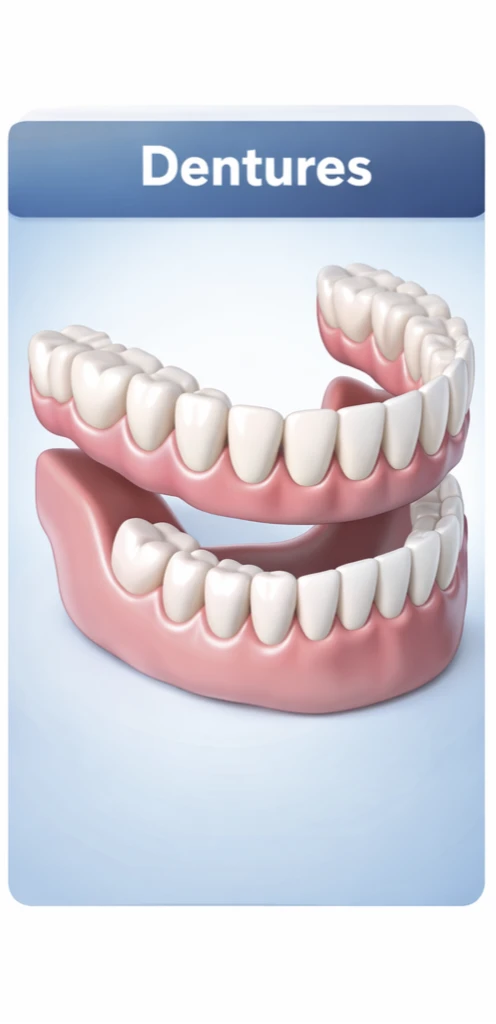
Restoring your smile, enhancing your speech and eating abilities, and increasing your self-confidence are all possible with dentures. Affordable dentures that are tailored to your mouth and lifestyle, enabling you to speak, smile, and chew with ease. However, problems may arise with even well-fitting dentures, particularly as your mouth changes or adapts over time.
1. Poor Fit or Loose Dentures
The Issue:
Over time, your gums and jawbone can change shape after tooth loss. This may cause dentures that once fit well to become loose or slip when eating, speaking, or laughing.
Fix:
Denture Adjustment or Relining: To better fit the curves of your gums, your dentist may reline the base of your dentures. This enhances comfort and stability.
Denture Adhesive: If the fit has changed significantly, temporary denture adhesives are not a long-term solution, but they can offer additional support.
Implant-supported dentures are anchored to dental implants in the mandible for long-lasting security, providing exceptional stability and bite strength.
2. Sore Spots and Irritation
The Problem: Sore spots, irritation, or even tissue inflammation can occur when dentures rub unevenly against the gums, particularly when the dentures are new or poorly fitted.
Correct:
Professional Adjustment: Where the dentures are putting too much pressure, a dentist can adjust them.
Soothing Rinse: While you and your dentist work on a long-term solution, warm salt water rinses can help reduce irritation momentarily.
Giving Your Mouth Breaks: While taking out your dentures for brief periods of time can help soothe minor irritants, a dentist should be consulted if your pain persists.
3. Difficulty Eating Certain Foods
The Issue: Chewing can be difficult at first, especially when eating tough, sticky, or hard foods. The bite force of natural teeth is not replicated by dentures.
Fix:
Start With Soft Foods: Cut food into smaller, more manageable portions and start with softer foods like yogurt and cooked vegetables.
Practice Your Bite: To balance pressure, chew on both sides of your mouth and gradually reintroduce firmer foods.
Enquire About Adjustments: If chewing is still challenging weeks after receiving dentures, it may indicate that the occlusion (the way your dentures meet) or fit needs to be adjusted.
4. Trouble Speaking Clearly
The Issue: At first, new dentures may feel strange, which may momentarily impair speech. Many wearers report lisping or having trouble pronouncing some sounds.
Fix:
Practice Speaking: Speaking slowly or reading aloud will help your mouth get used to the new device more quickly.
Dentist Adjustment: Your dentist may examine the fit of your denture and make minor adjustments to enhance comfort and clarity if your speech problems continue.
5. Cleaning and Care Challenges
Dentures must be cleaned and stored properly to avoid bacterial growth, odors, and warping. They can be harmed by hot water or ordinary toothpaste.
Daily Cleaning: Use a soft brush and a specialised denture cleaner to brush your dentures every day.
Proper Storage: To keep dentures moist and avoid deformity, soak them in water or a denture solution when not in use.
Regular Dental Check ups: Even comfortable dentures should be evaluated periodically to ensure they continue to fit well and function properly.
6. Chronic Problems That Require Professional Care
Persistent denture problems can occasionally extend past the initial period of adjustment. These consist of:
1. Dry mouth or excessive saliva can be uncomfortable and interfere with the adhesion of dentures.
2. Ulcers or gum infections brought on by stress or inadequate personal hygiene.
3. Damage or cracks in the denture material that call for expert repair as opposed to do-it-yourself solutions.
Consult your dentist for evaluations, relines, repairs, or even upgraded denture options like implant-supported designs if problems persist despite at-home care.
Conclusion:
Custom-crafted dentures are designed to restore your smile, self-esteem, and oral function. However, like any dental appliance, they may need to be adjusted or maintained over time to remain comfortable and functional.
With routine cleaning, regular dental visits, and timely professional fixes for common problems like loose fit, sore spots, or chewing challenges, dentures can help you enjoy everyday activities like eating, speaking, and laughing with confidence.


























Sign in to leave a comment.