

The U.S. immigration process leaves very little room for error. Whether you are applying for a work visa, adjusting your status, or petitioning for a green card, even a small oversight can trigger serious consequences - delays, Requests for Evidence (RFEs), outright denials, or worse, removal proceedings. Understanding the most common immigration mistakes is the first line of defense for anyone navigating this process. Every year, thousands of applicants lose time, money, and legal status not because their cases were weak, but because of avoidable errors made during filing or petition preparation. This article walks you through the most critical common immigration pitfalls and, more importantly, the steps to avoid the common immigration mistakes that put your future at risk - and how Somireddy Law Group helps clients across Virginia, New Jersey, and Pennsylvania get it right from day one.
What Are the Most Costly Immigration Process Errors?
Not every mistake carries the same weight, but several recurring errors consistently derail applications across visa categories. Understanding where applicants go wrong is the starting point for protecting your case.
- Outdated USCIS forms: Filing on old form editions leads to automatic rejection, even when your petition is otherwise complete.
- Blank or incomplete fields: Leaving required sections empty causes USCIS to return the entire application package without adjudication.
- Personal detail mismatches: Name, date of birth, or passport number inconsistencies across documents raise immediate red flags with immigration officers.
- Incorrect filing fees: Submitting the wrong payment amount or using an unsupported payment method results in outright rejection before the petition is even reviewed.
- Missing certified translations: Any foreign-language document submitted without an accompanying certified English translation will be treated as incomplete evidence.
Each of these errors is fully preventable. The damage they cause, however, can take months or even years to undo within the immigration process.
How Does a Visa Overstay Affect Your Immigration Case?
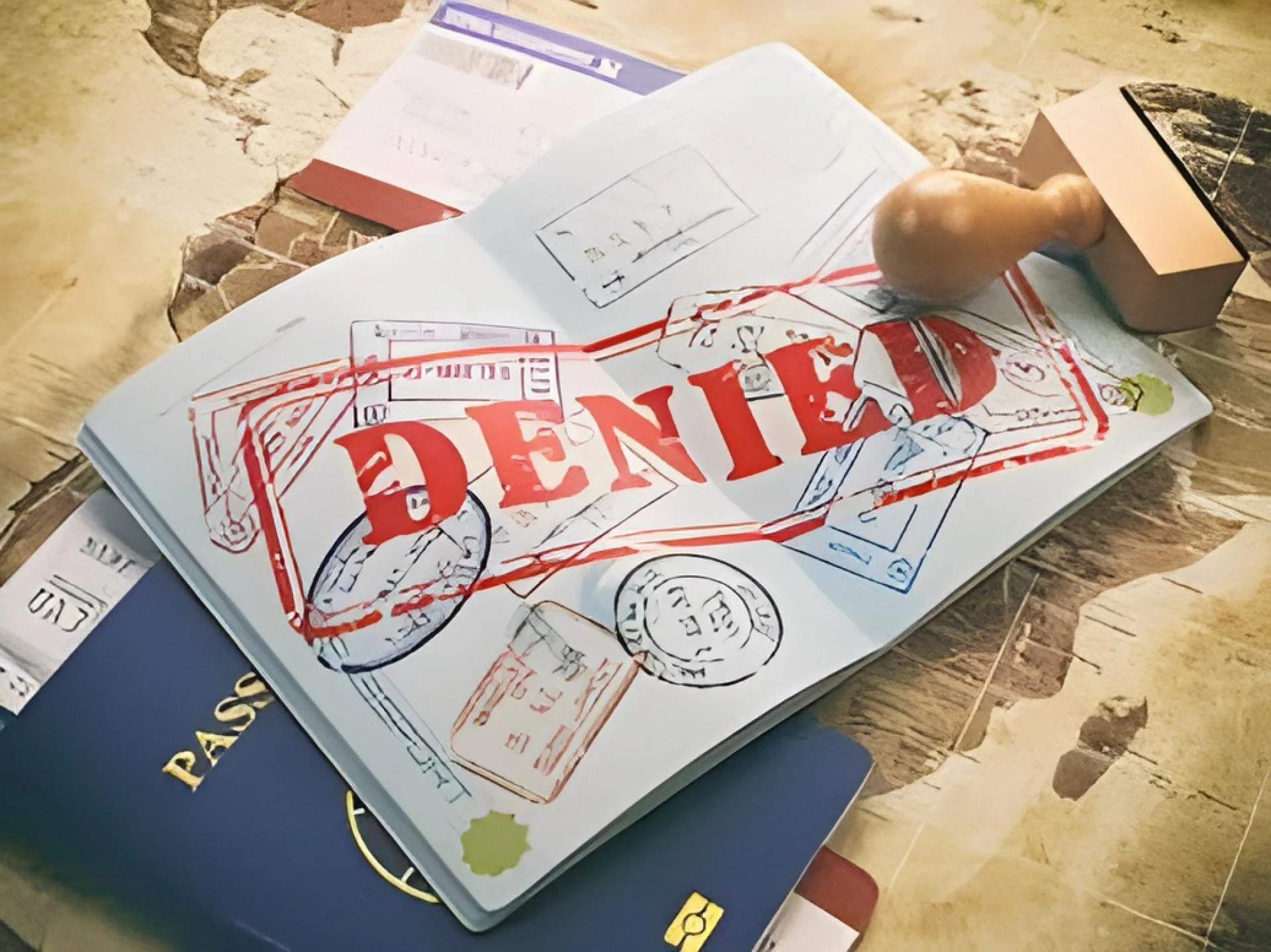
Visa overstay is one of the most serious - and most frequently committed - mistakes in the immigration process. Many applicants underestimate how staying beyond an authorized period of admission can affect every future application they file.
- Accrual of unlawful presence: Overstaying for more than 180 days triggers a three-year bar from re-entering the United States.
- Ten-year bar for longer overstays: Remaining unlawfully for more than one year results in a decade-long bar on re-admission to the U.S.
- Impact on adjustment of status: A history of overstay can make you ineligible to adjust status from within the United States, forcing consular processing abroad.
- Complications during green card interviews: USCIS officers routinely flag overstay history, leading to heightened scrutiny and possible RFEs or denials.
- Risk of removal proceedings: In the current enforcement climate, even minor visa overstays are being treated with far less leniency than in prior years.
If you have overstayed and now have an employer willing to sponsor you, consulting with skilled immigration attorneys in Virginia, New Jersey, or Pennsylvania before taking any further steps is critical.
Why Does Unauthorized Employment Damage Your Immigration Status?
Working without proper employment authorization is treated as a serious violation under U.S. immigration law. It does not matter whether the work was paid or unpaid — the legal consequences are the same.
- Automatic status violation: Working outside the scope of your authorized visa category places you out of status immediately, regardless of your other petition activity.
- Bars on future adjustment: Unauthorized employment can make you permanently ineligible for certain immigration benefits unless a waiver is obtained.
- I-9 and E-Verify compliance: Employers who fail to maintain proper I-9 records face significant fines, but the burden on the foreign national is often far greater.
- Impact on H-1B portability: H-1B workers who switch jobs without filing a proper transfer petition technically engage in unauthorized employment during the gap period.
- Consular inadmissibility findings: Immigration officers abroad and at ports of entry can find a person inadmissible based on prior unauthorized work history.
The Trump administration's 2025 policy landscape has made unauthorized employment enforcement considerably stricter. Working with qualified legal counsel before taking on any employment is a non-negotiable step.
Quick Reference: Common Immigration Mistakes at a Glance
The table below captures the most frequently committed immigration errors, the visa categories most affected, and the likely consequence each error triggers at the USCIS level. Use this as a self-audit checklist before submitting any petition or application.
| Mistake | Visa/Category Affected | USCIS Consequence |
| Filing an outdated USCIS form | All categories | Outright rejection |
| Personal detail mismatch | H-1B, Green Card, Family-Based | RFE, delays |
| Missing certified translation | All foreign documents | Processing halted |
| Visa overstay (180+ days) | B-1/B-2, F-1, H-4 | 3 or 10-year re-entry bar |
| Unauthorized employment | F-1, B-1/B-2, H-4 | Inadmissibility finding |
| Wrong or unsupported filing fee | All categories | Immediate rejection |
| Missing LCA filing | H-1B | Petition voided |
| Vague job duty description | H-1B, EB-2, EB-3 | RFE on specialty occupation |
| Incomplete I-864 (Affidavit of Support) | Family-Based | Denial on financial grounds |
| Failure to update address (AR-11) | All active status holders | Missed notices, lapsed status |
What Happens When You Submit Incomplete Documentation?
USCIS adjudicates petitions based entirely on the evidence placed before it. When documentation is incomplete, the burden falls squarely on the applicant - and the consequences reach well beyond a simple delay.
- Request for Evidence (RFE) issuance: An incomplete file often triggers an RFE, adding months to your timeline and requiring additional legal preparation.
- Notice of Intent to Deny (NOID): In cases with significant evidentiary gaps, USCIS may issue a NOID rather than an RFE, giving you limited time to respond before denial.
- Family-based petition failures: Missing a birth certificate, marriage certificate, or financial support document can result in the entire I-130 or I-864 package being returned.
- PERM labor certification gaps: In employment-based cases, incomplete recruitment documentation causes the Department of Labor to audit or reject the certification.
- Single-response rule for RFEs: USCIS only accepts one RFE response per petition - a partially addressed response cannot be supplemented later.
Building a complete, organized, and indexed evidence packet from the outset eliminates the most common documentation pitfalls before they become legal problems.
Common Immigration Pitfalls in H-1B and Employment-Based Petitions
For skilled workers and the employers who sponsor them, H-1B and employment-based immigration involve layers of regulatory compliance that go well beyond filling out a form. The common immigration pitfalls in this space are well-documented - and frequently repeated.
- Vague job duty descriptions: USCIS scrutinizes job roles that do not clearly demonstrate a requirement for at least a bachelor's degree in a specialty occupation.
- Third-party placement issues: Employees placed at client sites face additional scrutiny around supervision, employer-employee relationships, and itinerary documentation.
- Prevailing wage non-compliance: Failing to pay the required prevailing wage as determined by the Department of Labor is a ground for both RFE and denial.
- Missing Labor Condition Application (LCA): The LCA must be certified by the Department of Labor before the H-1B petition is filed with USCIS - skipping this step voids the entire petition.
- Failing to file an amended petition: When an H-1B employee changes worksites, an amended H-1B petition may be required, and failure to file constitutes a status violation.
Skilled immigration attorneys in Virginia who regularly handle employment-based petitions can identify these vulnerabilities before the petition ever goes out the door.
Steps to Avoid the Common Immigration Mistakes That Derail Cases
Prevention is always more effective - and far less costly - than damage control. The steps to avoid the common immigration mistakes below apply whether you are filing an individual petition or managing corporate immigration for a large employer.
- Always download forms directly from USCIS.gov: Confirm the edition date on every form before filling it out to avoid automatic rejection.
- Build a comprehensive document checklist: Cross-reference every form's official instructions and account for certified translations on all foreign-language documents.
- Track every immigration deadline on a calendar: Visa expiration dates, filing windows, and RFE response deadlines must be monitored without exception.
- Report address changes to USCIS within 10 days: Failing to update your address using Form AR-11 can result in missed critical notices and lapsed status.
- Never begin new employment without legal authorization: Confirm your employment authorization category and its scope with an immigration attorney before your first day.
- Respond to RFEs promptly and completely: You have one opportunity to respond - submit a thorough, fully indexed response well before the deadline.
- Retain qualified legal counsel early: Experienced immigration attorneys in Virginia, New Jersey, and Pennsylvania can review your case and catch issues before they become costly problems.
Why Working with Skilled Immigration Attorneys in Virginia Matters
The U.S. immigration system in 2025 and 2026 is operating under heightened enforcement standards across virtually every visa category. H-1B fees have increased. Consular processing timelines have extended. USCIS scrutiny on employment-based petitions remains elevated. This is not the environment in which to navigate alone or rely on online petition services that offer no legal accountability.
At Somireddy Law Group, our attorneys bring hands-on experience across the full spectrum of immigration matters - from H-1B and PERM filings to green card petitions, family-based immigration, and removal defense. Beyond immigration, we actively practice Criminal Law, Traffic Law, Family Law, and Real Estate across New Jersey, Virginia, and Pennsylvania, including Philadelphia - making us a full-service legal resource for individuals and families navigating multiple legal needs at once.
If you are concerned about an error already made, facing an RFE, or simply want to ensure your next petition is filed right the first time, reach out to our team for a consultation. A single conversation with an experienced immigration attorney can change the outcome of your case entirely.




![How to Get Luxembourg Work Visa for Indians [2025]](https://writeupcafe.com/data/post/1473491/3d54b0b313e4da42bfb18b1998255efe.png.webp)















Sign in to leave a comment.