
AI-powered development platforms such as Lovable have changed how businesses and developers approach application development. They make it possible to create functional applications faster by turning ideas and natural-language instructions into working software. However, building an application is only one part of the process. Connecting that application with external tools, APIs, databases, payment gateways, and business platforms can introduce several technical challenges.
Lovable App Integration plays an important role in extending application functionality and creating a connected digital ecosystem. Whether an application needs a payment gateway, CRM, authentication system, AI service, or external database, integrations must be planned and implemented carefully.
Understanding Lovable App Integration
Lovable App Integration refers to connecting a Lovable-built application with external services and technologies. These integrations allow an application to exchange data and perform actions across multiple platforms.
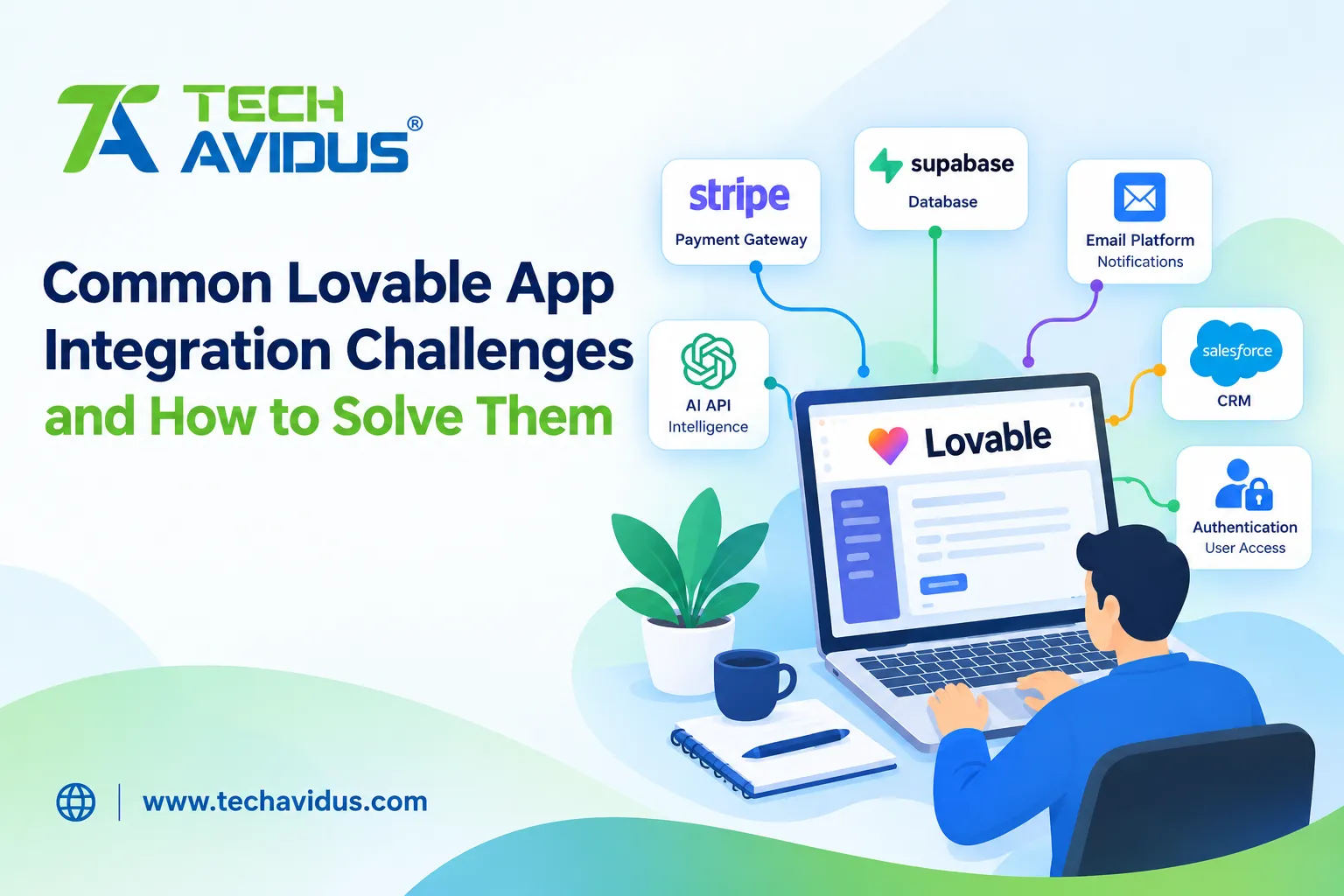
For example, a business application may connect with Stripe for payments, Supabase for database management, an email platform for notifications, or an AI API for intelligent features. Each integration has its own technical requirements, which can create potential points of failure.
1. API Connection and Configuration Issues
API integration is one of the most common challenges. An incorrect endpoint, request method, authentication parameter, or data format can cause an API request to fail.
To solve this problem, developers should review the third-party API documentation, verify endpoints, test requests independently, and implement appropriate error handling. API responses should also be validated before the application uses the returned data.
2. Authentication and Security Challenges
Many integrations require API keys, access tokens, OAuth credentials, or other authentication methods. Poor credential management can expose sensitive information and create security vulnerabilities.
Sensitive credentials should never be unnecessarily exposed in frontend code. Secure environment configurations, authentication controls, and appropriate permission levels should be used when connecting external services.
3. Database Synchronization Problems
When a Lovable application communicates with an external database or multiple systems, data synchronization can become complicated. Duplicate records, missing information, outdated data, and inconsistent formats can affect application performance.
A clearly defined data structure and synchronization strategy can reduce these problems. Developers should also validate data before writing it to the database and establish rules for handling conflicts.
4. Third-Party Compatibility
Different platforms have different technical requirements. A payment gateway may require specific security standards, while a CRM may use a particular API structure. AI services may also have usage limits, authentication requirements, and request restrictions.
Before beginning an integration, businesses should check documentation, supported API versions, authentication methods, rate limits, and compatibility requirements.
5. Error Handling and Debugging
Integration errors are not always easy to identify because the problem can originate from the application, API, database, authentication system, or third-party platform.
Developers should use structured error handling and maintain useful logs. Testing both successful and unsuccessful API requests can make troubleshooting considerably easier.
6. Performance and Scalability
An integration that works well with a small number of users may experience performance problems as application traffic increases. Excessive API requests, slow third-party responses, or inefficient database queries can affect the overall user experience.
Caching, optimized API calls, asynchronous processing, and appropriate database queries can help improve performance as the application grows.
How Professional Expertise Can Help
Simple integrations may be manageable during initial development, but complex applications often require careful architecture, security testing, API configuration, and ongoing maintenance. Businesses that need assistance can consider professional Lovable Development Services for integration planning, implementation, testing, troubleshooting, and optimization.
Conclusion
Lovable App Integration can significantly expand what a Lovable application can accomplish. However, successful integration requires more than connecting two systems. API compatibility, authentication, data synchronization, security, error handling, and scalability all need to be considered.
By following a structured integration approach and testing every connection thoroughly, businesses can create reliable applications that communicate effectively with the tools and services they already use.


























Sign in to leave a comment.