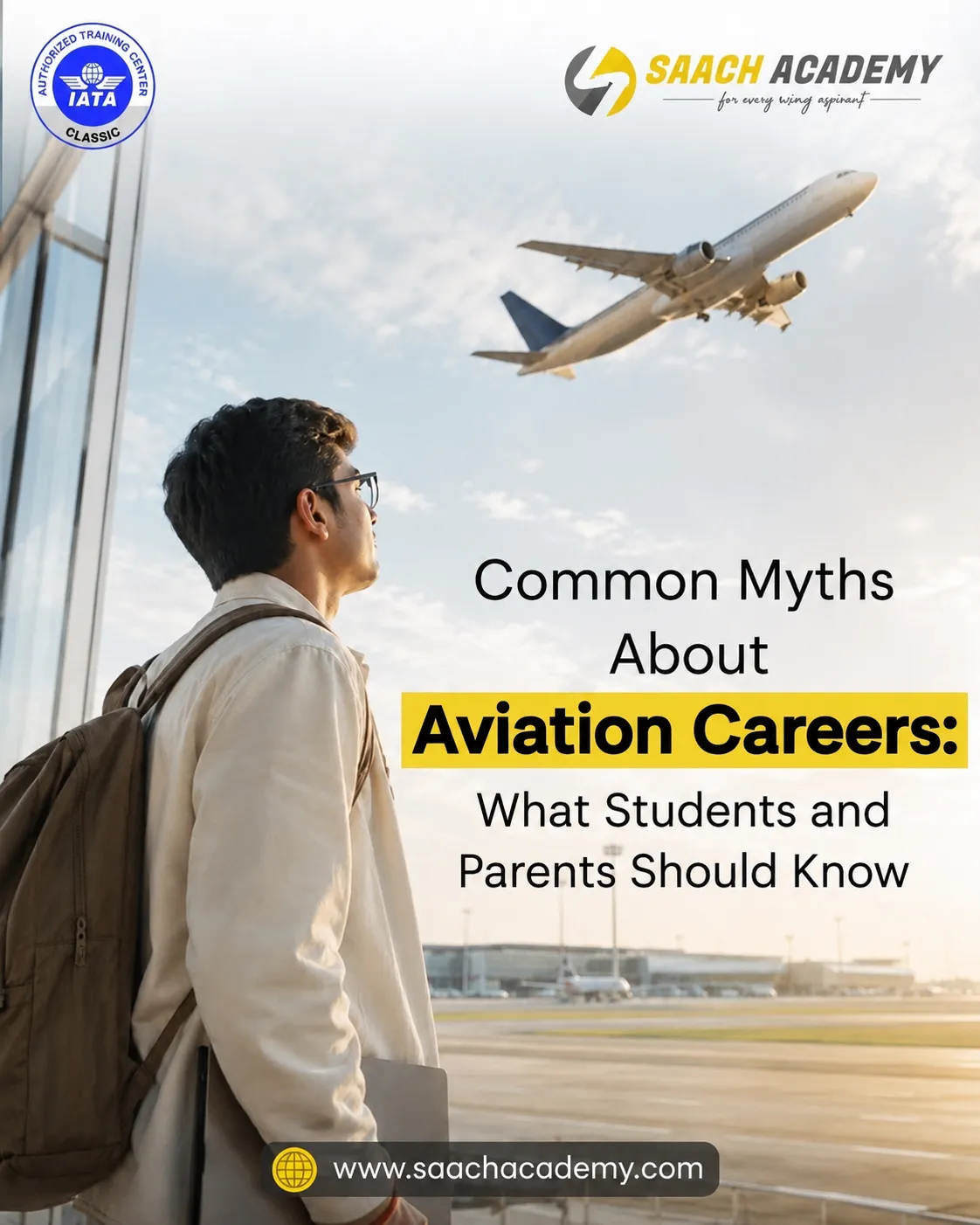

Choosing an aviation career after 12th can be an exciting opportunity for students who are interested in airlines, airports, travel and tourism. However, many students and parents hesitate because they have heard common myths about aviation careers. Some believe that only Science students can enter the industry, while others think aviation jobs are limited to cabin crew or pilots.
The truth is that the aviation industry offers a wide range of career options. With the right education, practical training and industry skills, students from different academic backgrounds can explore opportunities in aviation and travel.
Let’s look at some of the most common myths about aviation careers and understand the reality.
Myth 1: Only Science Students Can Join Aviation
One of the biggest common myths about aviation careers is that students must have a Science background.
Reality: Students from Science, Commerce and Arts streams can explore several aviation and travel-related courses after Class 12. Many careers in airline reservations, ticketing, travel consultancy, customer service and tourism do not require a Science background.
What matters is choosing the right course and developing practical skills, communication abilities and professional knowledge.
“Your Class 12 stream does not have to define your career. The right skills and training can open new opportunities.”
Myth 2: Aviation Jobs Are Only for Cabin Crew
When people hear “aviation career,” they often think about pilots and cabin crew. These are popular career choices, but they represent only a small part of the industry.
Airlines, airports and travel companies also need professionals in ticketing, reservations, customer service, airport operations, travel consultancy, sales, cargo and back-office operations.
Students can also develop specialised knowledge through areas such as BSP Essentials for Travel Agents, GDS reservations and airline ticketing.
Therefore, if a student is not interested in becoming cabin crew, there are still many other aviation career options to consider.
Myth 3: You Need an Expensive Degree to Build an Aviation Career
Another common misconception is that students need an expensive degree before they can enter the aviation industry.
Reality: While higher education can be valuable, students can also choose industry-focused aviation and travel courses that provide practical knowledge and job-oriented skills.
Training can cover areas such as airline fare construction, ticketing, PNR management, travel documentation, customer handling and GDS systems such as Amadeus, Sabre and Galileo.
For students and parents, the important thing is to compare the course curriculum, certification, practical training and career support rather than choosing a course only because it is expensive.
Myth 4: Airline Jobs Are Only Available in Metro Cities
Major cities such as Mumbai, Delhi, Bengaluru and Hyderabad are important aviation hubs, but aviation opportunities are not limited to these locations.
Airports, travel agencies, tourism companies and airline-support businesses operate across different parts of India. The growth of domestic aviation and tourism is also creating opportunities in several locations.
For students looking to study in an established aviation market, joining an Aviation Institute in Mumbai can provide exposure to a city with a strong connection to airlines, airports, travel companies and tourism.
Myth 5: Technology Will Replace Travel Professionals
Technology is changing the travel industry, but that does not mean trained professionals are no longer needed.
Modern travel professionals need to understand reservation systems, ticketing platforms, GDS technology and digital tools. Knowledge of SAACH Travel Technologies and practical travel-technology training can help students understand how technology is becoming part of modern travel operations.
Technology is not simply replacing professionals—it is changing the skills professionals need.
What Can Students Do After Class 12?
Students interested in an aviation career after 12th can explore courses related to:
- Airline and airport operations
- Travel and tourism
- Airline reservations and ticketing
- GDS training
- Travel consultancy
- Customer service
- Aviation and hospitality
- Travel technology
The best option depends on the student's interests, strengths and long-term career goals.
Frequently Asked Questions
Can Arts or Commerce students join aviation courses?
Yes. Many aviation, travel and tourism courses are open to students from different Class 12 streams. Eligibility depends on the specific course.
Are aviation jobs limited to cabin crew?
No. Aviation offers opportunities in reservations, ticketing, airport operations, customer service, travel consultancy, cargo, sales and other areas.
Is an IATA course useful for a travel career?
An IATA-focused course can help students gain structured knowledge of travel and tourism and understand international industry practices. Students should also look for practical training and relevant industry skills.
Is Mumbai a good place to study aviation?
Mumbai is an important aviation and travel market in India, making it a practical location for students who want exposure to airlines, airports and travel businesses.
Final Thoughts
The common myths about aviation careers can sometimes prevent students from exploring a career they may genuinely enjoy. Aviation is much broader than pilots and cabin crew, and students from Science, Commerce and Arts backgrounds can explore different career pathways.
Instead of making a decision based on assumptions, students and parents should research course eligibility, practical training, certifications, technology exposure and career opportunities.
At SAACH Academy, the focus is on helping students build practical knowledge and industry-ready skills for careers across aviation, travel and tourism. With the right guidance and preparation, an aviation career can become a realistic and rewarding career option for today's students.

























Sign in to leave a comment.