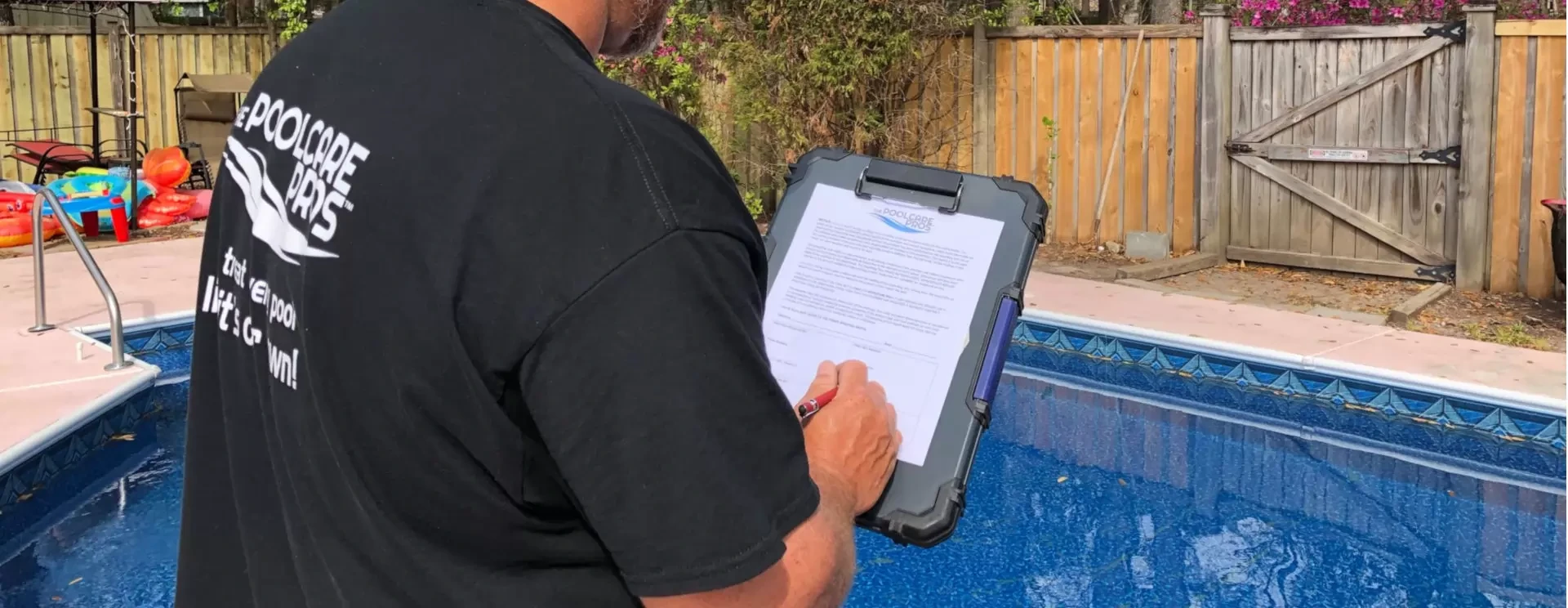
A pool inspection is meant to catch small issues before they turn into expensive repairs. The most common problems inspectors find usually involve water chemistry, filtration and recirculation, leaks, and general equipment or surface wear. In CDC inspection data, water-chemistry violations and filtration/recirculation issues made up the largest share of problems found during pool inspections.
1) Unbalanced water chemistry
One of the first things inspectors check is whether the sanitizer and pH levels are in the right range. CDC guidance says pool water should generally stay at pH 7.0–7.8, with free chlorine at least 1 ppm in pools, and it should be tested at least twice a day. When pH drifts too high, chlorine becomes less effective; when it drops too low, the water can become corrosive.
How to fix it: Test the water regularly, adjust chlorine and pH carefully, and keep records of every reading. If the water keeps drifting out of range, the issue may be with the feed system, circulation, or how the pool is being used.
2) Filtration and circulation problems
Weak circulation is another common inspection finding. CDC recommends maintaining filtration and recirculation systems according to manufacturer instructions, and its inspection data shows filtration and recirculation violations are among the most common issues in pool inspections. When circulation is poor, debris lingers, sanitizer does not distribute properly, and water quality drops fast.
How to fix it: Clean or replace filter media when needed, check pumps and baskets, and make sure the system is running long enough to move water properly through the entire pool. If pressure readings are off or the water still looks cloudy after cleaning, the system may need a professional diagnostic check.
3) Leaks and unexplained water loss
Leaks are another problem inspectors often uncover. A pool may lose water through plumbing, fittings, the shell, or hidden structural damage. Unexplained water loss is important to catch early because it can waste water, damage surrounding areas, and lead to bigger repairs later. The PoolCare Pros specifically highlights leak detection, pressure testing, and pipe repair as core services.
How to fix it: Start with a leak test and a visual inspection of the pool shell, plumbing lines, and equipment pad. If the water level keeps dropping or you notice damp soil, cracks, or air in the system, a professional leak detection service is usually the fastest way to find the source.
4) Cracks in the surface, tile, or coping
Small cracks in plaster, tile, or coping can look minor at first, but they can point to movement, wear, or deeper structural issues. Surface damage often shows up during inspections because it may also be connected to leaks, loose finishes, or shifting around the pool shell.
How to fix it: Hairline surface cracks may be repairable, but deeper cracks should be evaluated before patching. The right repair depends on whether the damage is cosmetic or structural, so it is best to inspect the area carefully instead of covering it up and hoping it holds.
5) Dirty, cloudy, or poorly balanced water
Cloudy water usually means something in the system is not working correctly. It can happen when sanitizer is too low, pH is out of range, filters are dirty, or circulation is weak. CDC notes that proper chlorine and pH levels are the first line of defense against swimming-related illness, and that pool surfaces and filtration systems should be maintained regularly.
How to fix it: Test the water, clean the filtration system, brush the pool surfaces, and confirm the pump is circulating water as it should. If cloudiness keeps returning, the problem may be deeper than chemistry alone.
6) Worn-out equipment and maintenance issues
Inspectors also find problems with pumps, sensors, feed systems, and other equipment that is simply wearing out. CDC recommends a preventive maintenance program so parts can be replaced before they fail, and it specifically calls out equipment such as feed pump tubing, injectors, and sensor probes.
How to fix it: Watch for unusual noises, leaks around the equipment pad, weak circulation, or repeated chemistry swings. Replacing failing parts early is usually cheaper than waiting for a full breakdown.
Final thoughts
Most pool problems found during inspections are fixable when they are caught early. The biggest warning signs are usually out-of-range water chemistry, filtration issues, leaks, and cracks that should not be ignored. For homeowners in Charleston and nearby areas, The PoolCare Pros offers inspections, leak detection and repairs, and pool remodel services to help keep your pool safe, efficient, and ready to enjoy.























Sign in to leave a comment.