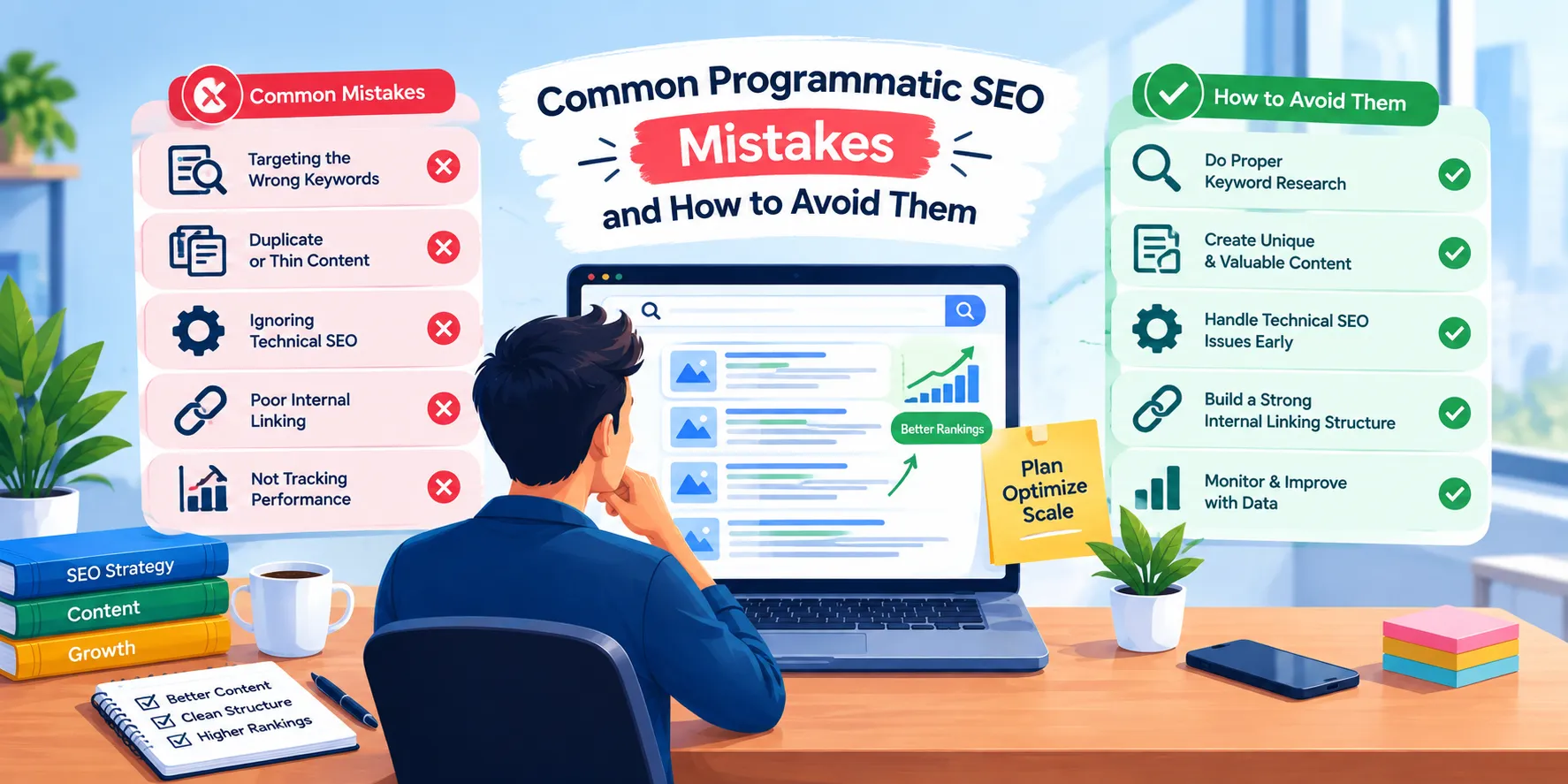

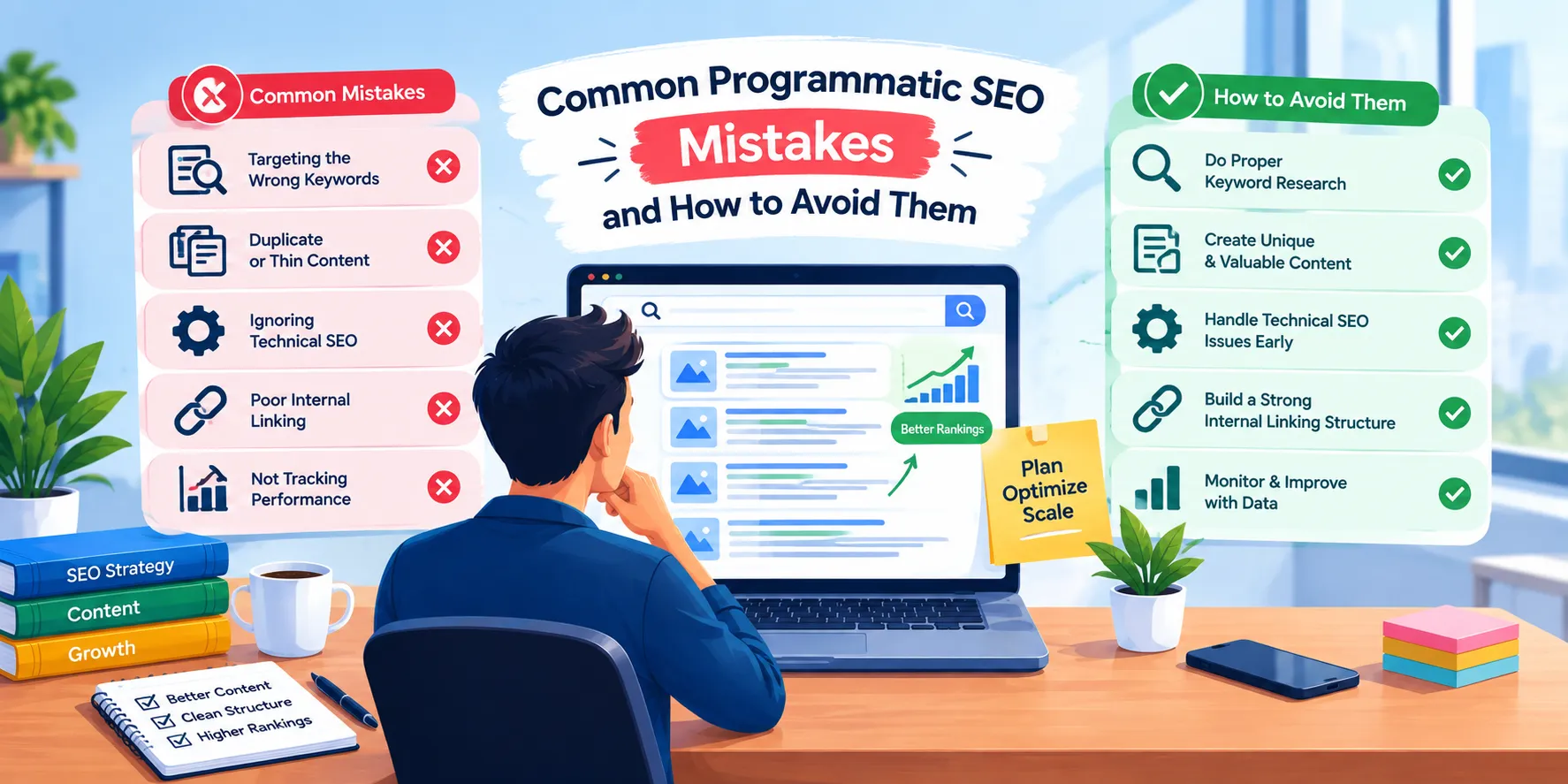
Programmatic SEO allows websites to create many targeted pages using templates, structured data, and a repeatable process. It can be useful for businesses that need to cover a large number of search queries, locations, products, services, or other related topics.
However, scaling pages does not mean every page will perform well. A small problem in a template, data source, or content process can be repeated across hundreds or thousands of pages. This can lead to poor user experience, unnecessary URLs, weak content, and technical SEO issues.
Understanding the key components of a successful programmatic strategy and knowing the common mistakes can help businesses build pages that are useful, relevant, and easier to manage.
Key Components of Programmatic SEO
A successful programmatic SEO strategy depends on several elements working together. Automation is only one part of the process.
Keyword and Search Intent Research
The first step is understanding what people search for and why they search for it. Keywords should represent real user needs rather than simply being added to increase the number of pages.
Scalable Page Templates
A template provides a consistent structure for pages. It should be flexible enough to accommodate different information while maintaining a clear layout and useful content.
Reliable Data
Programmatic pages often depend on databases or structured information. The data should be accurate, relevant, and regularly updated to prevent outdated information from appearing on the website.
Unique Page Value
Every page should offer a reason for users to visit it. Changing only a keyword, location, or product name is not enough if the rest of the page remains almost identical.
Internal Linking
A clear internal linking structure helps users move between related pages and makes it easier for search engines to understand the website's structure.
Technical SEO
Large websites need proper URL structures, canonical tags, XML sitemaps, crawl management, mobile usability, and good page performance.
These components form the foundation of Programmatic Search Engine Optimization and help prevent common problems when a website begins scaling.
Common Programmatic SEO Mistakes
Mistake 1: Creating Pages Without Checking Their Value
One of the biggest mistakes is creating pages simply because a keyword or data point exists.
A programmatic system can generate thousands of URLs, but not every possible combination deserves its own page. If multiple pages provide almost identical information, users may have little reason to visit them.
Before creating a page, consider whether it answers a specific search, provides useful information, and offers something different from other pages on the website.
How to Avoid It
Review potential page types before adding them to the system. Look at search demand, user intent, available data, and the amount of useful information that can be provided.
The purpose should be to create valuable pages, not simply increase the total number of URLs.
Mistake 2: Using the Same Content on Every Page
Templates make large-scale publishing easier, but they can also lead to repetitive content.
For example, replacing only a city name or product name while keeping almost every sentence unchanged does not create a meaningful difference between pages.
How to Avoid It
Use the template for the basic structure and add information that is relevant to each page. Depending on the website, this could include specific features, statistics, comparisons, descriptions, FAQs, or other useful information.
The structure can remain consistent while the information changes according to the user's needs.
Mistake 3: Ignoring Search Intent
Another common mistake is focusing heavily on keywords without understanding what users actually want.
Someone searching for “best project management software for small teams” may want comparisons, features, pricing, and important differences between products. A page that only provides a general definition may not meet that need.
How to Avoid It
Study the purpose behind each search before creating a page. Determine whether users are looking to compare products, find a service, learn something, check information, or solve a particular problem.
The content structure should then be designed around that intent.
Mistake 4: Publishing Too Many Low-Quality Pages
Automation makes it possible to publish pages quickly. However, publishing thousands of pages without quality checks can create a website filled with thin or incomplete information.
Pages may contain missing details, incorrect information, broken links, or very little value for visitors.
How to Avoid It
Create a quality review process before pages are published. Check content accuracy, titles, descriptions, internal links, images, mobile usability, structured data, and other important elements.
It is more useful to publish a smaller number of helpful pages than a large number of pages that do not satisfy users.
Mistake 5: Overlooking Technical SEO
Large programmatic websites can contain thousands of URLs, which makes technical SEO especially important.
Poor URL structures, incorrect canonical tags, duplicate URLs, crawl issues, slow pages, and badly managed sitemaps can make it difficult for search engines to discover and understand important pages.
How to Avoid It
Plan the technical structure before scaling. Keep URLs clear and consistent, use appropriate canonical tags, maintain accurate XML sitemaps, and make sure important pages can be crawled and accessed.
Regular technical checks can help identify issues before they affect a large part of the website.
Mistake 6: Creating Pages Without Proper Internal Links
When a website contains a large number of pages, visitors need a simple way to find related information.
Without internal links, some pages may become difficult to discover. Search engines may also have less context about how different pages are connected.
How to Avoid It
Create logical connections between related pages.
For example:
Category → Location → Service → Related Service
This type of structure can make navigation easier and create clear relationships between different sections of a website.
Mistake 7: Depending Too Much on Automation
Automation can reduce repetitive work, but it should not replace SEO planning or quality review.
A system may generate technically correct pages while still producing information that is outdated, irrelevant, or unhelpful.
How to Avoid It
Use automation for repetitive tasks while keeping important SEO decisions under review. Keyword research, search intent, data accuracy, content quality, and page performance still require careful attention.
Professional Programmatic SEO Services should focus on creating a reliable process where automation supports the overall SEO strategy instead of replacing it.
Mistake 8: Failing to Monitor Page Performance
Publishing programmatic pages is not the end of the process. Some pages may perform well, while others may receive very little traffic or engagement.
Without monitoring performance, it becomes difficult to identify which page types need improvement.
How to Avoid It
Track useful performance data such as:
- Organic clicks
- Search impressions
- Rankings
- Conversions
- Engagement
- Indexed pages
- Pages losing traffic
This information can help identify successful templates, weak pages, and areas that need improvement.
Mistake 9: Scaling Before Testing
Creating thousands of pages before testing the system can make small problems much harder to fix.
If a template contains an incorrect heading structure, poor internal linking, weak content, or a technical problem, the same issue may appear across every generated page.
How to Avoid It
Start with a small group of pages. Review their content, design, internal links, technical setup, and overall usefulness.
Once the template works properly, gradually expand the number of pages.
Mistake 10: Using Outdated or Incorrect Data
Many programmatic websites rely on information that changes over time. Product details, prices, locations, availability, statistics, and business information can become outdated.
Incorrect information can reduce the usefulness of a page and create a poor experience for visitors.
How to Avoid It
Keep the source data updated and establish a regular review process. Important changes should be reflected on the relevant pages as quickly as possible.
For large websites, automated data updates can help, but regular quality checks are still important.
How to Prevent Programmatic SEO Problems Before They Start
Preventing problems is easier than fixing them after thousands of pages have been published. A clear process can reduce the risk of repeating the same issue across a large website.
Start by researching the search opportunity and understanding what users expect from each page. Next, make sure the data being used is accurate and useful.
Before scaling, create a small group of test pages and review them carefully. Check the content, page structure, internal links, technical elements, and overall user experience.
Once the system has been tested, begin expanding gradually. Continue monitoring page performance after publication and make changes when the data shows that a page type is not providing enough value.
A useful prevention process includes:
- Research relevant search opportunities.
- Understand user intent.
- Collect accurate data.
- Create a clear page template.
- Add useful information to each page.
- Test the template with a small sample.
- Review technical SEO elements.
- Build relevant internal links.
- Monitor page performance.
- Update or improve pages when needed.
This approach allows businesses to scale more carefully while maintaining the quality of their website.
Final Thoughts
Programmatic SEO can help websites cover a large number of relevant searches, but successful scaling requires more than automation. Each page needs a clear purpose, useful information, accurate data, and a structure that makes sense to visitors.
The biggest problems usually appear when businesses focus on creating more pages without checking whether those pages provide real value. Repetitive content, poor search intent matching, technical issues, weak internal linking, and outdated data can all reduce the effectiveness of a large-scale SEO strategy.
By testing templates, maintaining accurate information, monitoring performance, and focusing on user needs, businesses can create a more reliable approach to Programmatic Search Engine Optimization and scale their organic search presence in a controlled way.

























Sign in to leave a comment.