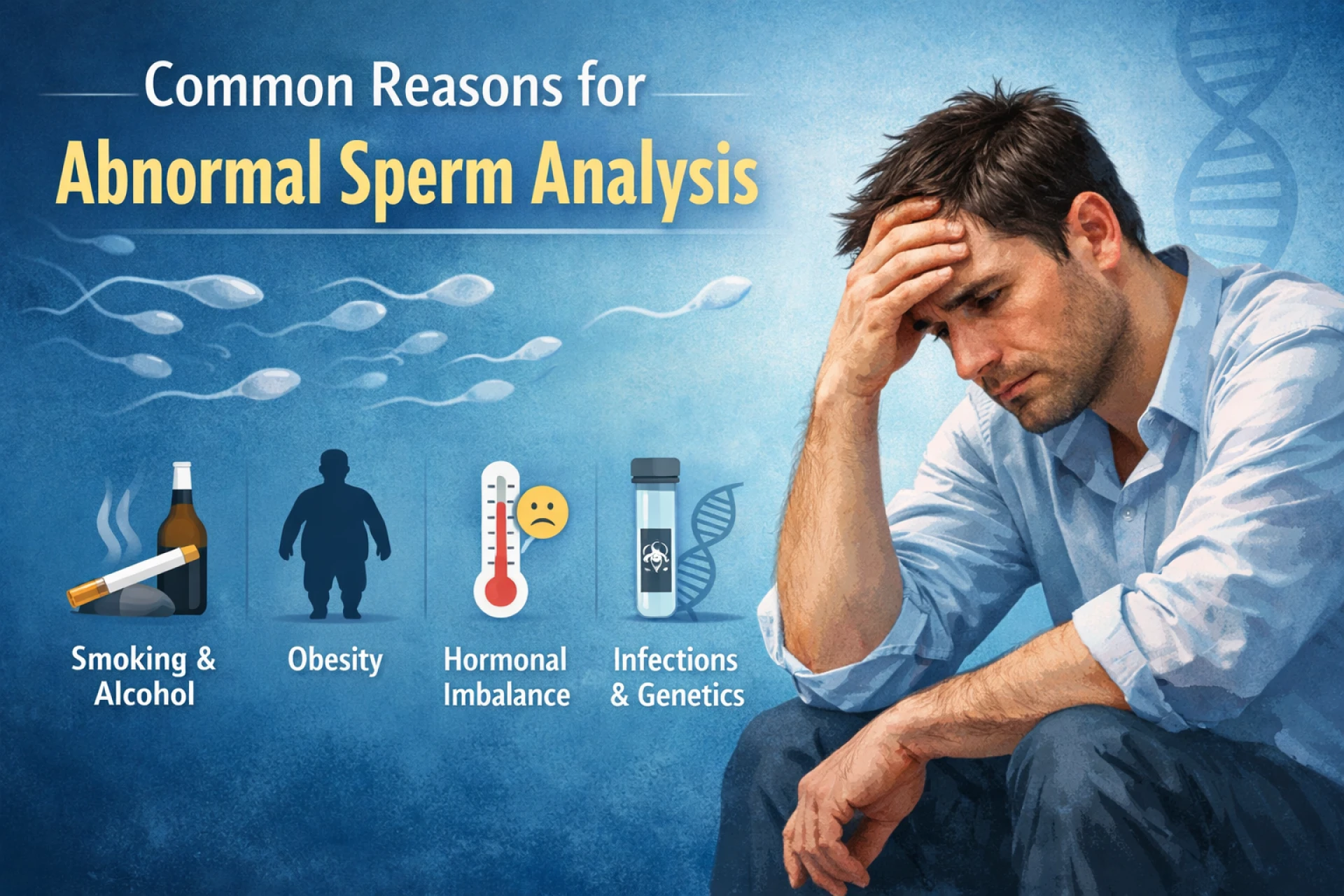

Understanding male fertility begins with one of the most important diagnostic tests in reproductive medicine — the sperm analysis test. Whether you’re searching for a “sperm test near me” the results of this test provide critical information about male reproductive potential. At Womb IVF & Fertility Center, recognized as the best IVF center in Mumbai and a leading fertility clinic in Mumbai, we frequently see patients with abnormal semen analysis results who want to understand the causes and treatment options.

A sperm analysis (or semen analysis) evaluates key parameters such as sperm count, motility (movement), morphology (shape), and volume. When one or more parameters fall outside normal ranges, it is described as an abnormal sperm analysis. This can impact a couple's ability to conceive naturally and often triggers further evaluation and treatment.
1. Low Sperm Count (Oligospermia)
One of the most frequent findings in an abnormal semen analysis is a low sperm count — medically called oligospermia. A normal sperm count provides a higher chance of sperm reaching and fertilizing the egg. A reduced count means fewer sperm available to travel the reproductive tract.
Common causes:
Hormonal imbalances involving testosterone, follicle-stimulating hormone (FSH), or luteinizing hormone (LH) can reduce sperm production.
Medical issues like varicocele (enlarged veins around the testicle) can raise scrotal temperature and affect sperm synthesis.
Chronic illnesses such as diabetes or infections (especially in reproductive organs) may damage sperm production.
Lifestyle factors such as smoking, alcohol use, obesity, poor diet, and high stress levels are linked to lower sperm counts.
➡️ Treatment options:
Treating underlying medical conditions such as infections or hormonal disorders.
Surgical correction for varicocele.
Lifestyle changes like quitting smoking, reducing alcohol, improving diet and managing stress.
Assisted reproductive technologies (ART) such as IVF (In Vitro Fertilization) with
ICSI (Intracytoplasmic Sperm Injection) can help overcome low sperm count — especially when efforts to boost sperm are unsuccessful.
2. Poor Sperm Motility (Asthenozoospermia)
Sperm motility means the capability of sperm to swim properly toward the egg. Poor motility means that sperm may not be fast or effective enough to travel through the female reproductive tract, significantly reducing the chances of fertilization.
Common causes:
Oxidative stress and exposure to toxins like pesticides and heavy metals.
Abnormal morphology (poor sperm shape) is often linked with poor motility.
Infections, inflammation, or autoimmune reactions involving anti-sperm antibodies can impair movement.
➡️ Treatment options:
Antioxidant therapy and nutritional supplementation can support sperm health.
Addressing inflammation or infection with medical treatment.
ICSI during IVF allows embryologists to select and inject a healthy sperm directly into the egg, bypassing the need for strong motility.
3. Abnormal Sperm Morphology (Teratospermia)

Sperm shape — or morphology — significantly impacts fertility. Even when sperm count and motility are adequate, an abnormal shape can prevent the sperm from effectively penetrating the egg. When morphology is compromised in many sperm, this is called teratospermia.
Common causes:
Lifestyle habits like smoking, excess alcohol use, and poor diet.
Environmental stressors such as heat (from tight clothing, saunas, laptops on the lap).
Genetic or hormonal disorders can affect how sperm develop.
Infections and inflammation in reproductive organs may also distort sperm shape.
➡️ Treatment options:
Lifestyle and diet modifications to improve overall sperm health.
Hormonal treatments when imbalances are detected.
Advanced ART procedures such as ICSI help by selecting the best-looking sperm under a microscope for fertilization.
4. Azoospermia (No Sperm in Semen)
In some cases, the semen analysis shows no sperm at all — a condition called azoospermia. This is a more serious diagnosis and requires specialized evaluation. It can be caused by physical blockages in the reproductive tract or testicular failure.
Causes:
Obstructive factors such as congenital absence of the vas deferens.
Hormonal issues and genetic conditions like Klinefelter syndrome.
Previous surgery, trauma, or infections that block sperm transport.
➡️ Treatment options:
Surgery to remove blockages where feasible.
Hormonal therapy to stimulate sperm production.
Testicular sperm extraction (TESE) or microscopic sperm retrieval for use in IVF with ICSI.
5. Lifestyle & Environmental Influences
Many causes of abnormal sperm analysis are linked to lifestyle and environment. Smoking, drug use, excessive alcohol, obesity, toxins, stress, and overheating (e.g., frequent hot tubs or saunas) are all contributors.
➡️ Treatment approach:
Regular exercise, balanced nutrition, stress reduction, and avoidance of harmful exposures can improve sperm count, motility, and morphology.
Antioxidants and micronutrient supplementation may help reduce oxidative damage to sperm.
6. Hormonal Imbalance & Medical Conditions
Hormonal imbalances, such as low testosterone, can significantly impact sperm production. Medical conditions including diabetes, infections of the reproductive system, or chronic diseases may also impair testicular function.
➡️ Treatment options:
Hormone replacement therapy under medical supervision.
Treatment of infections or other underlying medical conditions.
Referral to endocrinologists or urologists for specialized management.
Why Getting a Sperm Analysis Test Early Matters
If you and your partner are struggling to conceive after trying for 12 months a sperm analysis test should be one of your first steps. Early assessment allows healthcare providers to:
Detect abnormalities early.
Identify reversible causes such as lifestyle issues or infections.
Improve natural conception chances or create an effective reproductive plan.
1. What does an abnormal sperm analysis mean?
An abnormal sperm analysis means that one or more key sperm parameters such as count, motility, morphology, or volume fall outside the normal reference range. This can affect fertility and requires further evaluation and individualized treatment.
2. Can lifestyle changes improve an abnormal sperm result?
Yes. Many lifestyle factors including poor diet, smoking, excessive alcohol, stress, obesity impact sperm quality. Modifying these habits, along with proper nutrition and stress management, can improve it.
3. How is an abnormal sperm analysis treated at a fertility clinic?
Treatment depends on the underlying cause. It can range from medical management of infections or hormonal imbalances to assisted reproductive techniques like IVF with ICSI. Consulting a fertility specialist in Mumbai.



























Sign in to leave a comment.