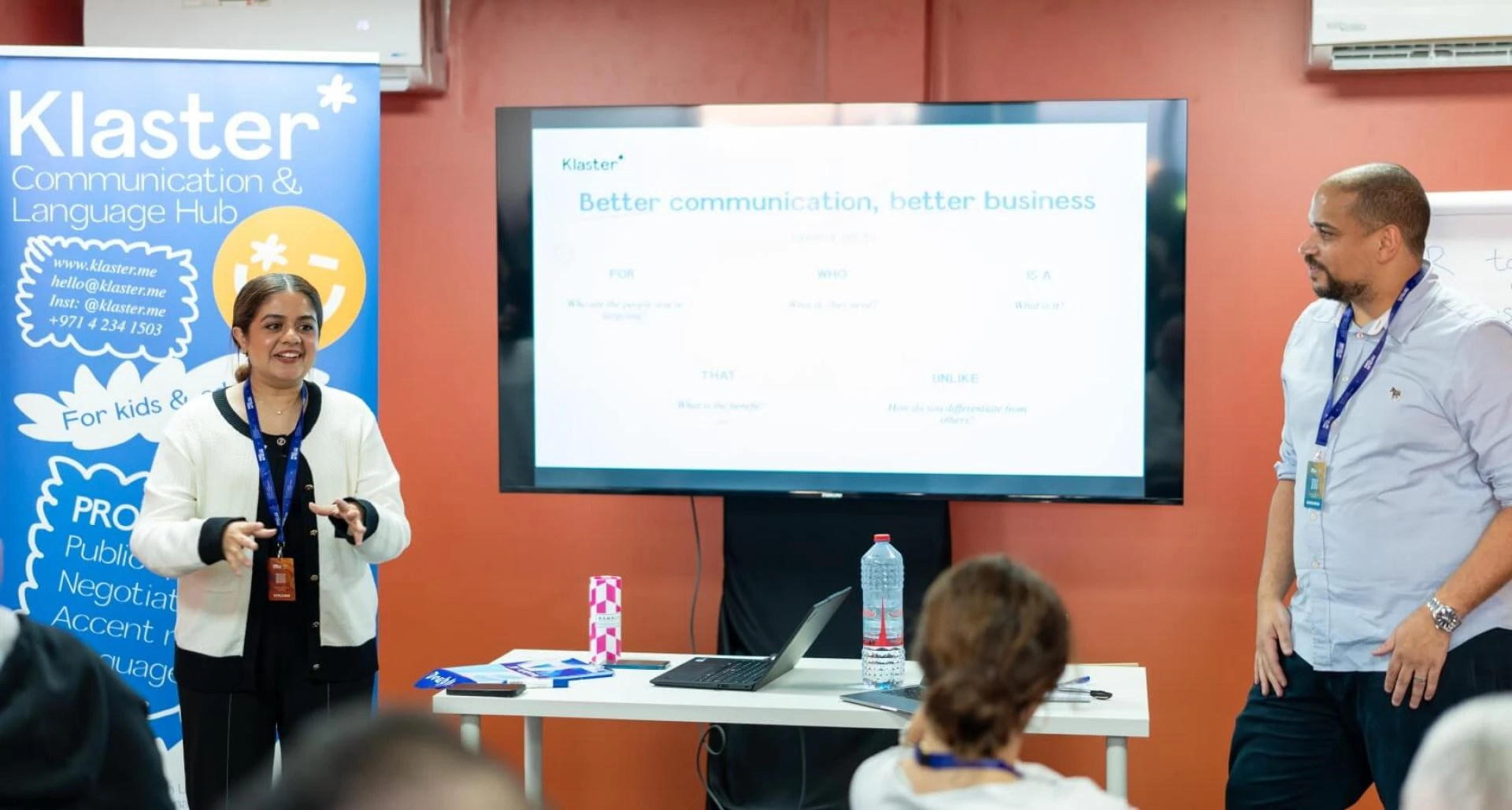

In the competitive UAE job market, 64% of employers in the Gulf Cooperation Council (GCC) countries demand good communication skills in Arabic and English, making it the top skill sought after in the region, according to a 2023 survey by Bayt.com and YouGov. But what does this statistic really mean for job seekers? Beyond the obvious requirement for bilingualism, UAE employers are screening for specific communication competencies that many candidates overlook.
While technical expertise remains important, hiring managers across the Emirates are increasingly evaluating candidates based on their ability to communicate effectively across cultural boundaries, present ideas persuasively, and negotiate successfully—skills that have become the true differentiators for career advancement. This article unpacks the specific high-value communication competencies that UAE employers are actively seeking but rarely explicitly state in job descriptions.
Language Proficiency as the Foundation
The UAE's position as a global business hub demands multilingual capabilities from its workforce. English remains the primary business language, but employers increasingly view it as a basic requirement rather than a distinguishing factor.
Effective communication in the UAE transcends mere language proficiency. It's essential to grasp cultural nuances, such as indirectness, formality, and non-verbal cues, which are deeply rooted in Emirati culture. Misunderstandings can arise when these subtleties are overlooked.
Beyond these general communication principles, language requirements vary significantly across industries, with each sector placing emphasis on different linguistic skills and combinations.
Specific sectors demonstrate clear language preferences:
- Government and Public Sector: Arabic-English bilingualism is essential, with formal Arabic writing skills highly valued
- Banking and Finance: English proficiency with sector-specific terminology and Arabic knowledge for client relations
- Hospitality and Tourism: English plus an additional language (often Arabic, Russian, or Mandarin) depending on target clientele
- Technology: English with technical vocabulary mastery
What many professionals discover too late is that accent barriers can significantly impact advancement opportunities. Research focusing on accent bias in professional environments found that individuals with non-native accents were perceived as less competent, skillful, warm, and likable compared to their native-accented peers. These perceptions persisted despite the individuals having equivalent qualifications and skills.
Professionals seeking to thrive in the UAE's competitive job market should therefore invest not only in expanding their language repertoire but also in refining their communication style to align with local business culture. This holistic approach to language development can significantly enhance career prospects in this dynamic global business center.
Public Speaking Mastery in Professional Settings
The ability to present ideas confidently has become non-negotiable across UAE industries. It's widely acknowledged that public speaking and effective communication skills are highly valued in professional settings, including in the UAE. These skills are often linked to leadership potential and can influence promotion decisions.
Industry expectations vary significantly:
- Finance and Consulting: Data-driven presentations with executive summaries and stakeholder-specific insights
- Technology: Technical concept simplification and solution-focused presentations
- Healthcare: Evidence-based communication balancing technical accuracy with clarity
- Hospitality: Emotionally intelligent presentations focusing on customer experience
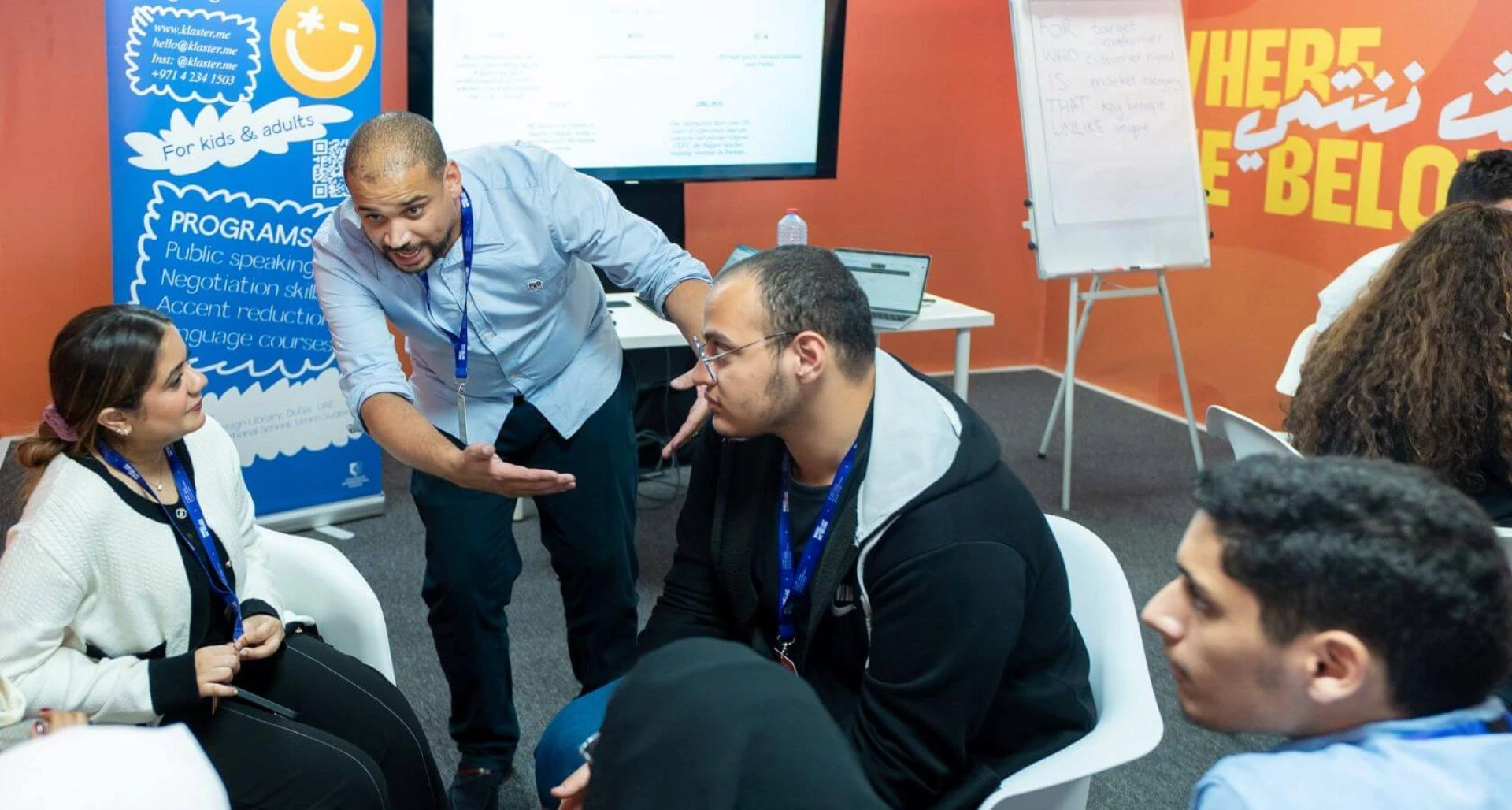
The challenge for many multilingual professionals is maintaining presentation confidence while switching between languages or presenting in their non-native tongue. Specialized training like Klaster's public speaking courses addresses this by focusing on structure, delivery, and audience engagement techniques specifically designed for multilingual environments.
Negotiation Skills in the UAE Business Context
Negotiation in the UAE business context requires understanding cultural dimensions that extend beyond typical Western approaches. Relationship-building and face-saving in negotiation practices is well-supported in Middle Eastern contexts. Adopting these culturally attuned strategies can significantly enhance negotiation outcomes by fostering trust and mutual respect.
Key negotiation skills valued by UAE employers include:
- Cultural intelligence in reading non-verbal cues
- Patience and relationship-focused approach
- Strategic concession management
- Ability to build consensus while respecting hierarchy
Understanding the strategic use of silence and prioritizing relationship-building are critical components of effective negotiation and professional success in the region. These elements often differentiate between those who merely participate in negotiations and those who excel at securing favorable outcomes while maintaining positive business relationships.
Negotiation skills mastery programs focusing on UAE-specific business contexts help professionals bridge the critical gap between technical knowledge and interpersonal effectiveness. For professionals aiming to advance in the UAE's diverse business landscape, developing these nuanced negotiation capabilities represents not just a professional advantage but an essential cultural competency that can determine long-term career trajectory and success.
Sales Communication Excellence
The evolution of sales communication in the UAE has been dramatic, with traditional relationship-based approaches now requiring integration with data-driven insights and multicultural awareness.
Critical sales communication techniques valued across industries include:
- Consultative questioning that respects cultural norms
- Value articulation aligned with regional priorities
- Objection handling with cultural sensitivity
- Virtual selling skills for remote client engagement
What distinguishes top performers is their ability to adapt communication styles to diverse stakeholders while maintaining authenticity. This adaptability proves particularly valuable in the UAE's multicultural business landscape where a single project may involve stakeholders from multiple cultural backgrounds.
Sales teams that undergo advanced training often achieve substantial growth in business metrics. For instance, FQE Chemicals experienced a 400% increase in their sales pipeline and closed high-value deals after implementing tailored online sales training.
Investment in Communication Skills: The Career ROI
The return on investment for communication skills development is increasingly quantifiable:
- A study by Korn Ferry found that learning-agile leaders, who often exhibit strong communication skills, receive promotions more quickly and frequently than their peers
- Research indicates that speaking a second language can boost career prospects and salary by up to 35%
- Reports highlight that professionals adept at adapting and applying new skills, including negotiation, advance more rapidly through organizational hierarchies
The most effective approach to communication skill development involves:
- Objective assessment of current communication strengths and gaps
- Targeted training focusing on industry-specific communication needs
- Consistent practice in authentic professional contexts
- Regular feedback from communication experts familiar with UAE business culture
Comprehensive programs like those offered by Klaster provide this structured approach while addressing the unique communication challenges faced by UAE professionals.
Final Note
As the UAE job market continues to evolve, employers increasingly distinguish between candidates based on their ability to communicate effectively across cultures, present ideas persuasively, negotiate successfully, and drive results through relationship-building.
What UAE employers are really looking for extends far beyond the basic language proficiency or presentation skills listed in job descriptions. They seek professionals who can navigate cultural subtleties, adapt communication styles to diverse stakeholders, and build relationships that translate to business results—competencies that many candidates mistakenly assume will develop naturally with experience alone.
Smart professionals recognize that communication skills development represents one of the highest-return investments for career advancement in the region. By addressing specific communication competencies valued in the UAE marketplace – from language mastery and accent clarity to negotiation and sales communication – professionals position themselves for accelerated career growth.
The question isn't whether communication skills matter, but rather which specific communication competencies will drive your career forward in the UAE's competitive professional landscape.
























Sign in to leave a comment.