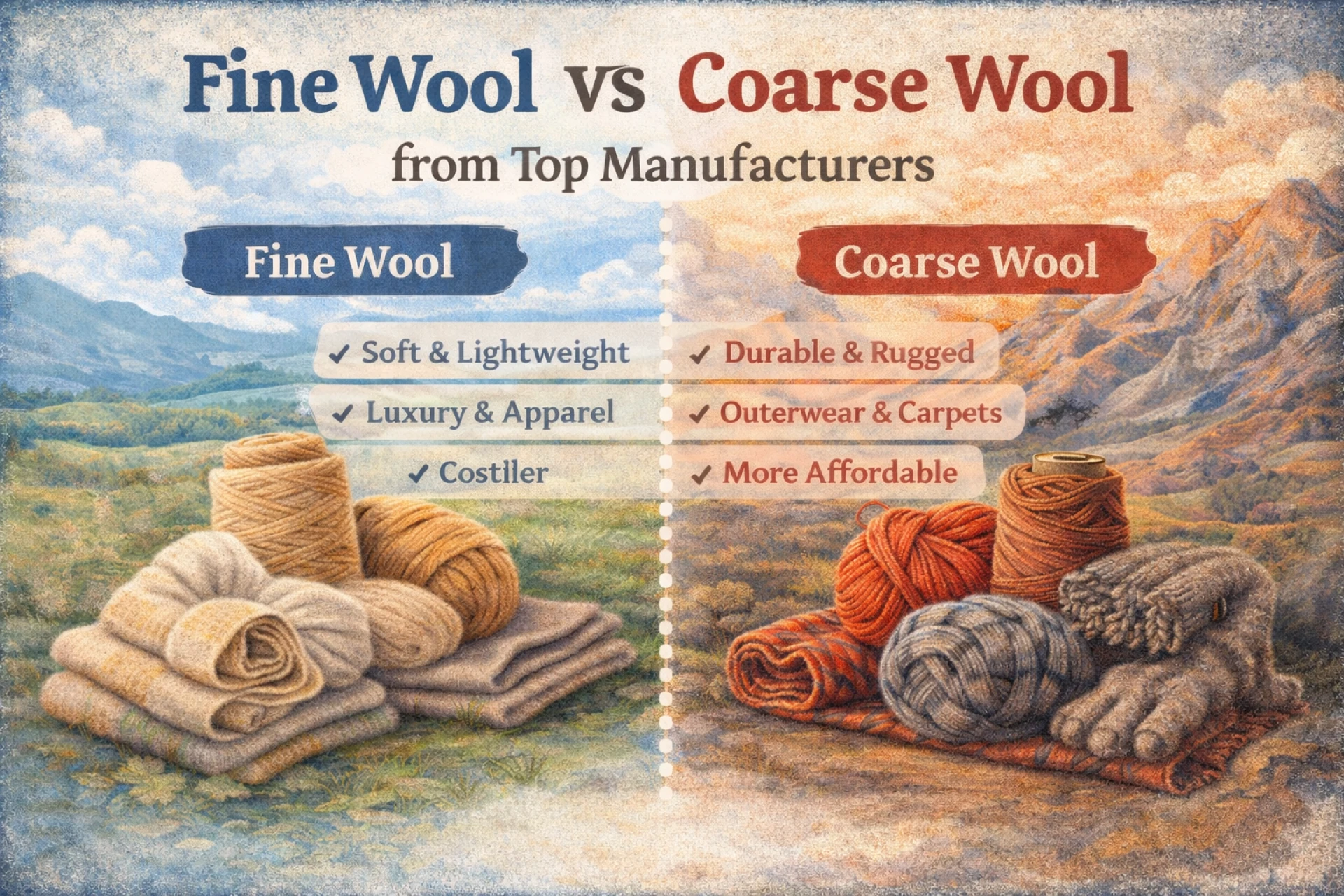

Wool has long been a staple in the textile world, cherished for its warmth, durability, and versatility. But not all wool is the same. From the soft, luxurious touch of fine wool to the rugged, durable feel of coarse wool, each type serves a distinct purpose. Understanding the differences is essential for designers, manufacturers, and textile enthusiasts when sourcing from wool manufacturers, including trusted industry names like Jindaltex.
What Is Fine Wool?
Fine wool comes from specialized breeds of sheep and goats, such as Merino sheep or cashmere goats. Its fibers are exceptionally thin, often under 20 microns, creating a silky, soft texture that drapes beautifully.
Key characteristics of fine wool:
- Soft and comfortable: Feels gentle against the skin.
- Lightweight and elegant: Perfect for garments that require a smooth, flowing appearance.
- Breathable and thermoregulating: Keeps you warm in winter and comfortable in warmer temperatures.
- Premium cost: Its luxurious feel comes at a higher price point.
Fine wool is typically used in high-end apparel, scarves, delicate knitwear, and soft throws. Its unique texture and subtle variations make each product feel special.
What Is Coarse Wool?
Coarse wool is thicker, stronger, and built to last. Sourced from long-haired or mountain sheep breeds, its fibers often measure over 30 microns in diameter. While less soft than fine wool, coarse wool offers durability and resilience that fine wool cannot match.
Key characteristics of coarse wool:
- Durable and tough: Ideal for heavy-use textiles.
- Excellent insulation: Provides warmth even in harsh conditions.
- Economical: More affordable for large-scale production.
- Rustic texture: Adds character and strength to products like carpets, outerwear, and blankets.
Coarse wool is commonly used in outer garments, industrial textiles, and upholstery, where durability and insulation are more important than softness.
Comparing Fine Wool vs Coarse Wool
Here’s a text-based comparison table for quick reference:
Softness: Fine wool is soft and gentle; coarse wool is rougher to the touch.
Durability: Fine wool requires careful handling; coarse wool is highly durable.
Weight: Fine wool is lightweight and drapes well; coarse wool is heavier and structured.
Cost: Fine wool is premium; coarse wool is more affordable.
Use Cases: Fine wool is ideal for luxury clothing, scarves, and throws; coarse wool suits outerwear, carpets, blankets, and upholstery.
Fiber Source: Fine wool comes from Merino sheep or cashmere goats; coarse wool comes from mountain sheep and long-haired breeds.
Thermal Comfort: Fine wool is breathable and thermoregulating; coarse wool provides strong insulation.
How Wool Manufacturers Ensure Quality?
Reliable wool manufacturers in India follow strict processes to deliver consistent and high-quality fibers. Here’s what makes a supplier trustworthy:
- Fiber Sourcing: Using the right sheep or goat breeds ensures uniform thickness and texture.
- Grading and Sorting: Fibers are sorted by micron count, color, and length to meet specific product needs.
- Processing Techniques: Gentle cleaning, carding, and spinning preserve the softness of fine wool and the strength of coarse wool.
- Quality Testing: Tensile strength, shrinkage, and colorfastness tests ensure fibers meet industry standards.
Top manufacturers, like Jindaltex, offer both fine and coarse wool varieties, helping textile businesses source the right material for their products.
Applications of Fine Wool
Fine wool is suited for textiles where comfort, elegance, and a soft touch matter most:
- Luxury Apparel: Suits, sweaters, scarves, and premium knitwear.
- Home Textiles: Soft blankets, throws, and decorative cushions.
- Handcrafted Products: Perfect for knitting, crochet, and high-end handmade items.
Fine wool does require careful maintenance, but its softness and luxurious feel make it worthwhile.
Applications of Coarse Wool
Coarse wool is ideal for heavy-duty products where durability and warmth are key:
- Outerwear: Jackets, coats, and heavy sweaters.
- Carpets and Rugs: Thick fibers withstand wear and tear.
- Industrial Use: Insulation, mats, and utility textiles.
Its rustic texture and resilience make coarse wool suitable for products that must endure frequent or harsh use.
Blended Wool: Best of Both Worlds
Many modern manufacturers blend fine and coarse wool to create fabrics that balance softness with durability:
- Outerwear: Fine wool layers provide comfort against the skin while coarse wool adds structure.
- Blankets and Throws: Fine wool offers a soft touch on top of a sturdy coarse wool backing.
- Knitting Yarns: Blends make garments more versatile, combining luxury and strength.
Blended wool allows businesses to offer products that are both comfortable and long-lasting.
Tips for Choosing the Right Wool
When selecting wool from manufacturers, consider these factors:
- End Product Requirements: Choose fine or coarse wool depending on whether softness or durability is more important.
- Care Needs: Fine wool may need hand washing or dry cleaning; coarse wool is low maintenance.
- Budget: Fine wool is premium-priced; coarse wool is cost-effective for large production runs.
- Supplier Expertise: Trusted suppliers like Jindaltex provide guidance on selecting the right wool for each product.
- Sustainability: Organic or ethically sourced wool is increasingly valued in the market.
Conclusion
Both fine and coarse wool have unique advantages. Fine wool is ideal for luxury, comfort, and breathability, while coarse wool provides strength, insulation, and durability. The choice depends on the product, budget, and intended use.
Partnering with reputable wool manufacturers and wool manufacturers in India, like Jindaltex, ensures access to high-quality fibers, expert guidance, and versatile options for all types of textiles. Understanding the distinctions between fine and coarse wool allows businesses to deliver the perfect balance of softness, durability, and functionality.
FAQs
1. What is the difference between fine wool and coarse wool?
Fine wool is soft, lightweight, and ideal for luxury garments, while coarse wool is thicker, stronger, and used for durable products like carpets or outerwear.
2. Which wool is better for clothing comfort?
Fine wool is preferred for garments that touch the skin directly because it is soft, breathable, and smooth.
3. Can coarse wool be used for everyday clothing?
Yes, coarse wool works well for durable outerwear, heavy sweaters, and industrial textiles, but may feel rough against the skin.
4. How do wool manufacturers in India maintain quality?
Reputable wool manufacturers, like Jindaltex, ensure consistent fiber quality through careful sourcing, grading, and processing techniques.
5. Are fine wool products more expensive than coarse wool products?
Yes, fine wool is premium due to its softness and lightweight texture, whereas coarse wool is more affordable and suited for bulk production.
6. What are the best uses for fine wool?
Fine wool is ideal for luxury apparel, delicate knitwear, scarves, and soft home textiles like throws and cushions.
7. How durable is coarse wool compared to fine wool?
Coarse wool is highly durable and long-lasting, making it suitable for heavy-use products, while fine wool requires gentle care to maintain its softness.
8. Can blending fine and coarse wool improve fabric quality?
Yes, blending fine and coarse wool creates fabrics that balance softness and durability, offering versatility for garments and home textiles.
9. How do I choose the right wool for my project?
Consider end use, desired texture, durability, care requirements, and budget. Suppliers like Jindaltex can guide you to the most suitable option.
10. Are natural and ethically sourced wools available from top manufacturers?
Yes, many top wool manufacturers offer ethically sourced or organic wool to meet sustainability goals while maintaining high quality.




























Sign in to leave a comment.