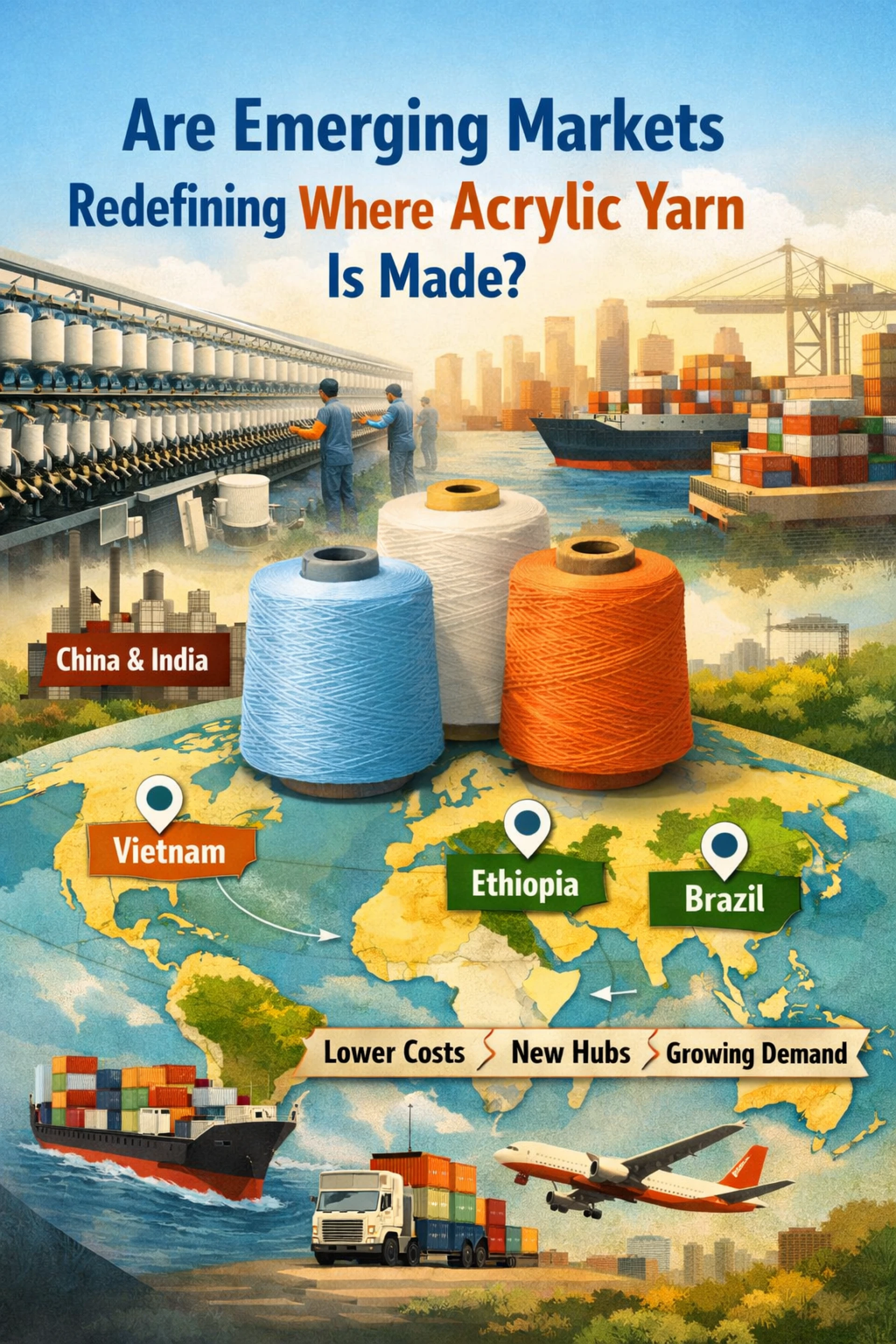

In the global textile supply chain, nothing stays static for long. The strategies of fashion houses, mills, and yarn vendors evolve as markets change, and right now, emerging economies are quietly reshaping where acrylic yarn is made. For decades, a few established hubs dominated production. But changes in demand, cost structures, technology, and trade have opened fresh pathways for both established and new entrants.
In this blog, we explore how emerging markets are influencing global production and what this means for brands, mill owners, and B2B buyers looking for reliable acrylic yarn suppliers or evaluating an acrylic yarn manufacturer.
The Traditional Acrylic Yarn Landscape
Historically, countries like China, India, and Turkey have been at the centre of acrylic yarn production. China alone accounts for nearly half of global output, driven by large-scale facilities, extensive downstream textile mills, and robust internal demand. India follows closely as a cost‑competitive centre with strong export ties to Europe and North America. Turkey is known for combining manufacturing scale with proximity to European markets and quality focus.
Leading yarn producers, including major acrylic yarn manufacturers, have built infrastructure and skilled workforces in these regions for decades, creating efficient supply chains that feed clothing, home textiles, industrial fabrics, and more.
Emerging Markets: The New Frontier
What makes a market “emerging” in this context? These are regions where industrial capacity is expanding rapidly, driven by demographics, cost advantages, trade policy shifts, and rising textile consumption. Examples include Southeast Asia (Vietnam, Bangladesh), parts of Africa (Ethiopia, Kenya), and even Latin America (Brazil, Mexico).
According to market research, while Asia‑Pacific (especially China and India) remains the dominant producer of acrylic yarn, demand and manufacturing activity are growing rapidly in other regions. In Southeast Asia, for instance, acrylic yarn imports and usage have been rising by double‑digit percentages annually as garment exports climb. Meanwhile, African textile hubs are beginning to scale synthetic fibre production to reduce reliance on imports.
This is crucial: production doesn’t immediately shift overnight. But emerging markets are becoming hubs for finishing, blending, and value‑added textile work, often with local feedstock sourced through global networks.
What’s Driving the Shift?
Several forces are pushing both buyers and yarn makers toward emerging markets:
1. Cost Dynamics and Labour Economics
One of the biggest draws of emerging production is cost. Lower labour prices and more competitive manufacturing overheads make it attractive for both established producers and new players to consider satellite operations outside traditional hubs. While large facilities in China maintain scale, complementary capacity in Bangladesh, Vietnam, or Ethiopia can offer appealing unit costs for specific yarn grades.
This matters especially for businesses or mills looking for acrylic yarn suppliers that can meet tight budgets without sacrificing reliability.
2. Trade Strategies and Global Supply Chain Realignment
Over the past few years, global buyers have adopted a “China plus one” sourcing strategy, meaning they still source heavily from China but also diversify into other economies to reduce risk and improve resilience. This shift isn’t just about tariffs or geopolitics; it’s also about securing supply continuity and cost stability.
As textile clusters like Tirupur in India or garment hubs in Bangladesh expand, acrylic yarn manufacturers in these regions see a chance to grow alongside finished‑goods producers.
3. Growing Local Demand and Export Orientation
Emerging domestic markets aren’t just producing for export, they’re consuming locally too. Rising middle classes in Southeast Asia, Africa, and Latin America are driving demand for affordable, durable textiles made with synthetic fibres like acrylic. This growth opens the door for suppliers and manufacturers to invest in production closer to end markets.
Furthermore, preferential trade agreements and improving infrastructure support the flow of yarn and finished textiles in and out of these regions.
4. Technological and Process Improvements
It’s not just cost that matters; technology does too. Emerging markets are catching up on production technology, including more energy‑efficient machinery, automation, and digital quality control. Local producers are also upgrading spinning and dyeing capabilities, making their products more competitive in terms of quality and consistency.
This is where players like Jindaltex, known for blending traditional expertise with modern manufacturing practices, stand out. By aligning with forward‑looking textile hubs, they bridge capabilities between traditional and emerging regions, offering a reliable supply source whether you’re in a legacy market or a newer production zone.
Challenges on the Road to Redefinition
Shifts like these don’t come without hurdles:
- Infrastructure gaps: Not all emerging markets offer the same logistical ease or power reliability as established hubs. Investment remains crucial for continuity.
- Standards and certifications: Buyers in developed markets often demand specific quality standards that not all new suppliers can meet immediately.
- Raw material access: Acrylic production depends on specific chemicals and polymers; ensuring consistent feedstock flow remains a challenge in some regions.
Even so, with focused investments and trade partnerships, these challenges are increasingly addressed through public‑private initiatives and global collaborations.
What It Means for Buyers and Brands?
For B2B buyers, understanding this landscape is more than academic; it’s practical:
- Diversified sourcing: Working with both established acrylic yarn manufacturers and vetted emerging producers can buffer supply risks.
- Cost optimisation: Emerging markets may offer cost advantages on certain grades or blends without quality compromises.
- Innovation access: Some new players specialise in niches — such as recycled acrylic or blended yarns that established suppliers are just beginning to scale.
As global trends point toward sustainability and performance, the role of acrylic yarn suppliers will continue to evolve beyond raw cost. Finding partners capable of delivering both reliability and innovation becomes paramount.
The Future: Integration, Not Replacement
Rather than replacing traditional production centres overnight, emerging markets are reshaping the overall ecosystem. They bring capacity, flexibility, and competitive pricing into the global mix, complementing, not displacing, mature manufacturing hubs.
Companies like Jindaltex are well‑positioned in this integrated environment, combining production expertise with a global outlook that embraces market diversity. For textile brands and mills seeking acoustic balance between cost, quality, and reliability, this blended approach to sourcing and manufacturing is increasingly the smart choice.
Conclusion
Yes, emerging markets are redefining where acrylic yarn is made today. They expand the global footprint of production, diversify supply networks, and offer competitive alternatives to traditional hubs. For B2B buyers, this evolution presents an opportunity: access to new acrylic yarn suppliers, innovative manufacturing processes, and adaptable partnerships.
Whether you’re sourcing regional volume, exploring sustainable blends, or building a resilient supply chain, recognising these shifts will help you make informed decisions in a dynamic global market.
FAQs
- What are the key emerging markets for acrylic yarn production?
Emerging markets like Vietnam, Bangladesh, Ethiopia, and Brazil are increasingly producing acrylic yarn, offering competitive pricing and growing manufacturing capabilities alongside traditional hubs like China and India. - How do emerging markets affect the global acrylic yarn supply chain?
They diversify sourcing options, reduce reliance on a single country, and provide B2B buyers access to innovative acrylic yarn suppliers that combine cost efficiency with quality. - Why are manufacturers moving acrylic yarn production to emerging markets?
Factors include lower labour costs, expanding textile hubs, local demand growth, and trade advantages, which make it viable for acrylic yarn manufacturers to invest outside traditional centres. - Can B2B buyers find quality acrylic yarn from emerging markets?
Yes, many emerging-market acrylic yarn suppliers now meet international quality standards, offering reliable yarn for apparel, home textiles, and industrial applications. - How does cost compare between emerging markets and traditional acrylic yarn manufacturers?
Emerging markets often provide lower unit costs without compromising performance, making them attractive for businesses seeking both price and quality in acrylic yarn. - What challenges do emerging markets face in acrylic yarn production?
Infrastructure gaps, raw material supply, and quality standard compliance can pose challenges, though many acrylic yarn manufacturers are addressing these with technology and strategic partnerships. - How is technology influencing acrylic yarn production in emerging markets?
Automation, energy-efficient machinery, and digital quality control are helping emerging-market acrylic yarn suppliers compete globally on both performance and consistency. - What role does Jindaltex play in this changing acrylic yarn landscape?
Jindaltex combines traditional manufacturing expertise with modern practices, bridging production between established hubs and emerging markets to offer reliable acrylic yarn solutions. - Are recycled or blended acrylic yarns becoming popular in emerging markets?
Yes, many emerging acrylic yarn manufacturers are innovating with recycled fibres and specialty blends to meet global sustainability and performance demands. - Should B2B buyers diversify suppliers to include emerging markets?
Diversifying with both established and emerging acrylic yarn suppliers helps businesses secure supply continuity, cost optimisation, and access to innovative yarn types.




























Sign in to leave a comment.