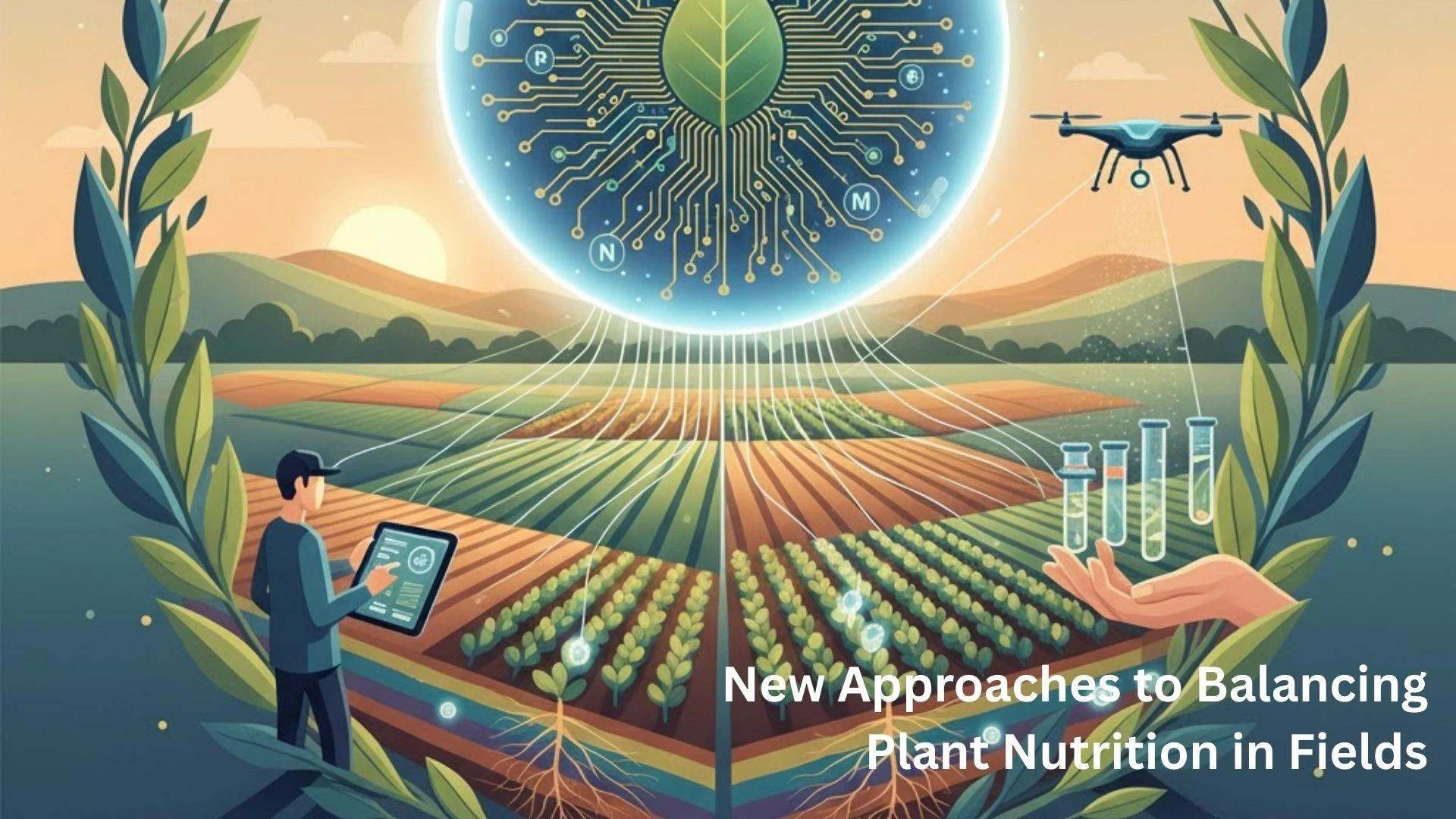

Farming today is not about applying fertilizers and hoping for the best. Changing soil conditions, climate pressure, rising input costs, and higher yield expectations have pushed farmers to rethink how nutrition is managed in the field. Balanced nutrition is now seen as a long-term strategy rather than a one-time input decision.
Modern agriculture focuses on understanding crop demand, soil behavior, and nutrient efficiency together. Instead of blanket applications, farmers are moving toward smarter, more responsive systems that support crop health from sowing to harvest.
Why Traditional Nutrient Practices Are Changing?
For decades, nutrient management relied heavily on fixed fertilizer schedules. While this approach delivered results in the short term, it often ignored soil health, nutrient losses, and crop-specific needs. Over time, many fields began showing signs of nutrient imbalance—poor root growth, uneven crop stands, and declining yields.
Another challenge has been nutrient runoff and leaching, especially in irrigated or high-rainfall regions. These losses not only increase costs but also reduce nutrient availability during critical growth stages. As a result, farmers are now shifting toward practices that focus on precision, timing, and absorption rather than quantity alone.
Understanding Crop Demand More Precisely
One of the most important changes in nutrient management is the focus on crop demand at different growth stages. Crops do not require the same nutrients throughout their life cycle. Root development, vegetative growth, flowering, and grain or rhizome formation all have distinct nutritional needs.
By mapping nutrient demand stage by stage, farmers can apply inputs more efficiently. This approach reduces waste and ensures nutrients are available exactly when crops need them most. Field trials across multiple crops show that this method improves nutrient uptake and crop uniformity.
Soil Testing as a Decision Tool
Modern soil testing goes beyond basic NPK values. Today’s tests provide insights into organic matter levels, micronutrient availability, soil pH, and microbial activity. These factors directly influence how nutrients behave in the soil and how crops absorb them.
Regular soil testing allows farmers to correct deficiencies before they impact yield. It also helps avoid excess application, which can harm soil structure and beneficial organisms. Balanced soil chemistry ensures that applied inputs translate into actual crop growth rather than remaining locked in the soil.
The Shift Toward Smarter Nutrient Formulations
New formulations are designed to improve nutrient availability and reduce losses. Controlled-release fertilizers, chelated micronutrients, and enhanced-efficiency blends are gaining popularity across crops.
These solutions work in sync with soil conditions, releasing nutrients gradually and improving absorption. When combined with proper irrigation and field practices, they help maintain steady growth and reduce stress during critical crop stages.
This shift also supports better utilization of plant nutrients, ensuring crops receive consistent nourishment without sudden spikes or deficiencies.
Role of Biology in Nutrition Balance
Another major change in field nutrition is the growing role of biological inputs. Healthy soils are living systems, and microbial activity plays a key role in nutrient cycling. Beneficial microbes help convert unavailable forms of nutrients into forms plants can absorb.
This is where bio-nutrients for plants are increasingly used as part of integrated nutrition programs. These inputs support soil biology, enhance root interaction, and improve nutrient efficiency over time. Farmers adopting this approach often see improved soil structure and better crop resilience.
Integrating Nutrition with Crop Protection
Nutrition does not work in isolation. Crop stress from pests, diseases, or weeds reduces nutrient uptake efficiency. Healthy, well-nourished plants are better equipped to handle stress and recover faster.
Many modern programs integrate nutrition planning with crop protection strategies. Companies like Dhanuka focus on holistic field solutions that align nutrient management with overall crop health, helping farmers maintain consistency throughout the season.
Precision Farming and Nutrient Application
Technology is playing a growing role in balancing nutrition. GPS-based application, variable rate technology, and sensor-based monitoring allow farmers to apply nutrients only where needed. This reduces input costs and improves efficiency across large fields.
Precision tools also help identify problem areas early, allowing corrective action before yield loss occurs. Over time, this data-driven approach improves field uniformity and long-term soil health.
Importance of Timing and Placement
When nutrients are applied is just as important as what is applied. Poor timing can lead to losses through volatilization or leaching. Proper placement ensures nutrients reach the active root zone where absorption occurs.
Split applications, foliar feeding at key stages, and localized placement near roots are now common practices. These methods help crops access nutrients more effectively and improve overall growth performance.
Supporting Roots for Better Nutrition Uptake
Strong root systems are essential for balanced nutrition. Practices that encourage deep and healthy root growth improve access to moisture and nutrients stored deeper in the soil.
Balanced nutrition programs now emphasize early root development through targeted inputs and soil conditioning. This foundation supports better nutrient absorption throughout the crop cycle and improves yield stability.
Long-Term Soil Health as a Priority
Balancing nutrition is no longer just about one season’s harvest. Long-term soil health is becoming a key focus for progressive farmers. Maintaining organic matter, supporting microbial life, and preventing nutrient buildup are essential for sustainable productivity.
Using plant nutrients wisely and supporting biological activity helps soils remain productive year after year without increasing dependency on higher input levels.
Combining Chemical and Biological Inputs
Modern nutrition strategies often combine conventional fertilizers with bio nutrients for plants to create balanced systems. This integration improves nutrient efficiency while supporting soil health.
Farmers using combined approaches report better crop vigor, improved nutrient uptake, and more stable yields across varying weather conditions.
Practical Benefits Seen in Fields
Farmers adopting these new approaches report several clear benefits:
- Improved nutrient use efficiency
- Healthier root and shoot development
- Reduced input waste
- Better tolerance to stress conditions
- More consistent yields
These results highlight the value of moving beyond traditional practices toward smarter, field-specific nutrition management.
Moving Forward with Balanced Nutrition
The future of farming depends on how well nutrition is managed at the field level. New approaches focus on understanding soil, crop demand, timing, and biological support rather than relying on fixed schedules.
By adopting modern strategies, farmers can protect soil health, improve productivity, and ensure their fields remain profitable for years to come. Balanced nutrition is no longer an option—it is a necessity for sustainable and resilient agriculture.
FAQs
1. What does balanced plant nutrition mean in farming?
Balanced plant nutrition means supplying crops with the right nutrients, in the right amount, at the right time. It ensures healthy root, stem, and leaf growth while preventing nutrient deficiencies or excesses that can reduce yield and soil health.
2. Why is balancing plant nutrition important for crop yield?
Balanced nutrition helps crops absorb nutrients efficiently, reduces stress, and supports steady growth throughout the season. This leads to healthier plants, better resistance to disease, and more consistent yields across different field conditions.
3. How do soil tests help in managing plant nutrition?
Soil tests show nutrient availability, pH levels, and soil health status. This information helps farmers apply nutrients precisely, avoid unnecessary inputs, and correct deficiencies before they affect crop growth and productivity.
4. What are new approaches to plant nutrition management?
New approaches include precision nutrient application, stage-wise feeding, soil health improvement, and combining chemical inputs with biological solutions. These methods improve nutrient efficiency and support long-term field productivity.
5. How do bio-based inputs support plant nutrition?
Bio-based inputs improve soil microbial activity, help convert nutrients into usable forms, and support stronger root systems. They work alongside fertilizers to improve nutrient uptake and reduce losses in the field.
6. Can balanced nutrition reduce fertilizer costs?
Yes, balanced nutrition reduces waste by ensuring nutrients are applied only where and when needed. This improves nutrient use efficiency, lowers repeated applications, and helps farmers manage input costs more effectively.
7. How does plant nutrition affect root development?
Proper nutrition encourages deeper, stronger root growth, allowing plants to access water and nutrients more efficiently. Healthy roots improve crop stability, nutrient uptake, and tolerance to stress conditions.
8. What role does timing play in nutrient application?
Timing ensures nutrients are available during critical growth stages. Poor timing can lead to nutrient losses, while well-timed applications improve absorption and support uniform crop development.
9. How does balanced nutrition support sustainable farming?
Balanced nutrition maintains soil health, prevents nutrient buildup, and reduces environmental impact. It allows farmers to achieve high productivity while protecting soil fertility for future cropping seasons.
10. Are integrated nutrient programs better than traditional methods?
Integrated programs combine soil testing, precision application, and biological support. These systems are more adaptable to field conditions and help farmers achieve better results than one-size-fits-all nutrient schedules.
































Sign in to leave a comment.