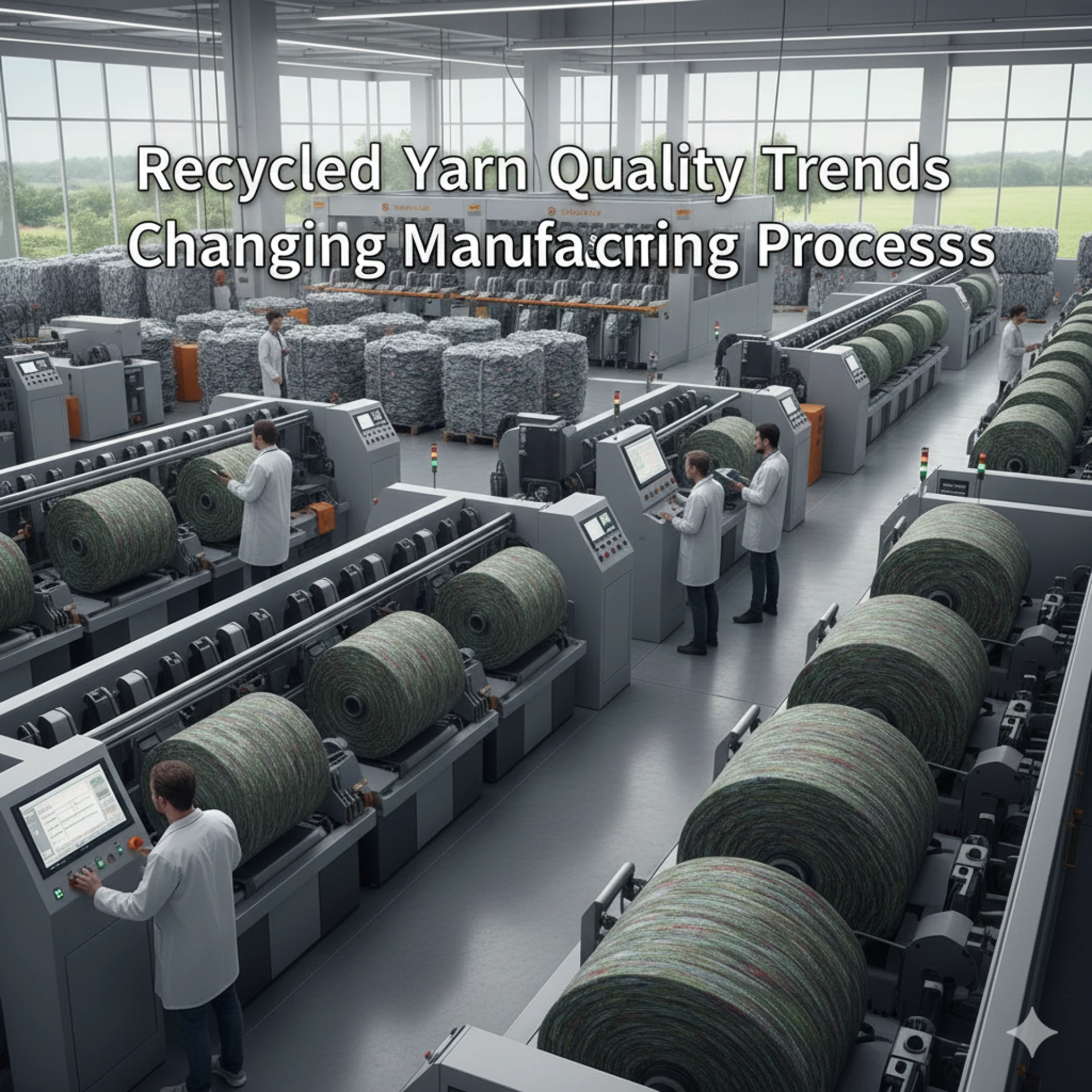

The textile industry is undergoing a clear transformation as sustainability and performance expectations continue to rise. One of the biggest drivers behind this shift is the growing focus on recycled yarn, which is no longer viewed as a secondary option but as a core material in modern textile production. As quality benchmarks improve, manufacturing processes are evolving step by step to meet global demand while maintaining consistency, strength, and finish.
Understanding the Shift in Yarn Quality Expectations
Buyers today expect recycled fibers to perform at par with conventional materials. This has pushed yarn manufacturers to rethink traditional methods and adopt refined production systems. Quality is no longer judged only by price but by durability, traceability, and end-use performance.
Key expectations shaping the industry include:
- Uniform fiber strength across batches
- Reduced contamination during processing
- Consistent color absorption and texture
- Compliance with global sustainability standards
Step 1: Improved Raw Material Sorting
Manufacturing quality starts with raw material selection. Advanced sorting techniques now separate fibers based on composition, shade, and condition. Automated systems and manual inspection together ensure fewer defects enter the production cycle.
This step reduces yarn breakage, improves spinning efficiency, and supports consistent output across large volumes.
Step 2: Advanced Cleaning and Fiber Preparation
Cleaning technology has become more precise. Manufacturers are investing in multi-stage cleaning systems that remove micro-impurities without damaging fibers. This is especially important when working with recycled inputs that originate from varied sources.
The result is smoother fiber flow during spinning and better yarn uniformity.
Step 3: Controlled Spinning Processes
Spinning recycled fibers requires tighter controls compared to conventional materials. Adjustments in speed, tension, and twist levels help achieve stable yarn structures. Modern machinery allows fine-tuning at each stage, helping maintain strength and flexibility.
This phase marks a major process upgrade for yarn manufacturers, as quality monitoring is now integrated digitally rather than manually.
Step 4: Real-Time Quality Monitoring
Sensors and data-driven systems are increasingly used to track yarn thickness, strength, and evenness in real time. Any deviation is detected early, reducing waste and reprocessing costs.
This proactive approach improves operational efficiency while ensuring consistent quality output.
Step 5: Collaboration Across the Supply Chain
Quality improvements are not limited to factories alone. Strong coordination with yarn suppliers ensures better control over fiber sourcing and pre-processing standards. Transparent communication allows manufacturers to align production settings with material characteristics.
Such collaboration also supports better planning and reduced production downtime.
Step 6: Enhanced Testing and Certification
Laboratory testing has become more frequent and more detailed. Yarn is tested for tensile strength, pilling resistance, colorfastness, and shrinkage. Certifications help build trust with international buyers and confirm that production meets evolving benchmarks.
This step reinforces market credibility and supports long-term export growth.
Step 7: Process Optimization for Scalability
As demand grows, manufacturers are optimizing processes to scale without compromising quality. Automation, energy-efficient machinery, and streamlined workflows help maintain consistency even at higher volumes.
At this stage, coordination with yarn suppliers becomes critical to ensure uninterrupted raw material flow and consistent specifications.
Market Impact of Quality-Driven Manufacturing
These changes are reshaping how the textile value chain operates. Improved quality standards make sustainable yarn more acceptable across apparel, home textiles, and technical applications. The industry is moving toward long-term reliability rather than short-term cost savings.
The second key impact is increased buyer confidence in recycled yarn as a dependable material for premium products.
The Jindaltex Approach
At Jindaltex, quality-led manufacturing is approached with balance and precision. The focus remains on sourcing carefully selected fibers, applying controlled processing methods, and maintaining transparency across every stage. By aligning technology with practical expertise, Jindaltex supports evolving market expectations while delivering yarn that meets both performance and sustainability goals.
Final Thoughts
Quality trends are not just influencing product outcomes; they are redefining how yarn is made from the ground up. Step by step, manufacturing processes are becoming cleaner, smarter, and more connected, setting a new benchmark for the future of textile production.





























Sign in to leave a comment.