
Lateral Pressure Coefficient Test
1. Test Method
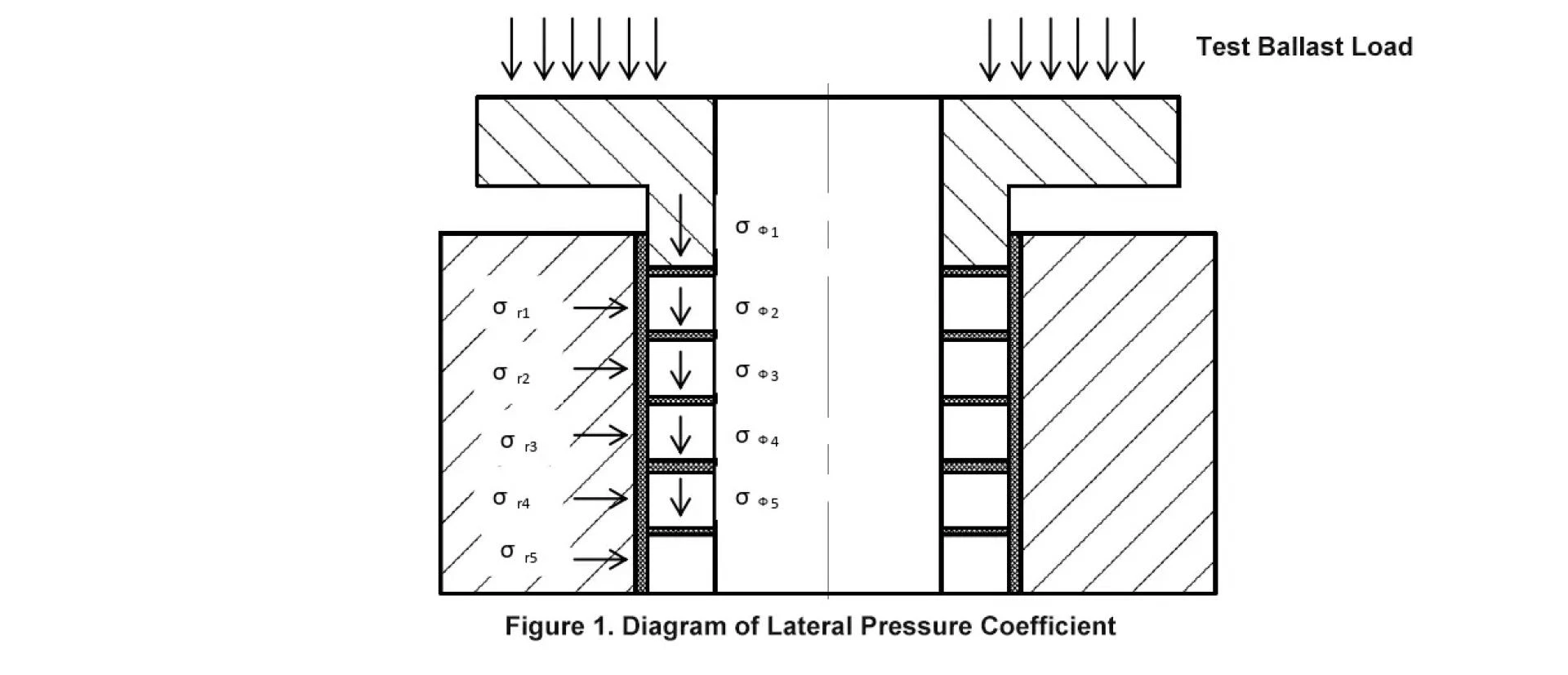
Under identical test conditions with a ballast load of 35 MPa, the axial stress (σφ) and lateral stress (σr) of each packing ring were measured using Fuji pressure-sensitive paper from Japan. The lateral pressure coefficient (n) for each ring was determined as the ratio of lateral stress to axial stress (n = σr / σφ). Specifically, the coefficients for the first through fifth packing rings were calculated as n₁ = σr₁ / σφ₁, n₂ = σr₂ / σφ₂, n₃ = σr₃ / σφ₃, n₄ = σr₄ / σφ₄, and n₅ = σr₅ / σφ₅. Figure 1 illustrates the measurement points used in determining the lateral pressure coefficient.
2. Stress Analysis of Packing Rings
Under axial load, the packing rings exhibited a gradual decrease in axial stress from the first to the fifth layer, reflecting a consistent attenuation of pressure along the axial direction. Similarly, the lateral stress distribution showed a corresponding downward trend, indicating that radial stress transmission efficiency varies by ring position and packing structure. These findings provide insight into the internal stress behavior of different packing materials and their effectiveness in maintaining uniform sealing pressure.
3. Test Data and Observations
Three types of packing materials—braided packing, anti-emission packing, and flexible graphite packing—were tested under the same conditions. The results revealed distinct differences in their stress transmission and pressure coefficients.
For braided packing, the axial stress decreased from 31.8 MPa to 21.0 MPa and the lateral stress from 30.5 MPa to 15.5 MPa, yielding an average lateral pressure coefficient of 0.84. The first three rings showed relatively high coefficients (0.89–0.96), while the fourth and fifth rings showed lower values (0.73–0.74), indicating uneven stress distribution and potential over-compression in the upper layers.
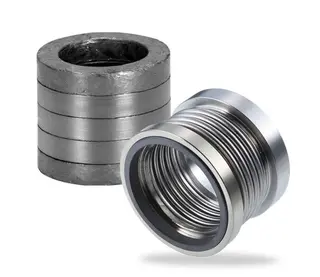
In the anti-emission packing, which features braided graphite strands with a special impregnation process, both axial and lateral stresses declined steadily from the top to the bottom layers. The average lateral pressure coefficient was 0.91, with more uniform values between 0.91 and 0.99 in the first four rings, and a moderate drop to 0.75 in the fifth ring. This result demonstrates improved stress uniformity and better load transfer compared with conventional braided packing.
For flexible graphite packing, composed of pure molded graphite, both axial and lateral stresses showed a pronounced decreasing trend from the first to the fifth layer. The average lateral pressure coefficient was 0.75, starting from 0.86 in the first ring and stabilizing between 0.70 and 0.76 in subsequent rings. This pattern reflects less efficient radial stress transfer and a tendency toward under-stressing in the lower layers.
4. Summary and Design Implications
The test results indicate that excessive packing depth does not enhance sealing performance. Instead, over-compression in the upper rings and under-stressing in the lower ones lead to stress imbalance. Over time and under repeated thermal cycling during valve startup and shutdown, this imbalance accelerates stress relaxation and packing degradation, ultimately reducing sealing reliability. The loosening of jack bolt torque during testing provided direct evidence of this phenomenon.
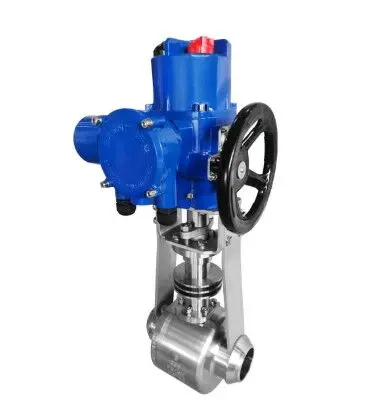
To achieve consistent low leakage performance in small-bore forged steel valves—fully meeting ISO 15848-1 requirements (400°C, three thermal cycles, and 310 switching operations)—it is essential to optimize the stuffing box design. Reducing the packing depth allows for more efficient mechanical stress conduction and balanced distribution within the graphite packing set.
A five-ring packing configuration is therefore recommended. Properly guided mechanical force and an optimized packing stack design enable low-emission graphite packing to achieve stable sealing performance under mass production conditions. This approach not only ensures repeatable low-leakage results but also reduces production variability and overall procurement costs.It's important to know about Google SEO to help your website rank higher in search results.
























Sign in to leave a comment.