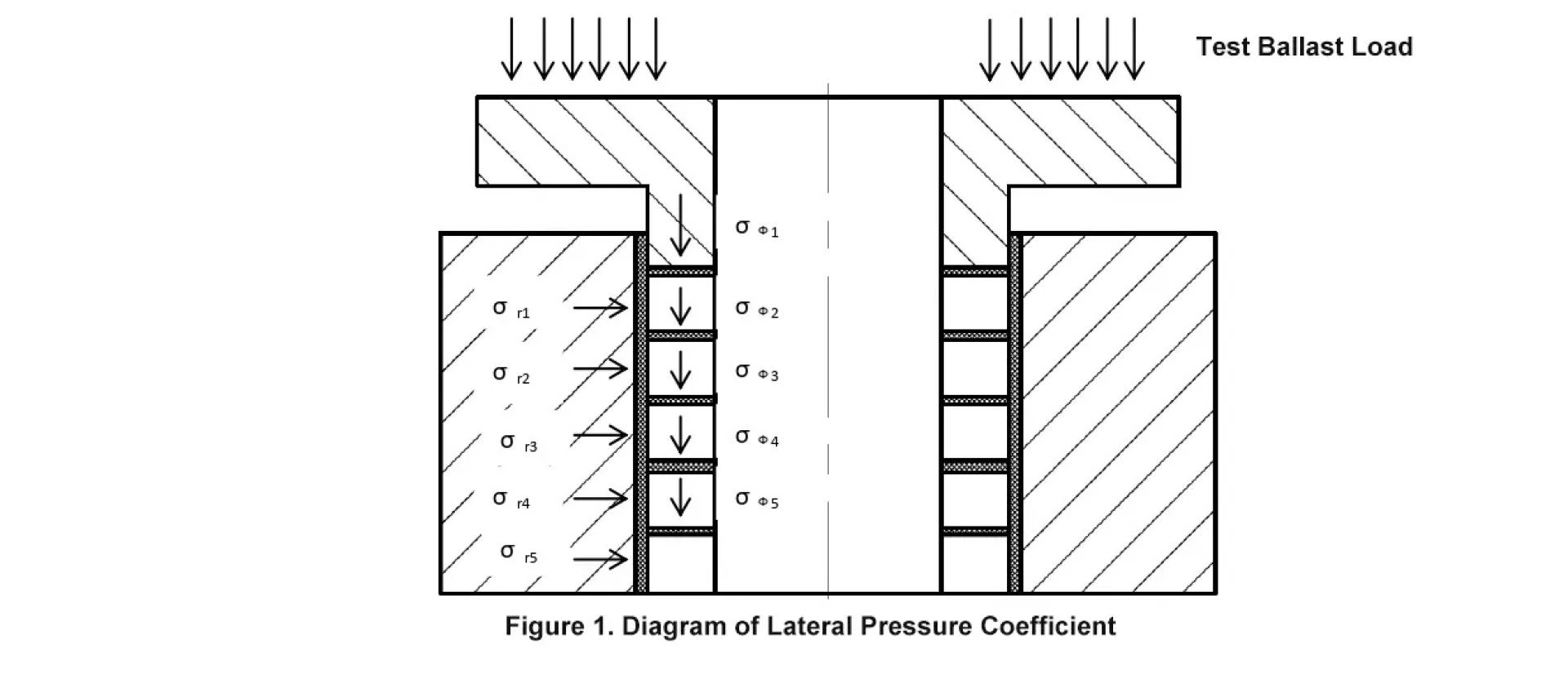

Lateral Pressure Coefficient Test and Analysis
Under a constant test ballast load of 35 MPa, the axial and lateral stresses of each packing ring were measured using Fuji pressure-sensitive film from Japan. The lateral pressure coefficient of each ring was then calculated as the ratio of lateral stress to axial stress (n = σr/σφ). This parameter was determined individually for each ring, providing a detailed understanding of how stress is distributed across the packing set.
Stress Distribution and Test Observations
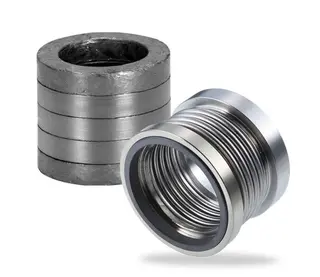
The axial and lateral stress conditions of the packing rings were analyzed to assess the mechanical behavior under compression. The test data revealed significant differences among the three packing types—Braided Packing, Anti-Emission Packing, and Flexible Graphite Packing.
For the Braided Packing, the axial and lateral stresses decreased gradually from the first to the fifth ring. Over-compression marks (yellow areas) appeared consistently in all rings, indicating uneven stress distribution. The average lateral pressure coefficient was 0.84, with higher coefficients (0.89–0.96) in the first three rings and lower values (0.73–0.74) in the last two.
The Anti-Emission Packing showed a more balanced stress profile. Axial stress decreased evenly without over-compression, and lateral stress followed a similar trend. Over-compression was observed only in the first two rings, while the fifth ring showed slight under-stress. The average lateral pressure coefficient reached 0.91, indicating better uniformity and stability compared to conventional braided packing.
For the Flexible Graphite Packing, both axial and lateral stresses exhibited a clear downward trend from the first to the fifth ring. Over-compression was evident in the first ring, while under-stress areas (green regions) appeared from the third ring onward. The average lateral pressure coefficient was 0.75, reflecting uneven stress transmission throughout the packing stack.
Analysis and Design Implications for Small Forged Valves
From the above data, it is evident that increasing packing depth does not enhance sealing performance. On the contrary, excessive packing layers tend to accelerate stress failure during long-term operation, especially under repeated thermal cycling caused by pipeline startup and shutdown. The most direct indication of this phenomenon is the loosening of jack bolt torque over time.
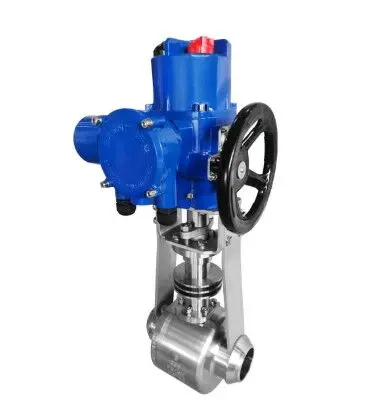
To achieve consistent low-emission performance in small-bore forged steel valves—meeting ISO 15848-1 requirements at 400°C with three thermal cycles and 310 switching operations—it is essential to optimize the stuffing box design. Reducing the packing depth ensures that graphite packing can maintain efficient mechanical load transfer and stable stress distribution, thereby improving sealing reliability.
Optimal Packing Design Principle
A 5-ring packing configuration is recommended for optimal stress control and sealing effectiveness. Excessive ring counts increase the risk of uneven compression and mechanical instability. With precise mechanical force guidance, low-emission packing can achieve consistent performance in mass production, enabling random installation while maintaining 100% low-leakage compliance. This design approach not only enhances product reliability but also reduces procurement and manufacturing costs.It's important to know about Google SEO to help your website rank higher in search results.





















Sign in to leave a comment.