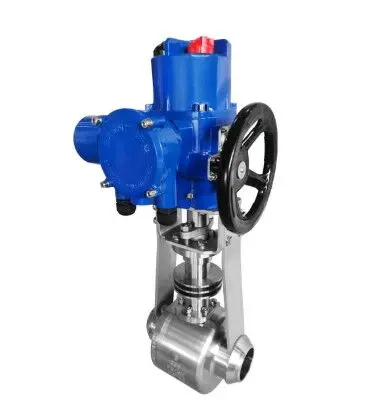

A leading Chinese manufacturer of low-emission valves and seals, offering high-end low-emission valves, low-leakage graphite packings, and gaskets engineered for zero-leakage performance.
Ball valves are widely used across industrial sectors such as petrochemicals, long-distance pipelines, and urban heating systems. Thanks to their low flow resistance, simple operation, fast opening and closing, excellent sealing performance, and high reliability, ball valves have evolved rapidly over the past few decades and become indispensable flow-control components.
However, as industrial processes increasingly operate under high-temperature conditions, traditional soft-sealed ball valves face clear limitations. Restricted by the temperature tolerance of soft sealing materials, these valves struggle to perform reliably once operating temperatures exceed 200°C. To meet this challenge, high-temperature ball valves were developed, providing a robust and reliable sealing solution for extreme thermal environments.
Soft-Sealed vs. Hard-Sealed Ball Valves
The sealing performance of a ball valve largely depends on the material used for the valve seat.
Soft-Sealed Ball Valves
When the valve seat is made from polytetrafluoroethylene (PTFE) or filled PTFE, the valve is classified as a soft-sealed ball valve. These valves offer excellent sealing performance under normal conditions and at temperatures below 200°C, making them widely used in general industrial and civil applications. However, at elevated temperatures, soft sealing materials lose elasticity and strength, leading to a sharp decline in sealing performance.
Hard-Sealed Ball Valves
Hard-sealed ball valves use metal materials for the valve seat. This metal-to-metal sealing structure allows the valve to operate reliably at temperatures above 250°C, which is why hard-sealed ball valves are commonly referred to as high-temperature ball valves. Under high-temperature conditions, they demonstrate superior sealing capability and adaptability due to their durable metal sealing pairs.
Optimization of Sealing Structures in High-Temperature Ball Valves
The metal sealing pair is the core of high-temperature ball valve design. Its main advantage lies in its wide temperature applicability, as different metals typically have similar thermal expansion coefficients. With proper material selection and matching, uniform contact between the ball and seat can be maintained even under high thermal loads, effectively compensating for thermal deformation.
That said, metal sealing pairs also present challenges. Their high hardness requires greater contact pressure to achieve sealing, which can accelerate wear between the ball and valve seat. In addition, the relatively high friction coefficient of metal surfaces increases operating torque.
To overcome these limitations, elastic sealing structures were introduced. These designs significantly enhance sealing performance by providing elastic compensation, reliable sealing force, and adaptability across a wide temperature range. Both floating and trunnion-mounted ball valves can incorporate elastic sealing structures. Under the combined action of preload force and fluid pressure, the valve seat is pressed tightly against the ball, allowing controlled deformation that compensates for ball roundness errors and microscopic surface irregularities. Adequate and stable contact pressure is the key to achieving dependable sealing performance.
Typical High-Temperature Ball Valve Structures
The structural design of high-temperature ball valves is critical to ensuring stable operation under extreme conditions. Common designs include the following:
1. Hard-Sealed High-Temperature Ball Valves
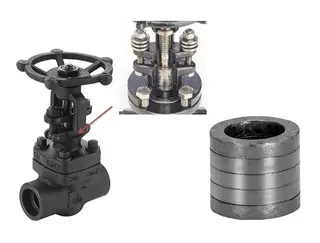
These valves consist of a valve body, ball, stem, metal valve seats, and flexible graphite sealing rings positioned between the seat and the body. The two valve seats are symmetrically arranged around the stem axis and embedded within the valve body. They can slide freely inside dedicated slots, while sealing between the seat and body is achieved using flexible graphite rings. The compressibility of the graphite allows the valve to accommodate thermal expansion of the ball without jamming. This structure is typically suitable for operating temperatures up to approximately 343°C.
2. Elastic-Sealed High-Temperature Ball Valves
Elastic-sealed designs build upon hard-sealed structures by adding components such as metal elastic rings, compression rings, and sealing gaskets. One valve seat is a sliding metal seat, while the other is a deformable metal elastic ring seat. As the ball expands due to heat, the elastic seat deforms accordingly, preventing seizure. The metal elastic ring provides continuous compensation for temperature changes, pressure fluctuations, and wear, ensuring stable and long-term sealing reliability.
3. High-Temperature Control Ball Valves
High-temperature control ball valves often adopt a disc spring-loaded sealing structure. The valve assembly includes the valve body, ball, stem, front and rear seats, sealing rings, compression rings, and disc springs. The front seat assembly is preloaded by disc springs, which provide the initial sealing force and compress the sealing rings between the seat and valve body. The seats are symmetrically arranged and able to slide within the body slots. During thermal expansion, the seat assembly moves while the disc springs deform, preventing jamming and ensuring smooth operation under high-temperature conditions.
Sealing Material Selection for High-Temperature Applications
High-temperature environments in industries such as oil refining, chemical processing, and power generation place extreme demands on sealing materials. When temperatures exceed 200°C, conventional rubber seals may harden, crack, or fail completely. While metal seals offer greater thermal stability, mismatched thermal expansion can still cause leakage if not properly engineered.
For example, catalytic cracking units in refineries often operate continuously at temperatures between 300°C and 500°C. In such applications, factors such as peak temperature, exposure duration, pressure, and media characteristics must all be carefully evaluated.
Common high-performance sealing materials include:
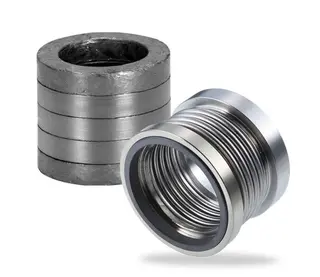
- Flexible Graphite: With a temperature range from -200°C to 450°C, flexible graphite is ideal for high-temperature steam and process valves. It maintains stable sealing performance under extreme thermal cycling and effectively prevents leakage.
- Silicon Carbide: Known for its high hardness and excellent thermal conductivity, silicon carbide is widely used in mechanical seal rings for high-temperature, high-pressure pumps, providing outstanding wear resistance and sealing stability.
- PTFE Composites: Reinforced with glass or carbon fiber, PTFE composites can withstand temperatures up to approximately 260°C while retaining chemical resistance and low friction, making them suitable for dynamic sealing.
- PEEK: Polyether ether ketone (PEEK) offers long-term operating temperatures above 250°C, along with excellent mechanical strength, dimensional stability, and chemical resistance. It performs reliably in complex and demanding sealing applications.
Appropriate material selection can dramatically extend service life. For instance, upgrading seals from nitrile rubber to fluororubber in a chemical plant extended service life from three months to two years, significantly reducing maintenance costs and downtime. Among advanced materials, PTFE is favored for low-friction dynamic sealing, while PEEK is valued for its comprehensive mechanical and thermal performance.
Challenges Facing High-Temperature Ball Valves
Despite their advantages, high-temperature ball valves face ongoing challenges. Extreme operating conditions demand continuous advancements in sealing materials and structural design. At the same time, manufacturing precision is critical to ensure consistent quality and long-term reliability.
Maintenance also plays a vital role. Regular inspection for corrosion, deformation, and wear of internal sealing components is essential. Only through proper maintenance can high-temperature ball valves fully realize their performance advantages, extend service life, and minimize operational costs.
Conclusion
As critical guardians of sealing performance in high-temperature industrial environments, high-temperature ball valves play an irreplaceable role across many industries. From optimized sealing structures to advanced high-performance materials, each technological advancement strengthens their reliability and efficiency. With continued innovation in materials science and valve design, high-temperature ball valves will be capable of meeting even more demanding operating conditions, ensuring safe, stable, and efficient industrial operations well into the future.Find Top China Manufacturers, Suppliers, Exporters, Services Providers, Sourcing China Quality Products & Services on the B2B E-Commerce Website Platform Portal.


















Sign in to leave a comment.