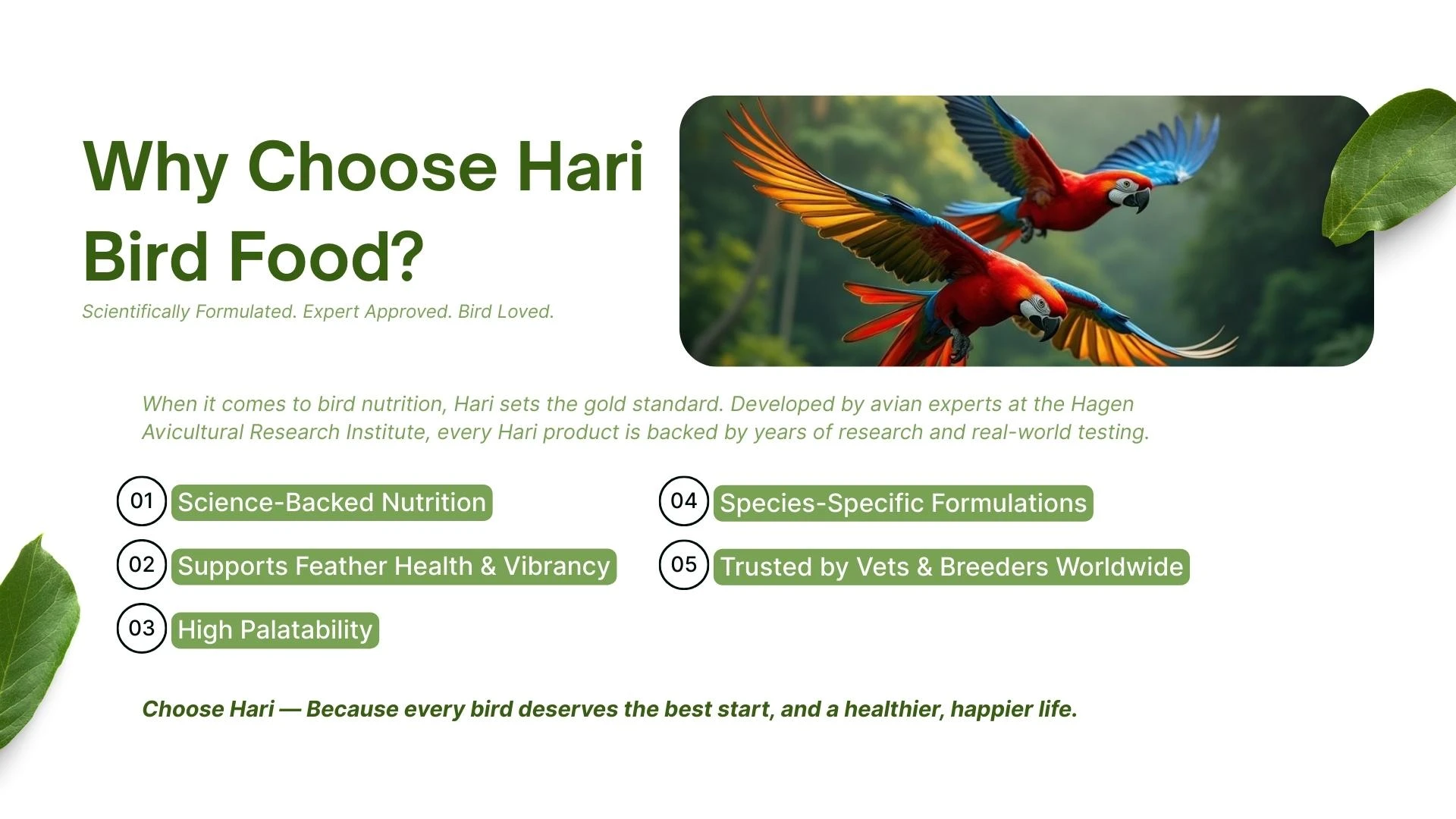

Birds are sensitive, intelligent, and highly social pets. Whether you have parrots, budgies, or other pet birds, proper care at home plays a major role in their long-term health and happiness. Many bird parents unknowingly make small mistakes in feeding, nutrition, or habitat setup, which can impact a bird’s energy, feathers, and immunity. This guide focuses on essential bird care practices that help pet birds thrive indoors.
1. Balanced Nutrition Is the Foundation of Bird Health
One of the most common problems in pet birds is nutritional deficiency. Many bird owners rely only on seeds, which may fill the stomach but fail to provide complete nutrition. Birds require a balanced diet that includes essential vitamins, minerals, proteins, and grains to maintain energy levels and feather quality.
Solution:
A varied diet that combines quality seed mixes with nutritionally balanced formulas helps support overall health. Proper nutrition improves digestion, strengthens immunity, and promotes brighter feathers. Supplementing the daily diet with vitamin-rich food sources helps birds stay active and reduces the risk of weakness or illness.
2. Importance of Vitamins & Supplements for Birds
Pet birds often live indoors, which limits their exposure to natural sunlight and varied food sources. This can lead to vitamin deficiencies that affect bone strength, metabolism, and immunity.
Solution:
Adding vitamin supplements to a bird’s routine supports bone health, feather growth, and overall vitality. Vitamins play a key role during molting, breeding, and growth stages. Regular supplementation helps birds adapt better to indoor environments and reduces stress-related health issues.
3. Proper Feeding Habits & Portion Control
Overfeeding or feeding the wrong type of food can lead to obesity and digestive issues in birds. Birds also tend to pick only their favorite seeds, ignoring essential nutrients.
Solution:
Offering nutritionally complete food in measured portions ensures birds receive balanced nutrition every day. Rotating food textures and formulas helps prevent selective eating and encourages healthier feeding habits. Clean feeding bowls and fresh food daily are essential to prevent contamination.
4. Feather Health & Molting Care
Molting is a natural process, but excessive feather loss, dull plumage, or slow regrowth can indicate poor nutrition or stress. Feathers are a strong indicator of a bird’s internal health.
Solution:
A nutrient-rich diet combined with proper vitamin intake supports healthy feather growth. During molting periods, birds need extra care, hydration, and calm surroundings. Consistent nutrition helps feathers grow stronger and shinier while reducing discomfort during molting.
5. Clean Environment & Cage Hygiene
Birds are highly sensitive to unclean environments. Poor cage hygiene can lead to bacterial infections, respiratory problems, and stress.
Solution:
Regularly cleaning cages, perches, and feeding areas helps maintain a healthy living space. Fresh water and clean food bowls should be provided daily. A hygienic setup keeps birds comfortable and reduces the risk of disease.
6. Mental Stimulation & Stress Reduction
Birds are intelligent and social animals. Lack of interaction, boredom, or sudden changes in routine can cause stress, feather plucking, and aggressive behavior.
Solution:
Providing mental stimulation through interaction, routine, and enrichment helps birds stay emotionally balanced. A calm environment, predictable feeding times, and regular interaction with caregivers improve confidence and reduce anxiety.
7. Supporting Long-Term Bird Wellness at Home
Healthy birds require a combination of proper nutrition, clean surroundings, and emotional care. Small improvements in daily routines can significantly impact their lifespan and quality of life.
Solution:
Choosing reliable bird care essentials, focusing on balanced nutrition, and supporting overall wellness through supplements and quality food helps birds live healthier, happier lives indoors.
Final Thoughts
Caring for pet birds at home goes beyond basic feeding. Proper nutrition, vitamin support, hygiene, and mental stimulation are essential for long-term health. When birds receive the right care, they become more active, vocal, and emotionally connected with their owners. A thoughtful approach to bird care ensures a safe, healthy, and enriching environment for your feathered companions.




























Sign in to leave a comment.