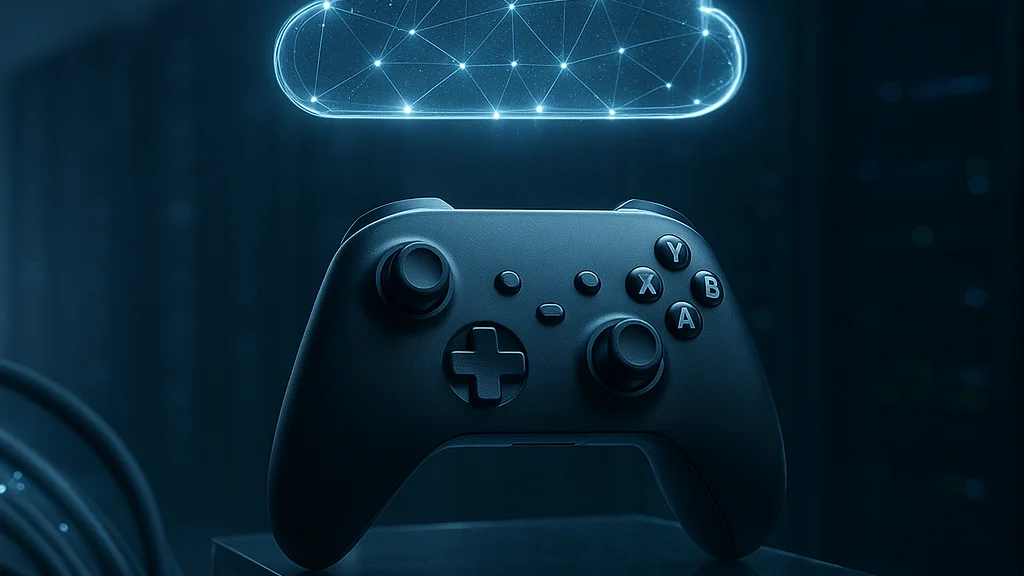

A decade ago, cloud gaming felt like one of those tech promises that lived in keynote slides and demo booths—right next to flying taxis and printers that behave. In 2026, it is no longer hypothetical. Millions of players now stream full PC and console-style games to phones, smart TVs, laptops, handhelds, and low-spec desktops, often without downloading more than an app. The miracle is real; the asterisk is still doing heavy lifting.
The central question is not whether cloud gaming works. It does. The more useful question is when it works, for whom, and at what cost. A player with fiber internet in Dubai Marina, Seoul, or Amsterdam is having a very different experience from someone relying on congested home Wi-Fi and a mobile hotspot that acts like it has personal grievances. Hardware matters less than network quality, server proximity, game licensing, and the business model each platform uses.
That is why a proper comparison has to go beyond marketing terms like “play anywhere.” Some services sell access to a rotating game library. Others rent you a virtual gaming PC. Some support purchases from existing stores such as Steam, Epic Games Store, Ubisoft Connect, or Xbox. Others lock you into a subscription catalog. Latency, bitrate, save syncing, controller support, TV apps, and regional availability all shape the actual value. If you want a shorter companion read, WriteUpCafe also has Beginners Guide to Cloud Gaming Platforms Compared and What You Need to Know About Cloud Gaming Platforms Compared, both useful before you start comparing tiers like a sleep-deprived procurement manager.
Cloud gaming is best understood as a delivery method, not a single product category. The service you choose matters as much as the games you want to play.
The market in 2026 is more mature than it was during the Stadia era, and also more fragmented. Microsoft, NVIDIA, Amazon, Sony, and several PC-cloud specialists have each pushed different definitions of success. Some want ecosystem lock-in. Some want subscription retention. Some are effectively selling remote access to expensive GPUs by the hour or month. For players, that fragmentation is annoying—but useful. It means there is finally enough variety to compare platforms on real terms instead of vibes and launch trailers.
The short history that explains the current mess
Cloud gaming did not fail because the idea was bad. It failed, repeatedly, because internet infrastructure, data center coverage, codec efficiency, and licensing frameworks were not ready at the same time. Early services such as OnLive proved the concept but struggled with economics and scale. Google Stadia later showed that even a giant with infrastructure muscle could not force a platform into relevance without a compelling content strategy. The lesson was brutal and obvious in hindsight—players do not migrate just because the tech demo is smooth for nine minutes.
By the early 2020s, the market split into two workable models. The first was the subscription library: pay monthly, stream from a curated catalog, and benefit from convenience over ownership. Xbox Cloud Gaming became the clearest example, tied to Game Pass Ultimate and Microsoft’s broad software ecosystem. The second was the bring-your-own-library model, where a service such as GeForce NOW lets users stream games they already own from supported digital stores. That turned out to be a crucial distinction because it reduced content acquisition costs for the platform and preserved familiar buying habits for players.
Sony kept PlayStation cloud access attached to its broader console strategy rather than presenting it as a standalone replacement. Amazon Luna took the channel approach, bundling access around themed content groups and ecosystem perks. Meanwhile, specialist services like Boosteroid and Shadow leaned toward PC-style flexibility, appealing to players who wanted fewer catalog restrictions and more control over settings, mods, and storefronts. None of these approaches solved every problem. Each simply chose a different compromise—rather like IKEA furniture, where the final shape depends on which screws you quietly accept losing.
Recent consumer coverage reflects that maturity. TechTimes’ 2026 comparison of cloud gaming services frames the category around practical trade-offs rather than novelty, while International Business Times’ 2026 cloud-versus-console analysis focuses on performance, cost, and player experience. That is where the conversation belongs now. The hype cycle has passed; the spreadsheet phase has begun.
The major platform types and what they actually sell
Most confusion about cloud gaming comes from treating every service as interchangeable. They are not. In 2026, the category breaks into several distinct platform types, and understanding them saves time, money, and at least one regrettable free trial.
Xbox Cloud Gaming is primarily a subscription-access platform. You subscribe to Game Pass Ultimate and stream supported titles from Microsoft’s catalog across devices. The upside is value through breadth—first-party releases, a large rotating library, and tight ecosystem integration. The limitation is equally clear: you are mostly streaming what Microsoft licenses into the service, not a universal personal game collection.
NVIDIA GeForce NOW works differently. It is best seen as a remote high-end PC layer for games you already own on supported stores. If your Steam or Epic library is substantial, GeForce NOW can feel less like Netflix and more like renting a powerful graphics card in someone else’s building. Support is not universal, though. Publisher participation determines what appears, and unsupported games remain unsupported no matter how much optimism you bring to the app.
Amazon Luna sits closer to the channel-subscription model, with access structured around selected libraries rather than broad ownership portability. PlayStation cloud streaming, attached to higher PlayStation Plus tiers, remains most attractive to players already invested in Sony’s ecosystem and backward-catalog access. Boosteroid and similar services often emphasize broad device support and access to PC titles through linked storefronts, though exact availability can vary by region and publisher agreements. Shadow is the outlier because it sells a cloud PC, not just game streaming. That makes it flexible for mods, launchers, and non-gaming workloads—but also more expensive and more technical.
- Library subscription: best for players who want instant access and low friction.
- Bring-your-own-library streaming: best for users with existing Steam, Epic, or Ubisoft purchases.
- Cloud PC rental: best for enthusiasts who want maximum flexibility, mod support, and PC-like control.
Those categories matter more than brand loyalty. A service can be technically excellent and still wrong for you if it clashes with how you buy games. If you want a broader framework for comparing these categories, WriteUpCafe’s Cloud Gaming Platforms Compared: Performance, Features, and Future Trends usefully maps the feature trade-offs that marketing pages tend to bury under cheerful gradients.
The smartest way to compare cloud gaming platforms is to start with your existing library, not the platform’s ad copy.
Performance is where the promises get audited
Cloud gaming lives or dies on latency. Resolution matters, frame rate matters, image quality matters—but latency is the judge, jury, and occasionally the executioner. A game can look crisp at 1080p or 4K and still feel wrong if input delay turns every dodge, parry, and headshot into an argument with physics. According to International Business Times, performance comparisons in 2026 still place local consoles ahead in consistency, especially for competitive and twitch-sensitive genres. That should not surprise anyone who has ever tried to time a fighting-game punish over unstable Wi-Fi and then blamed “netcode” out of habit.
What determines performance? First, the distance between the player and the nearest data center. Second, the quality of the home network—preferably Ethernet or strong 5GHz/6GHz Wi-Fi. Third, the platform’s streaming stack: codec choice, bitrate ceilings, server load, and adaptive streaming behavior under congestion. Finally, the game itself matters. Turn-based RPGs, strategy games, card battlers, and slower action-adventure titles tolerate cloud conditions far better than esports shooters or rhythm games.
In practical terms, here is what users should evaluate before committing:
- Latency tolerance by genre: single-player RPGs and management sims are forgiving; fighters and shooters are not.
- Resolution versus stability: a stable 1080p stream often feels better than a fluctuating 4K stream with compression spikes.
- Session limits and queue times: free or lower tiers may impose waits that erase convenience.
- Controller and keyboard support: some services are better for gamepads, others for mouse-and-keyboard play.
- Save syncing and launcher behavior: friction here can turn “instant play” into software archaeology.
TechTimes notes that the appeal of cloud gaming in 2026 is strongest for users who want premium experiences without buying new hardware. That remains true—but only if the network side of the equation is reliable. A midrange laptop with a wired connection can outperform an expensive tablet on weak Wi-Fi. A smart TV app can be wonderfully convenient until Bluetooth controller latency joins the party and starts rearranging your expectations.
For many households, bandwidth caps also deserve attention. Cloud gaming can consume substantial data, especially at higher resolutions and longer sessions. If your ISP still treats unlimited data as an optional personality trait, the monthly cost calculation changes fast. The hardware savings are real; the networking fine print is realer.
Cost, ownership, and the hidden economics of convenience
Cloud gaming is often sold as cheaper than traditional hardware. Sometimes it is. Sometimes it is simply moving the bill to a different column and hoping you do not read left to right. The basic value proposition is obvious: instead of spending hundreds on a console or a gaming PC upgrade, you pay a monthly fee and stream from remote hardware. For casual players, or for people who only play a handful of titles a month, that can be an excellent trade.
The problem appears when subscription stacking begins. A player might pay for Game Pass Ultimate, a GeForce NOW tier, one or two storefront purchases, and perhaps a cloud PC subscription for unsupported edge cases. Suddenly the “budget” setup starts looking like a streaming-era parody of cable television—more flexible, less honest, and weirdly full of duplicate charges. International Business Times highlights this tension in comparing cloud and console gaming: lower upfront cost does not automatically mean lower long-term cost.
Ownership is another fault line. On subscription-first services, access disappears when titles rotate out or when your membership ends. On bring-your-own-library services, ownership is stronger in theory because the game remains in your store account—but streaming support can still change if publisher agreements shift. The safest model for players who care about permanence is still local ownership on supported hardware. Cloud access is convenience layered on top, not a legal substitute for possession.
- Best value for casual players: library subscriptions with broad catalogs and low setup friction.
- Best value for existing PC buyers: services that stream already-owned games from major stores.
- Best value for power users: cloud PCs, but only if flexibility matters enough to justify the premium.
- Worst-case scenario: paying for multiple subscriptions while still buying games separately and tolerating queues.
There is also a resale and preservation issue. Physical console games can sometimes be sold, collected, or archived. Cloud-native access offers none of that. You are renting capability and, in many cases, temporary access rights. That is not inherently bad—it is just a different relationship to media. Some players are comfortable with it. Others hear “you will own nothing and your save file is in three ecosystems” and decide to go polish a disc case.
What changed recently, and why 2026 feels different
The biggest change in 2026 is not a single blockbuster platform launch. It is the accumulation of small improvements that made cloud gaming less fragile. Device support is broader. Smart TV apps are more common. Handheld PCs and tablets now function as credible cloud endpoints. Controllers pair more cleanly. Streaming codecs and server optimization have improved enough that the average good session feels routine rather than miraculous. That sounds boring, which is usually how technology signals adulthood.
Another shift is strategic clarity. Microsoft continues to treat cloud gaming as part of a larger subscription ecosystem rather than a standalone hardware replacement. NVIDIA has doubled down on premium streaming for users with existing PC libraries. Amazon Luna remains selective and ecosystem-friendly, especially for users already inside Amazon’s services orbit. Sony continues to use streaming as a complement to PlayStation’s installed base rather than a total reinvention of it. Specialist providers still matter because they serve users who want broader PC flexibility than the console-adjacent platforms offer.
Consumer guidance has accordingly become more nuanced. TechTimes’ 2026 roundup emphasizes that cloud gaming is now practical for many users, particularly those avoiding hardware upgrades, while still acknowledging familiar drawbacks such as internet dependency and occasional input lag. International Business Times similarly argues that cloud gaming has narrowed the gap with consoles in convenience and cost of entry, but not fully in raw consistency or ownership certainty. That is a fair reading of the market. The dream is no longer absurd. It is simply conditional.
Regional infrastructure is also doing more work than platform branding. In markets with widespread fiber, robust 5G, and nearby data centers, cloud gaming is increasingly normal. In regions with patchier infrastructure, the experience remains hit-or-miss. This is why broad claims about “the best cloud gaming service” are often unserious. The best service in one city can be mediocre in another—like food delivery apps, except with more ray tracing and fewer fries.
Which platform fits which kind of player
The most useful comparison is not a universal ranking. It is a matching exercise between platform design and player behavior. If you mainly want to sample a wide variety of games, avoid downloads, and play across devices with minimal setup, Xbox Cloud Gaming remains one of the strongest choices because the subscription library does the heavy lifting. It is especially attractive for households that value breadth over permanence and already see Game Pass as their main discovery engine.
If your gaming identity is basically “person with an overstuffed Steam backlog and opinions about settings menus,” GeForce NOW is often the better fit. It preserves the habit of buying games where you want and then using cloud hardware when your local machine is underpowered. The caveat, again, is title support. Before paying, check whether the games you actually play are available. Hope is not a compatibility layer.
PlayStation-oriented players who want access to selected catalog titles and cloud convenience inside Sony’s ecosystem may find PS Plus streaming sufficient, especially if local console play remains part of the mix. Luna makes sense for users who prefer simplicity, curated access, and Amazon ecosystem integration over maximal flexibility. Shadow or similar cloud PC offerings are for enthusiasts, creators, modders, and edge-case users who want a remote Windows machine rather than a tightly managed catalog service.
A practical buyer’s checklist looks like this:
- List the five games you play most.
- Check whether each service supports those exact titles.
- Test your home network on the device you will actually use.
- Decide whether you prefer subscription access or ownership through a storefront.
- Compare total monthly cost, including any existing memberships.
- Use free trials or entry tiers before committing long term.
For readers still sorting through the basics, How to Get Started With Cloud Gaming Platforms Compared in 2026 is a practical setup companion. It pairs well with this analysis because choosing a platform is only half the battle; configuring your network and expectations is the other half, and sadly there is no “ultra preset” for either.
The future: stronger infrastructure, sharper trade-offs
Cloud gaming’s future is promising, but not because it will replace all consoles and PCs. That old binary was always too neat. The more plausible future is hybrid. Local hardware will remain preferable for competitive play, offline reliability, preservation, and users who want guaranteed performance. Cloud gaming will keep expanding where convenience, device flexibility, and lower upfront cost matter most. The categories will overlap rather than conquer one another.
Three developments are worth watching over the next few years. First, publisher licensing behavior will remain decisive. The more publishers support bring-your-own-library streaming, the stronger services like GeForce NOW and Boosteroid become. Second, network quality and edge infrastructure will determine whether cloud gaming reaches beyond early-adopter geographies. Third, business-model consolidation may reshape the market if companies decide that platform loyalty is better built through bundles than through standalone subscriptions.
There is also the question of integration with handhelds, smart TVs, and low-cost devices. As those endpoints improve, cloud gaming becomes more attractive to families and casual players who do not want a dedicated console in every room. At the same time, AI-assisted upscaling, better video compression, and lower-latency encoding could further reduce the quality gap between local and streamed play. None of that eliminates the laws of physics. It just negotiates with them more effectively.
Cloud gaming is no longer trying to prove it exists. It is trying to prove that its compromises are acceptable often enough to become routine.
The bottom line is simple. There is no single best cloud gaming platform in 2026—only the best fit for your library, network, budget, and patience. If you value instant access and broad catalogs, subscription ecosystems are compelling. If you value ownership through familiar PC stores, bring-your-own-library services are more rational. If you want full flexibility, a cloud PC may justify its higher cost. Compare the model first, the games second, and the marketing last. That order saves money—and, occasionally, your dignity.




















Sign in to leave a comment.