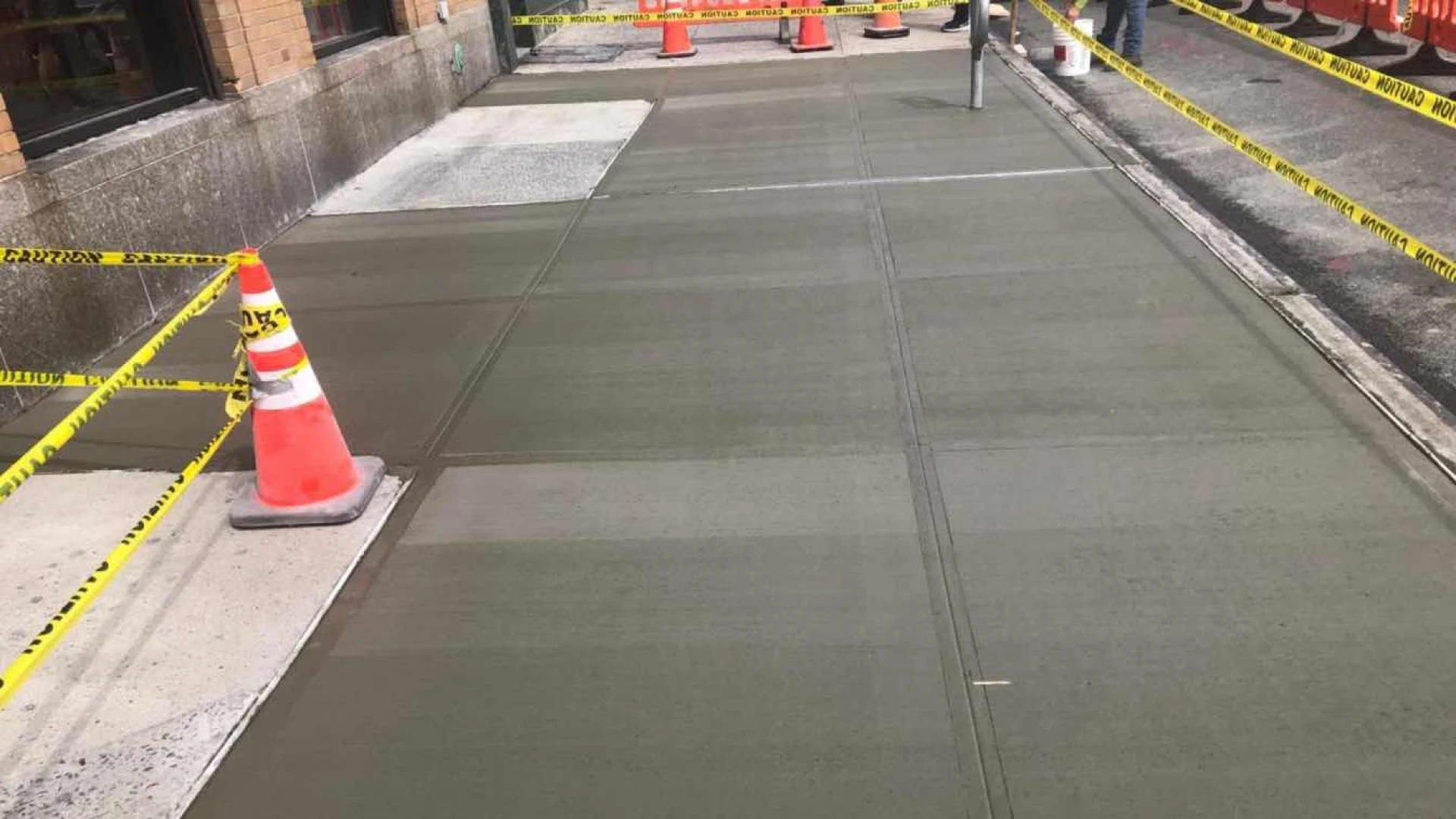
When property owners in New York City notice cracks, uneven slabs, or trip hazards, the first question that comes to mind is: “Should I repair my sidewalk or replace it completely?” Since the New York City Department of Transportation (DOT) strictly enforces sidewalk safety laws, choosing the right approach is important for both compliance and cost savings.
This guide explains the difference between concrete sidewalk repair and sidewalk replacement, which option is better in different situations, how NYC regulations affect your decision, and how long you have to fix issues after receiving a DOT Notice of Violation.
Understanding Sidewalk Repair vs. Replacement
1. Concrete Sidewalk Repair
Concrete sidewalk repair involves fixing damaged sections without removing the entire sidewalk. This may include:
- Crack filling
- Leveling uneven slabs
- Grinding trip hazards
- Patch repair
- Replacing only one or two flags
Best for:
- Minor cracks
- Small uneven areas
- Surface damage
- Early-stage deterioration
Benefits of Repair:
- Cost-effective: Repair is far cheaper than full replacement.
- Faster: Most repairs are completed in 1 day.
- Less disruption: No need to remove an entire walkway.
2. Concrete Sidewalk Replacement
Sidewalk replacement means removing damaged slabs and pouring brand-new concrete. NYC often requires replacement when the sidewalk is severely deteriorated.
Best for:
- Deep cracks
- Multiple broken slabs
- Structural damage
- Tree-root lifting
- Long-term durability issues
Benefits of Replacement:
- Long-lasting results: New concrete lasts 20–30 years.
- Improves property value & curb appeal
- DOT compliance: Required for severe trip hazards.
Sidewalk Repair vs Replacement: Which Is Better?
Choose Repair If:
- Damage is cosmetic or minor.
- Only 1–2 flags are affected.
- The surface has small cracks.
- Slab height difference is under ½ inch.
Repair is cheaper, faster, and effective for small issues.
Choose Replacement If:
- The sidewalk has multiple structural failures.
- Water puddles form (drainage problem).
- Slabs are lifted by tree roots.
- There are large gaps, holes, or missing concrete.
- DOT has issued a violation for hazardous conditions.
Replacement provides long-term safety and ensures city compliance.
How DOT Notices Affect Your Decision
When NYC DOT inspects sidewalks, they issue a Notice of Violation if the sidewalk is dangerous or not compliant. Once you receive this notice, you must take action quickly.
What Happens If You Ignore a DOT Notice?
- The city waits for the required time period.
- If no sidewalk repair is done, DOT hires a contractor.
- They repair or replace the sidewalk.
- You receive a bill, often 3–5x more expensive.
- A lien may be placed on your property.
How Long Do You Have to Complete Repairs After a DOT Notice?
NYC DOT gives property owners 45 days to complete sidewalk repairs after receiving a Notice of Violation.
Important Points:
- Repairs must be done by a licensed NYC sidewalk contractor.
- You must follow NYC DOT specifications and permits.
- After repairs, DOT reinspects the work for approval.
- If the repair is rejected, you must fix it again.
For Tree-Root Damage
If the sidewalk is lifted by city-owned trees, DOT gives more flexibility. In many cases, the Parks Department repairs the sidewalk at no cost—but only when the damage is clearly tree-related.
Factors to Consider Before Choosing Repair or Replacement
1. Extent of Damage
Minor cracks → Repair
Multiple deep cracks → Replacement
2. Safety
Trip hazards must always be fixed immediately.
3. DOT Regulations
If DOT recommends replacement, repair alone is not allowed.
4. Budget
Repair is cheaper, but replacement prevents future costs.
5. Long-Term Durability
Replacement gives 20–30 years of life.
Why Professional Sidewalk Contractors Matter
A licensed NYC concrete contractor ensures:
- DOT-approved materials
- Proper grading and leveling
- ADA compliance
- Permit handling
- Full DOT violation removal service
DIY repairs are not allowed and often lead to rejection during inspections.
Conclusion
Choosing between sidewalk repair and sidewalk replacement depends on the severity of the damage, compliance requirements, and long-term goals. Repair is ideal for small cracks and surface issues, while replacement is best for structural damage, tree-root lifting, and large-scale deterioration.
If you receive a DOT Notice of Violation, you generally have 45 days to complete the required repairs to avoid penalties, liens, and costly city-contractor work. The safest approach is hiring a professional, licensed contractor like Eden Pro Contractors who follows NYC DOT standards and ensures durable, long-lasting results.
FAQs
1. How long does sidewalk repair take?
Most concrete sidewalk repairs are completed within 1 day, depending on the damage.
2. How long does sidewalk replacement take?
Full replacement can take 2–3 days, including demolition, pouring, and curing.
3. Can I repair my sidewalk myself?
No. NYC requires sidewalks to be repaired by a licensed contractor following DOT standards.
4. What counts as a sidewalk hazard?
Trip hazards, deep cracks, holes, uneven slabs, and lifted concrete caused by tree roots.
5. What if I miss the 45-day DOT deadline?
The city will repair or replace the sidewalk and send you a large bill, plus they may place a lien on your property.
6. How do I remove a DOT sidewalk violation?
Hire a licensed contractor, complete repairs, request a DOT re-inspection, and wait for approval.

























Sign in to leave a comment.