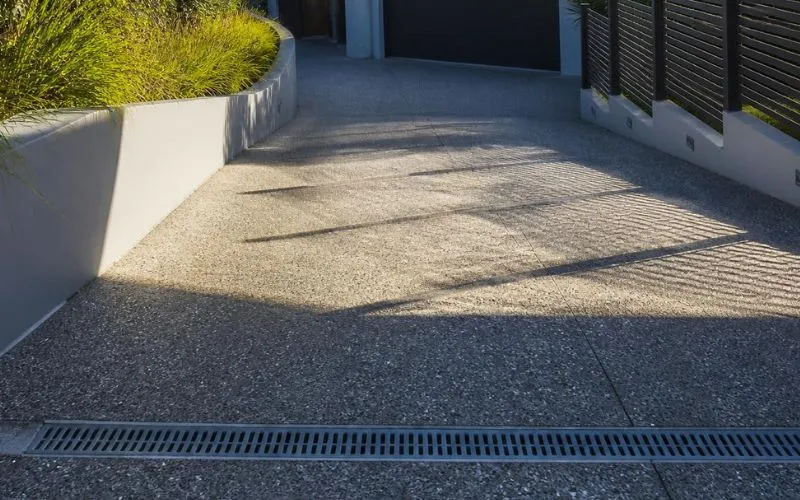

A driveway that cracks, pools water, or turns slippery after rain, these are the clearest signs a steep block wasn't concreted the right way. Left alone, a small crack or drainage issue turns into a full driveway replacement.
Sloped driveways work harder than flat ones. They carry the same vehicle weight while managing fast-moving water, extra braking pressure, and constant weather exposure. Getting a steep driveway right takes a different approach to a flat one, from tight hillside blocks to long coastal properties.
Why Sloped Driveways Behave Differently
Water behaves differently once gravity gets involved. On flat concrete, it sits and slowly drains away. On an incline, it picks up speed fast, and that moving water causes most of the long-term damage.
Left unchecked, runoff erodes the base beneath the slab over time. It also makes the surface dangerously slippery if the finish hasn't been chosen with grip in mind.
Anyone quoting concrete driveways in Doncaster knows a steep block needs a different plan than a flat one. Base preparation, surface texture, and drainage all have to work together, not just the pour itself.
Why Your Driveway's Base Matters Most on a Slope
Skimp on the base, and everything built on top of it suffers eventually. Dig deeper than standard, then compact a solid layer of crushed rock before any concrete goes down.
A properly compacted base keeps the slab from shifting as the ground moves through wet and dry seasons. Most early cracking on sloped driveways traces back to corners cut at this stage:
- Digging deeper than a standard flat driveway
- Compacting crushed rock in layers, not one big load
- Testing soil stability, especially on clay-heavy ground
- Letting the base settle before pouring
How Water Runoff Affects a Steep Driveway
Every steep driveway needs a real plan for runoff, not just a slope and a hope. A channel drain across the base of the incline intercepts water before it reaches the garage, street, or a neighbour's fence line.
Grading the slab slightly to one side, rather than pouring it dead flat, sends water where it should go. Skip this step, and water finds the lowest point on its own, usually somewhere inconvenient.
Choosing the Right Finish for a Steep Driveway
A smooth, polished slab looks sharp on a flat courtyard. That same finish on a steep driveway becomes a genuine hazard the first wet morning.
Exposed aggregate earns its reputation here. The textured surface grips shoes and tyres alike, exactly what a slope needs. Broom finishes work too, adding enough ridge to improve traction without looking rough:
- Exposed aggregate for the best available grip
- Broom finish as a cheaper, still-effective option
- Stamped concrete for texture with more visual style
- Smooth or polished finishes, best avoided on any real incline
Homeowners comparing concrete driveways in Mornington often lean toward texture anyway, given how often morning dew and coastal rain show up.
What Keeps a Steep Driveway From Cracking
A sloped driveway copes with more stress than a flat one, largely from cars braking and accelerating on the incline. Steel mesh or rebar gives the slab something to resist that load.
Control joints matter just as much. Cut at the right intervals, they let the concrete expand and contract with the weather instead of cracking wherever it feels like.
Curing time matters too. Rushing a slope-set driveway onto vehicle duty too early increases the risk of surface damage, since the incline already stresses the concrete as it sets.
What Does It Cost to Concrete a Steep Driveway?
Costs vary depending on slope severity, base depth, drainage work, and finish. Steeper blocks generally cost more than flat driveways of the same size, mainly from the extra excavation, reinforcement, and drainage involved.
A site-specific quote is the only reliable way to know your actual cost, since soil type and access both affect the final price.
Get Your Steep Driveway Right the First Time
A steep driveway doesn't force a choice between looks and safety. Get the base, drainage, and finish right, and it holds up as well as any flat driveway, for years.
Getting an assessment from an experienced concreter before work begins is the best way to know your driveway is set up to last.



























Sign in to leave a comment.