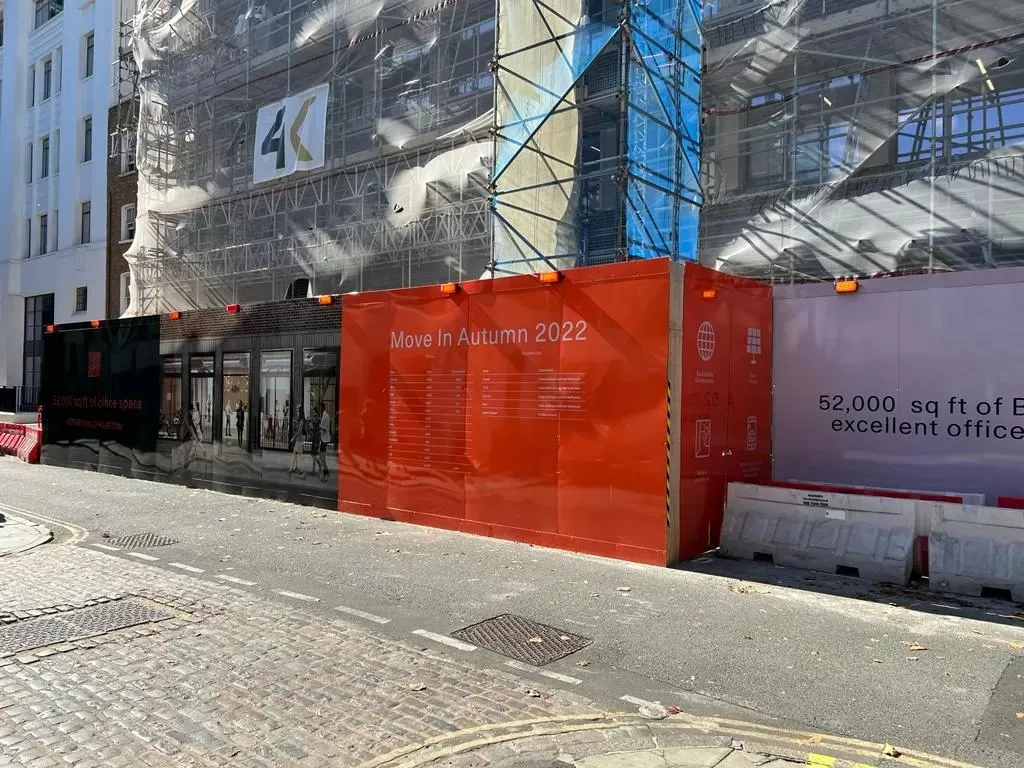

Construction projects often take months or even years to reach completion. During this time, exposed structures, temporary fencing, scaffolding and building materials can affect how a site appears to people passing by. Although these elements are essential to the work, the surrounding presentation does not have to look unfinished. Printed construction graphics offer a practical way to create a cleaner, more organised visual environment. From covering temporary fencing to transforming building exteriors, these displays can give active developments a more professional appearance while keeping the public informed about the project.
The Visual Impression of an Active Construction Site
A building site is more than a place where construction takes place. It is also a visible part of the surrounding neighbourhood, commercial district or public space. Its appearance can influence how people perceive the development, particularly when work continues for an extended period.
Temporary barriers and exposed surfaces may make a project appear disorganised, even when the construction process is progressing efficiently. Printed graphics help address this visual challenge by introducing consistent colours, images and messaging across the site.
Well-planned graphics can serve several purposes, including:
- Creating a more uniform appearance around the site perimeter.
- Communicating the identity of the development.
- Sharing information about the project with passers-by.
- Covering visually distracting areas of temporary infrastructure.
- Maintaining a consistent presentation throughout different construction stages.
These benefits make printed graphics a useful consideration during the planning of commercial buildings, residential developments, refurbishments and infrastructure projects.
Making Temporary Fencing Part of the Presentation
Temporary fencing is commonly used to establish site boundaries, manage access and separate construction activity from public areas. However, plain fencing can create a stark appearance, particularly when it extends along busy roads or pedestrian routes.
Printed covers can turn these boundaries into purposeful visual displays. Instead of leaving the fencing bare, project teams can use branded graphics, development imagery or information about the planned building.
Heras fencing covers are particularly useful for sites that rely on temporary mesh fencing. They provide a printable surface that can make the boundary look more coordinated while retaining the practical role of the fencing system.
The artwork might feature architectural visualisations, project names, developer branding or simple design elements that complement the surrounding environment. For residential developments, images of the proposed homes can help people understand what is being built. Commercial projects may use the space to display the building's intended purpose or identity.
The design should remain easy to read from a reasonable distance. Large text, clear imagery and a restrained colour palette generally work better than layouts filled with small details.
Building Wraps and the Transformation of Exposed Structures
Scaffolding and unfinished external walls can dominate the appearance of a construction project. Building wraps provide an opportunity to cover these areas with large-scale printed graphics, creating a more considered exterior while work continues behind the display.
A building wrap can feature a visual representation of the completed development, promotional artwork or branding associated with the project. When applied across a suitable structure, the graphic can help the building maintain a consistent visual identity during its construction phase.
Building wraps are particularly relevant to:
- Large commercial developments in prominent locations.
- Residential projects near busy streets.
- Renovation work on existing buildings.
- Construction sites with extensive scaffolding.
- Developments where architectural imagery is an important part of the presentation.
A wrap can also help connect the current construction activity with the building's intended appearance. For example, a development featuring modern office spaces might use a clean architectural image that reflects its final design. A residential project could display exterior renderings that give passers-by a clearer idea of the finished homes.
Choosing the Right Display for the Site
Heras fencing covers and building wraps serve related purposes, but their applications differ. The choice depends on the available structure, the scale of the project and the area that needs to be presented.
| Feature | Heras Fencing Covers | Building Wraps |
| Typical placement | Temporary mesh fencing | Building façades or scaffolding |
| Main purpose | Improve boundary presentation | Transform the appearance of large exterior areas |
| Common applications | Smaller construction sites, access boundaries and temporary enclosures | Large developments, refurbishments and prominent buildings |
| Visual scale | Fence-level graphics | Large-scale architectural displays |
| Artwork options | Branding, project details and promotional imagery | Architectural visuals, large graphics and development branding |
| Installation considerations | Fence dimensions, attachment points and mesh compatibility | Surface suitability, fixing systems and site conditions |
Neither option should be selected solely on appearance. The display needs to be appropriate for the site structure, installation conditions and duration of use.
Designing Graphics That Work in Real Conditions
Construction graphics are often viewed from different distances and angles. A design that looks impressive on a computer screen may become difficult to understand when installed across a long fence or elevated building surface.
A few design considerations can help improve the finished display.
Keep the message focused
A construction graphic does not need to communicate every detail of a development. A clear project name, recognisable image and concise supporting message can create a stronger impression than an overcrowded layout.
Use consistent branding
Colours, typography and imagery should follow a consistent visual direction. This is particularly important when several separate fence panels or wrap sections are used across the same site.
Consider viewing distance
Large graphics are usually seen by people walking past, driving nearby or viewing the building from across the street. Text should be sufficiently large, and important information should be positioned where it can be seen clearly.
Plan artwork around the structure
Fence panels, scaffold sections and building dimensions can affect how a design is displayed. Artwork should account for joins, fixing points and areas that may be obstructed.
Select suitable materials
Outdoor graphics need to be appropriate for the environment in which they will be installed. Weather exposure, wind conditions, surface requirements and the expected display period should all be considered before printing.
Planning the Display Before Installation
The visual result depends on more than the artwork itself. Careful preparation helps ensure that the printed graphics fit the site and remain suitable throughout the intended display period.
- Site dimensions: Measure the fence or building area accurately before preparing the artwork.
- Display duration: Determine whether the graphics are needed for a short construction phase or a longer project.
- Installation surface: Confirm that the selected material and fixing method are suitable for the surface.
- Artwork layout: Allow for panel joins, scaffold sections and other structural features.
- Site conditions: Consider wind exposure, weather and the location of the display.
- Maintenance: Plan how the graphics will be inspected and kept presentable.
- Safety requirements: Ensure the installation does not interfere with access, visibility or site operations.
These checks are especially important for large-scale displays. Building wraps and temporary fencing graphics should be installed using appropriate methods, with site-specific safety requirements taken into account.
Keeping the Site Presentation Consistent as Work Progresses
Construction projects rarely remain unchanged from beginning to end. Fencing may be moved, scaffolding may be altered and different sections of the building may become visible as work advances.
Printed graphics should be planned with these changes in mind. A display that works during the early construction stage may need adjustments when the site layout changes.
For example, a project might begin with branded covers along the perimeter fencing. Later, when scaffolding is installed, larger building graphics could be introduced to maintain a consistent visual identity. In other cases, some sections may need to be removed as access requirements change.
It is also worth considering the condition of the graphics over time. Regular checks can help identify loose fixings, damaged sections or areas affected by weather. Keeping the display tidy supports the overall presentation of the site and helps prevent it from looking neglected.
Conclusion
An unfinished building does not have to create an unfinished impression. Thoughtfully designed construction graphics can make temporary boundaries and exposed structures appear more organised, informative and professional. Heras fencing covers are useful for improving the presentation of site perimeters, while building wraps can create a more unified appearance across larger exterior areas. The right choice depends on the project’s structure, conditions and visual objectives. With suitable materials, clear artwork and careful installation, Hoarding Printing Company can support construction projects in presenting a more considered image while building work continues.



























Sign in to leave a comment.