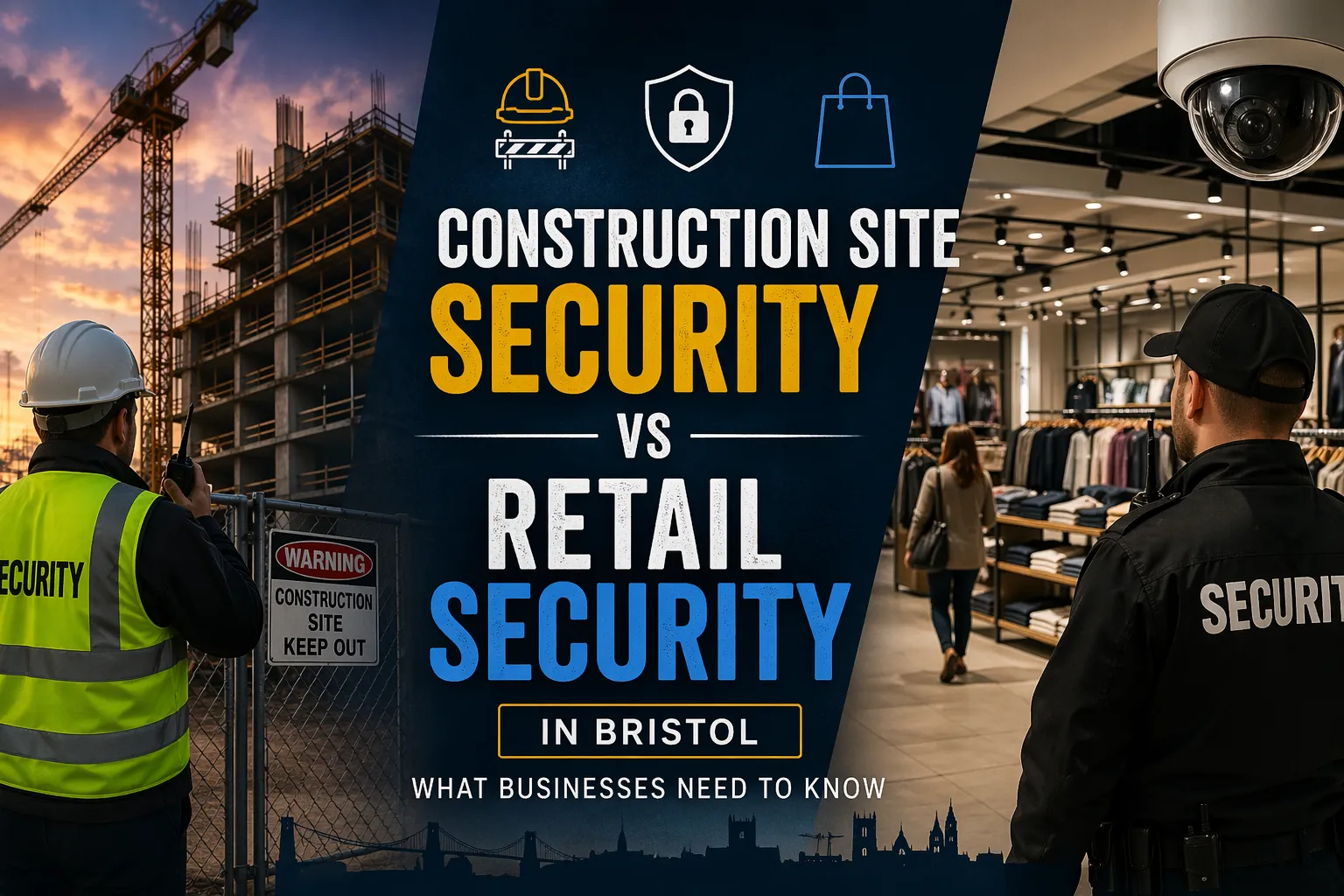

Security sounds like a single idea. In practice, it splits into very different realities depending on the environment.
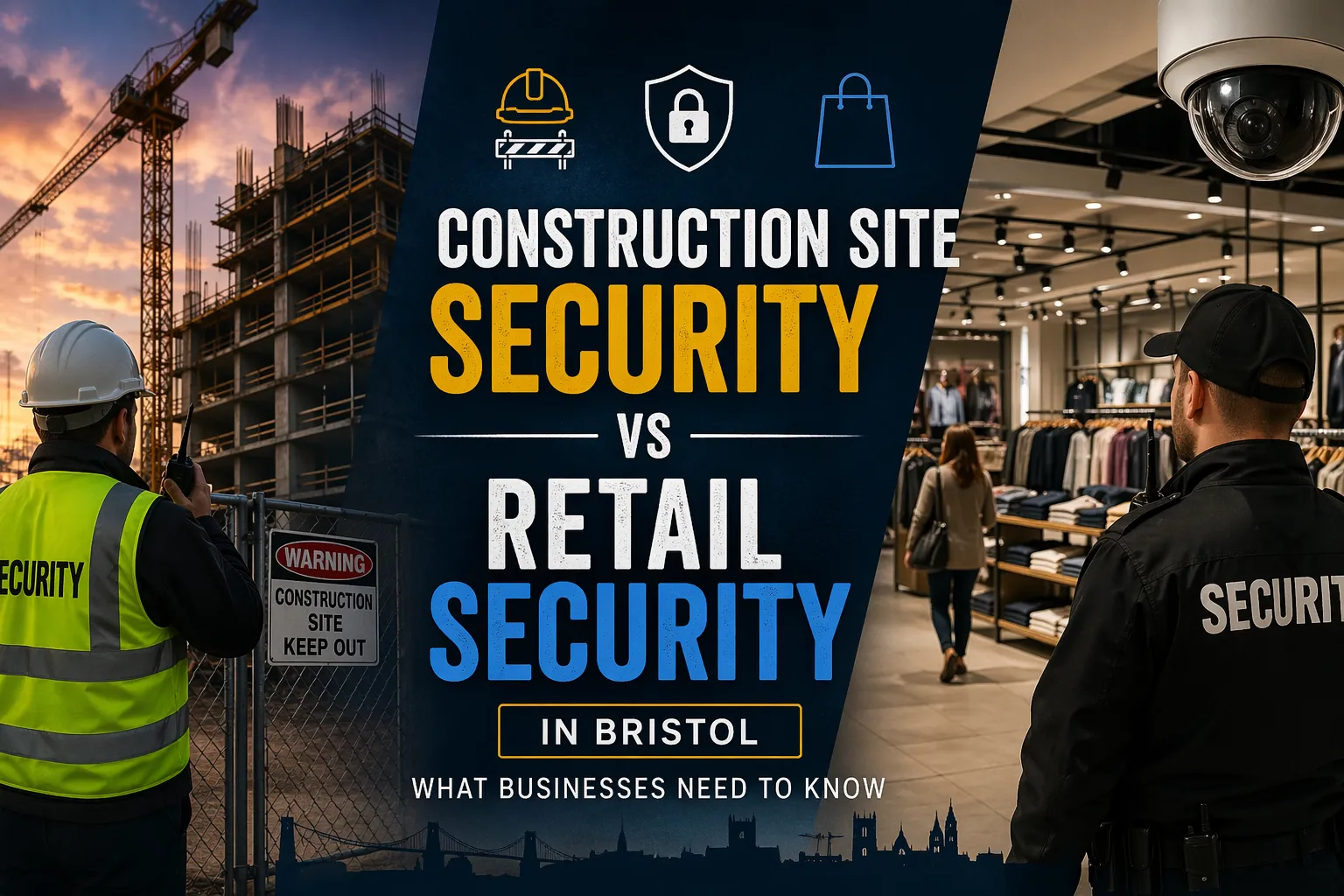
Take Bristol as an example. On one side, you have cranes, scaffolding, and half-finished buildings. On the other hand, busy shop floors with constant foot traffic. Both need protection. But the way you approach that protection could not be more different.
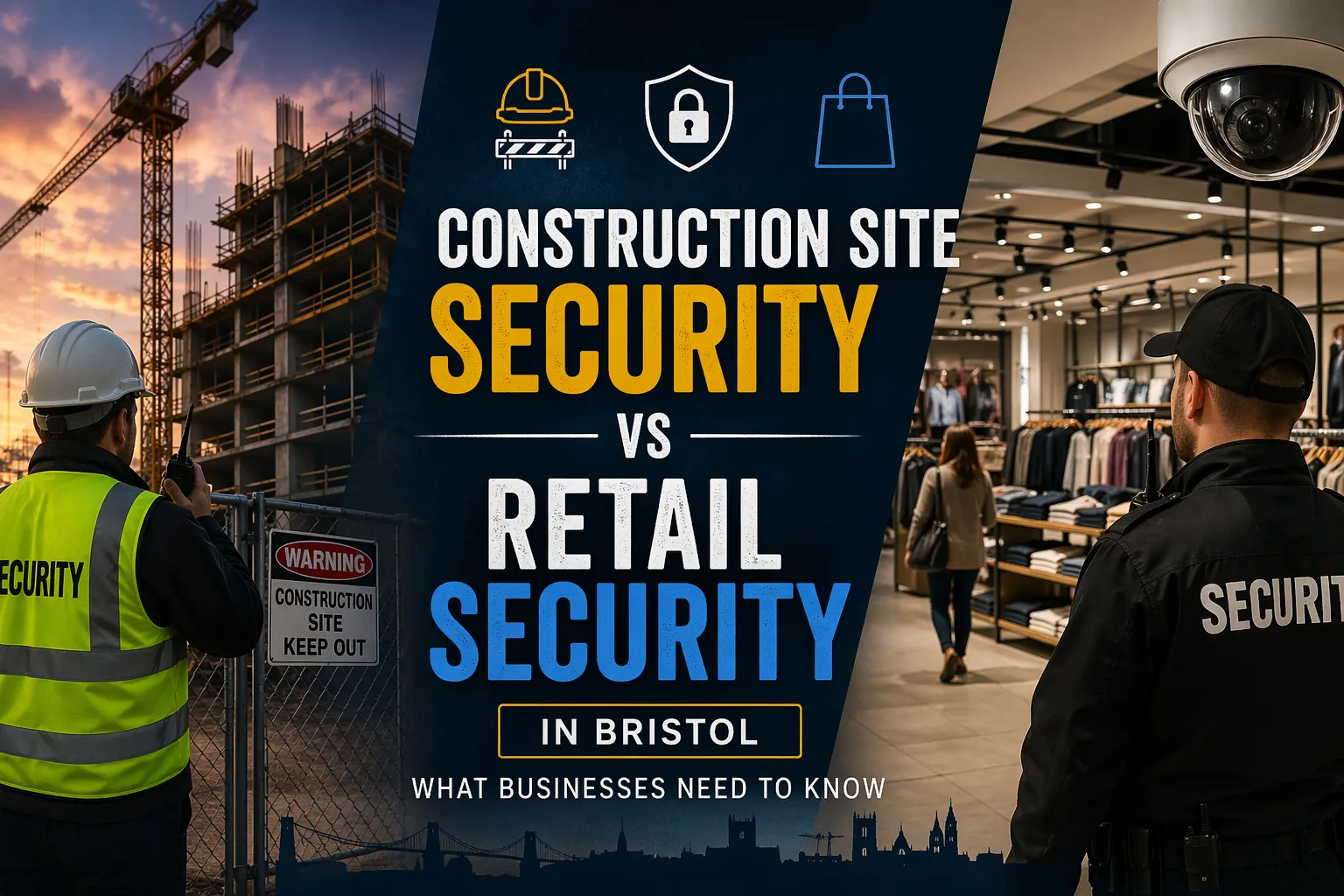
That is where many businesses slip up. They assume the same logic applies everywhere. Install cameras, maybe hire a guard, and the problem is solved. It rarely works like that.
Construction sites and retail spaces deal with different risks, at different times, involving different kinds of people. Once you see that clearly, the need for two distinct strategies becomes obvious.
Construction Site Security: Where Silence Creates Risk
At first glance, construction site security seems straightforward. Put up a fence, install a camera, and lock things away. That should be enough.In reality, it rarely works that way.
Construction sites are unfinished by nature. They have open edges, temporary access points, and inconsistent lighting. These conditions make them naturally vulnerable, and criminals are well aware of it.
What Actually Goes Wrong on Sites
People tend to focus on tool theft, which is fair. It happens a lot. But it is only one piece of a bigger puzzle.
You also get:
- Individuals wandering in out of curiosity and getting injured
- Groups targeting specific materials such as copper or fuel
- Damage that is not even about theft, just disruption
- The occasional but serious case of fire setting
And then there is the domino effect. One missing piece of equipment can delay multiple stages of work. Deadlines slip. Costs climb. It adds up faster than expected.
Timing Is Not a Small Detail
Here is something worth pausing on. Construction sites are most vulnerable when nothing is happening. It sounds obvious, but it changes everything.
Security is not just about what you install. It is about when your site is exposed. Nights and weekends are not secondary concerns. They are the main window of risk.
What Tends to Work in the Real World
1. Proper Perimeter Setup
Not just putting up barriers, but making them difficult to bypass. Weak fencing is often an open invitation.
2. Physical Presence
Even a single guard doing rounds can change behaviour. People are far less likely to take chances if someone might appear at any moment.
3. Responsive Surveillance
Modern systems can alert someone instantly instead of just recording footage that gets reviewed later.
4. Limited Access Points
The more ways in, the harder it is to control. Simplifying entry points makes monitoring easier.
5. Secured Equipment Zones
Leaving tools scattered across the site increases risk. Centralised, locked storage reduces temptation.
- A Simple Way to Look at It: Construction security is about removing opportunity. If access is difficult and visibility is high, most problems never start.
Retail Security: Risk in Plain Sight
Retail environments operate on the opposite principle. You want people to come in. But with that openness comes a constant layer of risk.
Unlike construction sites, there is no quiet period where you can relax. The exposure is ongoing.
What Retailers Are Dealing With
Shoplifting is the obvious one, but it is not always as simple as someone slipping an item into a bag.
There are patterns behind it:
- Repeat offenders who know when the staff are distracted
- Groups working together, each playing a role
- Employees misusing their access
- Situations where staff face aggression or pressure
It is not just about the loss of stock. It is also about safety and morale.
The Tightrope Most Stores Walk
Retail security has to do two things at once. Prevent loss and keep the environment welcoming. Lean too far in one direction, and customers feel uncomfortable. Lean too far in the other direction, and shrinkage increases. There is no perfect formula. It is more of a constant adjustment.
What Helps in Practice
1. Visible but Approachable Staff
A guard standing near the entrance changes how people behave. At the same time, they cannot appear confrontational.
2. Active Use of CCTV
Cameras are useful, but only if someone is actually paying attention to what they show.
3. Tagging and Alarm Systems
Simple, but effective. They create a clear consequence at the exit point.
4. Behind-the-Scenes Analysis
Looking at patterns over time often reveals more than a single incident ever could.
5. Thoughtful Store Layout
If staff cannot see certain areas, those areas will eventually become a problem.
- One Detail That Often Gets Overlooked: Perception plays a huge role. When people feel observed, behaviour shifts. When they feel ignored, the opposite tends to happen. That subtle difference matters more than most systems.
Construction vs Retail Security: A Clear Comparison
| Aspect | Construction Site Security | Retail Security |
| Core Objective | Prevent access and protect assets | Allow access while reducing loss |
| Peak Risk Time | Nights and weekends | Throughout business hours |
| Environment | Open and evolving | Structured and active |
| Main Threats | Theft, trespassing, damage | Shoplifting, fraud, aggression |
| Security Approach | Barrier and deterrence focused | Observation and interaction focused |
| Technology Use | Alarms, perimeter CCTV | CCTV, tagging systems, analytics |
| Role of Personnel | Monitoring and patrol | Engagement and response |
If you had to sum it up in one line, construction security deals with empty spaces, while retail security deals with busy ones.
Choosing What Works in Bristol
There is no single blueprint. A site near a busy area faces different challenges compared to one further out. The same applies to retail stores of different sizes and locations. This is why working with a security company Bristol can make a real difference.
For Construction Projects
It usually makes sense to:
- Focus heavily on after-hours protection
- Build layers instead of relying on one solution
- Adjust security as the site develops
- Think about visibility as much as restriction
For Retail Stores
A more balanced approach works better:
- Keep staff aware and involved
- Maintain clear lines of sight
- Combine visible deterrents with quieter monitoring
- Pay attention to patterns, not just isolated events
Common Mistakes Businesses Make
- Delaying Security Investment: Many businesses act only after experiencing a loss.
- Using the Same Approach Everywhere: Different environments require different strategies.
- Relying on a Single Solution: Effective security requires multiple layers.
- Overlooking Human Factors: Training and awareness are just as important as systems.
Conclusion
Construction site security and retail security may sound similar, but they operate under completely different conditions.
One deals with absence. The other deals with constant presence. One focuses on keeping people out. The other focuses on managing the people who come in.
For businesses in Bristol, recognising that difference is where effective security starts. Once the approach matches the environment, decisions become clearer and risks become easier to manage.
FAQs
1. Why do most construction site incidents happen at night?
Because no one is around. Fewer people means fewer interruptions, and that makes it easier for someone to get in without being noticed.
2. Is retail security only about shoplifting?
Not really. Theft by staff, group activity, and even safety issues all come into play.
3. Do all construction sites require guards?
No. Smaller sites may manage without them. But if the project is large or expensive, having guards usually helps.
4. Is CCTV enough for a retail store?
On its own, not quite. Cameras help, but someone still needs to watch and respond when something happens.
5. What is the most common mistake businesses make?
Using the same setup everywhere. Different places come with different risks, so the approach should change too.



























Sign in to leave a comment.