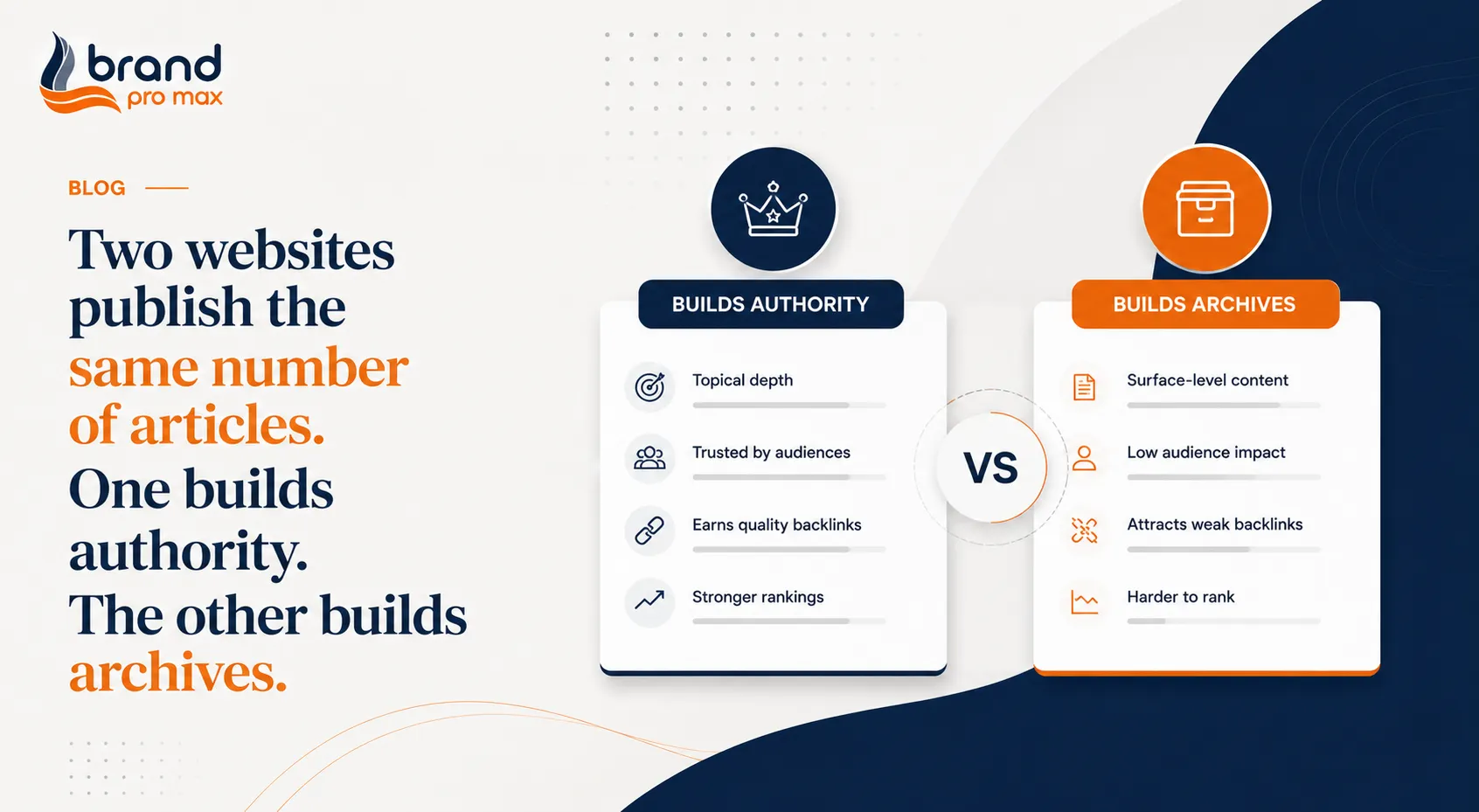

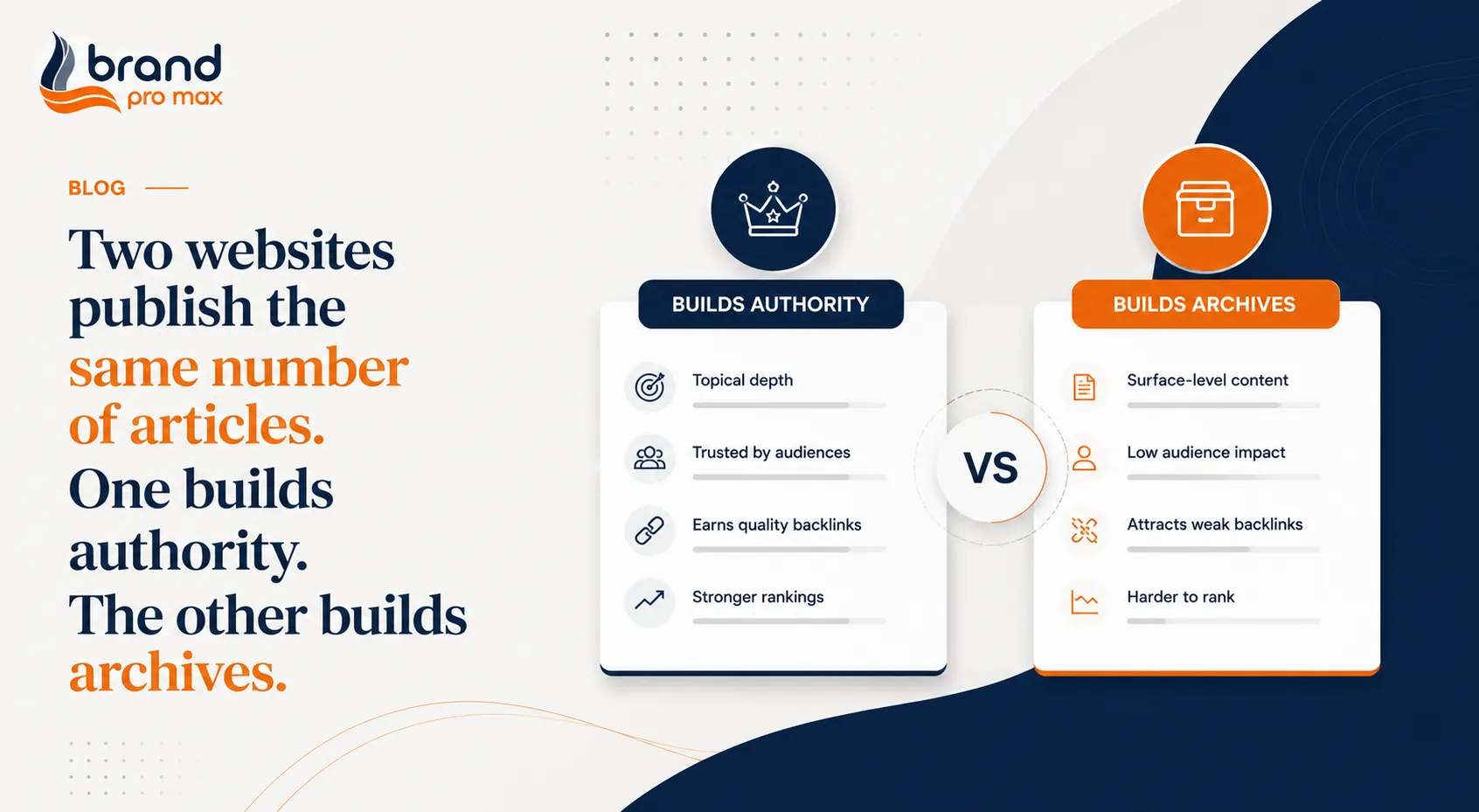
More blog articles don’t automatically mean better rankings. Many sites have hundreds of articles but only a handful of those articles get any real organic traffic. It’s typically more about how you format your material, rather than how much content you have.
And that's when the debate about content clusters versus individual blog postings begins. One way is to create topical authority around a core issue. The rest are single-purpose pages that answer particular questions. Both have their role in SEO, but they are for different things.
In this article, we’ll show you how each method works, how Google reads them, and which strategy will get you better results for your content goals.
What Is a Content Cluster?
A content cluster is a collection of pages that all discuss different facets of a single topic. The pillar page will discuss the topic in general terms, whereas the supporting articles will go into details which allow for answering questions or exploring specific concepts. All pages within the cluster will link back to the pillar page and other pages within the cluster. The structure is clear for readers and search engines alike.
The goal is to show that your site knows the topic in different ways. So, for example, if your pillar page is Technical SEO, your supporting content could be about crawl budget, XML sitemaps, Core Web Vitals, robots.txt, canonical tags, structured data, and log file analysis. All these pages together make a stronger case for topical authority than any one page alone.
What Is an Individual Blog Post?
A blog post is an article that focuses on a single topic, keyword, or user question and is independent of a content ecosystem. It’s good for timely updates, product launches, industry news, opinion articles, case studies, or those niche long-tail queries that don’t need a whole content cluster.
Separate articles can do well if they satisfy the search goal and demonstrate expertise. They have no supporting content and no strong internal links. They rely on their own authority. The more isolated content you create, the harder it is for search engines to identify your topical focus.
Content Clusters vs Individual Blog Posts: A Side-by-Side Comparison
| Factor | Content Clusters | Individual Blog Posts |
| Primary goal | Cover a complete topic | Cover one idea |
| Content structure | Pillar page + supporting blogs | One standalone blog |
| Keyword strategy | Group of related keywords | One main keyword |
| Internal linking | Articles link to each other | Links only where needed |
| Topical authority | Grows authority over time | Builds authority one post at a time |
| Search visibility | Brings in traffic from many searches | Targets one search intent |
| AI search potential | Gives AI the full picture | Answers a specific question well |
| Best suited for | Evergreen topics and service pages | News, updates, opinions, case studies |
| Maintenance | Review the whole cluster | Update the post when needed |
How Google Evaluates Both Strategies
Google does not index a page as 'clusters' or ‘standalone postings.’ It measures how well a page meets search intent and how it adds to overall website expertise.
- Subject matter expertise
One post might rank, but consistent coverage helps Google see your website as an authority on a subject. Multiple high-quality materials built on the same issue create higher authority than individual articles.
- Search intent coverage
Google aims to meet the varying needs of users researching the same subject. They each target a distinct phase of the process: a broad overview, a comparison, a how-to piece, and a case study.
- Context for internal linking
Internal links pass authority, but not only. They link sites, improve the information hierarchy, and help Google understand which pages are supporting a larger topic.
- Content depth
Pages that answer secondary questions, cover related topics, and include supporting resources often send stronger signals of a topic than pages optimized for one keyword.
- Maintenance & freshening
Google returns to pages that remain relevant. A well-maintained and updated content hub will frequently send greater quality signals than standalone items that sit for years without being updated.
- Entity consistency
When your knowledge is constant across blogs, service pages, case studies, author biographies and mentions of your site, Google’s confidence grows. Consistency develops topical linkages over time.
When Content Clusters Perform Better
Content clusters need more planning, but they provide better content architecture for topics where authority matters.
Having a Whole Topic
Clusters help your website answer the big issue and every critical follow-up inquiry surrounding it. That makes your material more useful for people and search engines alike.
Premium Service Page Support
Service pages don’t always answer every customer’s inquiry. Supporting blogs offer instructional content that reinforces those commercial pages with contextual internal links.
Optimizing Crawl Pathways
Structured clusters provide a logical path for crawlers via related information. That enhances page discovery and helps search engines go back to important portions of your site more efficiently.
Enhancing AI retrieval
AI search engines might draw information from other connected documents, rather than a single site. A properly connected cluster has more context, clearer definitions, and supporting evidence.
Creating Lasting Topical Authority
Every piece you post that is relevant builds authority. Each of the supporting pages supports the subject, not another disjoint asset.
Simpler Content Management
Fixing one cluster is often more efficient than updating dozens of unrelated articles. A structured architecture makes managing content audits, internal links, and information changes much easier.
When Individual Blog Posts Make Sense
Content clusters aren’t the solution to every SEO problem. Some themes are better suited for a stand-alone essay since they relate to a specific event, question or opportunity.
Industry news coverage
If it’s an algorithm update, product release, policy change, or industry announcement, it needs to be covered right away. Putting them into a content cluster often slows down visibility and diminishes relevance.
Capturing long tail search intent
Many long-tail queries answer one query and don’t need a pillar page. A targeted article generally fulfills the search goal better.
Thought leadership publishing
Executive opinions, market observations, and industry projections establish brand authority, but seldom in a structured content cluster. They are ideal for stand-alone properties.
Developing a Case Study
Case studies solve one business challenge with one measurable result. Their worth is in proof, not thematic coverage.
Responding to growing search demand
New technology, laws or consumer behaviors provide search opportunities before keyword data can catch up. Standalone articles allow you to publish while the demand is rising.
Research New Topic Opportunities
Not all topics require a complete content cluster. A solitary piece allows you to check audience interest before putting supplementary content into place.
How to Build a High-Performing Content Cluster
A content cluster is successful before the first article is published. Start with content architecture, search intent, and a clear sense of where every page fits into the larger topic.
- Select a pillar topic with business value
Select a topic that is relevant to your products, services, or expertise. If the pillar does not align with your business objectives, the cluster will not generate meaningful outcomes.
How to use it: Focus on themes that are naturally able to support service pages, product pages, and commercial search intent.
- Chart each step of the search journey
Your cluster should be able to answer queries that go above the introductory level. Cover comparisons, implementation, pricing, best practices, troubleshooting, use cases, and FAQs.
How to use it: Instead of keyword volume, build your outline around customer inquiries, sales calls, support requests, and “People Also Ask."
- Give each supporting page a clear purpose
Don't post numerous articles for the same objective that compete with each other. Make each page answer a different question to support the main page.
How to use it: Before you write, identify the core question each article will answer and how it fits into the larger topic cluster.
- Build internal links mindfully
Internal links should lead people through connected topics, not just link pages. Contextual links add to the content relationships and navigation.
How to use it: Link naturally in the body copy with descriptive anchor text, rather than put all links in a ‘Related Articles’ section.
- Audit cluster as a single asset
A content cluster is a system. If one supporting page is out of date, the authority of the whole topic can erode over time.
How to use it: Do a full cluster review every 6-12 months. Refresh old info, add new supporting articles, and remove overlap.
Which Strategy Should You Choose?
If you want to be an expert in a core service, product, or industry area, start with a content cluster. This helps Google understand your expertise better, and over time, it builds a stronger internal connecting structure.
A single blog post is generally the preferable option when you're responding to industry news, testing a new topic, posting a case study, or targeting a niche search term. It lets you publish fast without blowing out your content architecture needlessly.
The strongest method for most businesses is a combination of both. Create topical authority around evergreen themes using content clusters and then reinforce that foundation with solo articles that capture timely opportunities, client stories, and rising search demand.
How Brand Pro Max Builds Content Strategies That Scale
Publishing more content doesn't guarantee better search visibility. What is important is how each page contributes to your site’s authority and business goals.
At Brand Pro Max, we don’t write isolated blogs; we create content ecosystems. Our approach begins with search intent, pillar topics, content clusters, and internal link architecture. Then we figure out where solo articles bring value, whether that’s picking up new trends, supporting service sites or answering high-intent client inquiries.
Every piece of content has a purpose in the overall SEO strategy. This leads to increased topical authority, higher crawlability, better AI retrieval, and information that continues to provide value far after being published.
Looking to establish a content strategy that can grow with your business? Book a free strategy call with Brand Pro Max and build a content architecture for a long-term search presence.






























Sign in to leave a comment.