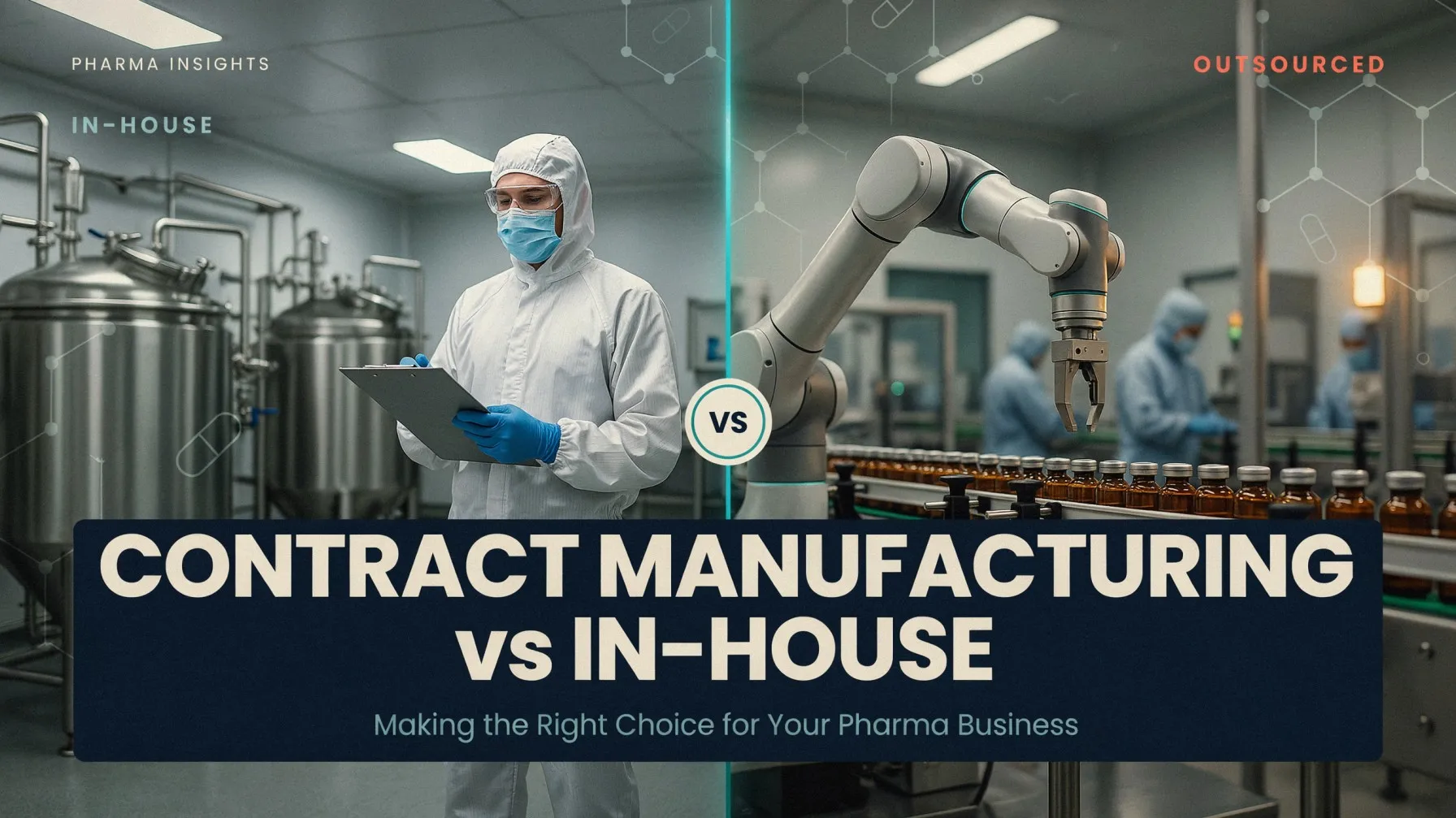

Every pharma or skincare brand eventually reaches a moment of decision: should production happen under their own roof, or should it be handed over to an experienced manufacturing partner instead. This choice shapes nearly every aspect of how a business grows, and understanding what genuinely matters in this decision helps entrepreneurs avoid costly mistakes made too early.
Why This Decision Rarely Has a Universal Right Answer
Contract Manufacturing vs In-House: Making the right choice depends entirely on a company's specific situation, its available capital, growth stage, and long-term goals. There is no single correct path that works equally well for every business, which is exactly why so many companies struggle with this decision without properly evaluating their own unique circumstances first.
Why In-House Manufacturing Appeals to Some Companies
Building your own manufacturing facility offers complete control. You decide every detail, equipment choices, staffing decisions, production schedules, and quality protocols, without needing to coordinate these details with an outside partner. For companies with significant capital and a clear, long-term vision requiring highly specialised production capabilities, this level of control can genuinely justify the substantial upfront investment.
However, this control comes at a real cost. Building and maintaining a facility requires ongoing investment in equipment, staffing, certification renewals, and regulatory compliance, expenses that continue regardless of how much product you actually sell in a given period.
Why Contract Manufacturing Removes This Financial Burden
Working with an experienced Contract manufacturing partner in India shifts this financial equation considerably. Instead of committing enormous capital toward building infrastructure that might sit underutilised during slower periods, companies pay based on actual production needs, keeping financial exposure far more manageable, especially during earlier growth stages when demand remains somewhat unpredictable.
This flexibility often makes contract manufacturing the more practical choice for newer brands still establishing themselves in the market, allowing them to test demand and grow gradually without the pressure of justifying a massive fixed investment right from day one.
Why Specialised Categories Complicate This Decision Further
For companies producing standard tablets or capsules, this decision might feel relatively straightforward. But for brands developing dermatological products specifically, creams, gels, serums, and other topical formulations, the decision becomes more nuanced. These products require specific expertise around ingredient stability, texture consistency, and proper packaging that not every manufacturing setup handles equally well.
Building in-house capability specifically suited to dermatology products requires even more specialised investment compared to standard oral medication manufacturing, making the case for partnering with an already experienced manufacturer even stronger for brands entering this particular category.
Why Speed to Market Often Favours Contract Manufacturing
Building a facility from scratch, securing proper certification, and establishing reliable production processes takes years. Contract manufacturers already have this infrastructure in place, allowing brands to move from concept to finished product significantly faster. For companies operating in competitive categories where being first to address a specific consumer need matters, this speed advantage can genuinely outweigh the appeal of long-term in-house control.
Why Quality Concerns No Longer Favour In-House as Strongly
Earlier hesitation around contract manufacturing often stemmed from quality worries; brands assumed that giving up direct production control might compromise consistency. This concern has diminished significantly as certified contract manufacturers have matured, with many maintaining quality systems equal to or exceeding what most individual brands could realistically achieve independently, especially smaller or newer companies without deep manufacturing expertise already built in-house.
Why Scaling Considerations Should Factor Into This Decision
Companies need to think beyond their current production needs toward where they expect to be in several years. In-house manufacturing built for small initial volumes can struggle to scale efficiently as demand grows, sometimes requiring costly facility expansions. Contract manufacturers, particularly larger, well-established ones, typically have more built-in flexibility to accommodate significant growth without requiring the brand itself to invest in additional infrastructure.
Why Some Companies Eventually Choose a Hybrid Approach
Interestingly, not every company needs to choose one path exclusively. Some established brands eventually build limited in-house capabilities for their core, highest-volume products while continuing to rely on contract manufacturing partners for newer product lines or more specialised formulations still being tested in the market.
Why This Decision Deserves Careful, Honest Evaluation
Rushing into either choice without properly evaluating available capital, growth projections, and specific product requirements often leads to regret later, either through wasted investment in underutilised facilities or through choosing manufacturing partners unsuited to specific formulation needs.
Final Thoughts
Choosing between contract manufacturing and in-house production ultimately depends on a company's specific financial situation, growth stage, and the technical complexity of their products. While in-house manufacturing offers complete control for companies with substantial resources, contract manufacturing provides genuine flexibility, faster market entry, and reduced financial risk that benefits many growing brands, particularly those developing specialised dermatological products. Taking time to honestly evaluate these factors, rather than defaulting to whichever option feels more prestigious, ultimately leads to a smarter, more sustainable business decision.




























Sign in to leave a comment.