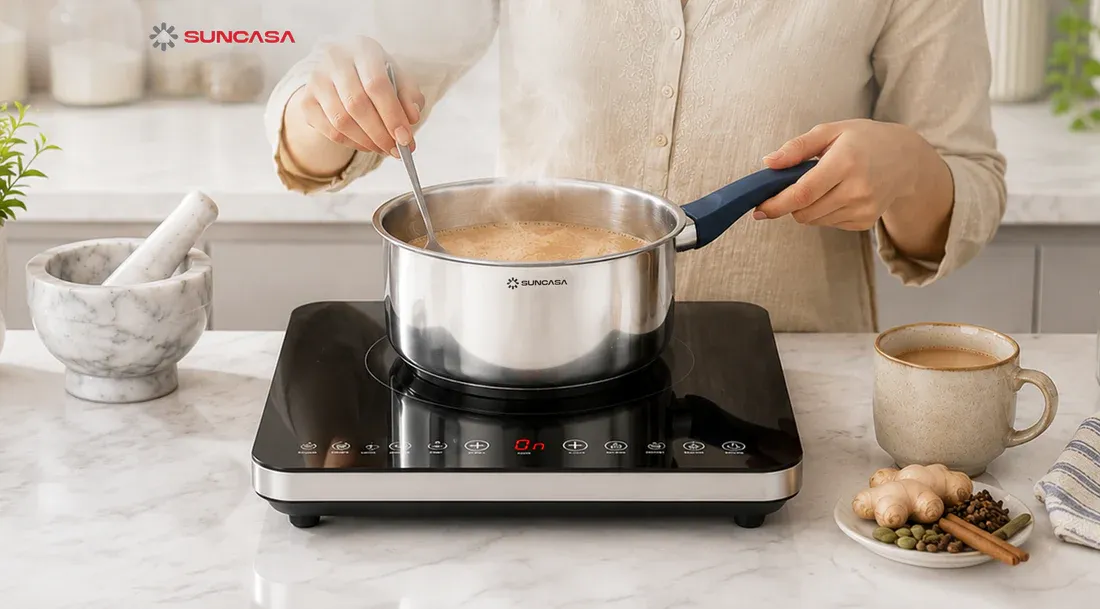

You invest good money in your kitchen gear, expecting it to last for years, but somehow find yourself replacing pans every 8 months. Let's do the math: if you ruin a ₹1,500 coated pan twice a year, you are burning through over ₹11,000 in just a few years. Contrast that with buying one proper, heavy-duty pan that lasts generations.
It is rarely a manufacturing defect that destroys our pots and pans; it is usually daily, overlooked habits. Treating all cookware materials exactly the same is a recipe for disaster, especially given the rigorous demands of Indian cooking. Here are five habits silently destroying your kitchen gear and how to fix them.
1. Thermal Shock (Drowning a Hot Pan)
Your pan spins like a top on a flat induction stove because the base is no longer flat.
It is because you have taken a sizzling hot kadhai or tawa straight off the stove and tossing it directly into the sink under cold water to hear that satisfying “hiss.”
The Fix: Let the pan sit on a cold burner and drop to room temperature before washing it.
This phenomenon is called "thermal shock." Metal expands when heated and shrinks when cooled. Forcing a rapid temperature change by blasting a 200°C pan with 20°C water causes the metal to warp instantly. Once a pan loses its flat base, it will never distribute heat evenly again, leading to burned spices and undercooked food.
2. Using Metal Utensils on Delicate Surfaces
Your food constantly sticks to the center of the pan, and the surface looks dull and scratched.
This is because of the habit of vigorously scraping the bottom of a delicate pan with a steel palta (spatula) or khunti while roasting masala or tossing vegetables.
The Fix: Switch to silicone or wooden spatulas for coated pans, and save the metal tools for heavy-duty metals.
Metal-on-metal friction creates micro-scratches. Once a synthetic coating is breached, food sticks aggressively, and harmful chemicals can begin to leach into your meals. If you are tired of constantly babying fragile coatings and want to use steel utensils freely, reading up on the differences between cast iron vs non stick cookware can help you decide if it is time to upgrade to a surface that thrives under heavy-duty use.
3. Cooking Highly Acidic Foods in Reactive Metals
Your food develops a strange metallic taste, and the inside of your pan looks pitted or discolored. It is because of immering heavy tomato-based makhanis, tamarind pastes, or adding generous amounts of amchur (dry mango powder) in bare, reactive metal pots.
The Fix: Use non-reactive materials like high-quality steel or enameled cast iron for acidic gravies.
Acidic ingredients slowly eat away at reactive surfaces like untreated aluminum or unseasoned cast iron. This chemical reaction strips the metal, depositing it directly into your food. This exact reaction is one of the biggest deciding factors when comparing stainless steel vs aluminium cookware, as premium stainless steel is completely non-reactive and handles acidic Indian gravies safely without degrading over time.
4. Cranking the Heat Too High, Too Fast
Your pans have a sticky, brown, polymerized rim around the edges that seems impossible to scrub off. It happens because of blasting the burner to the highest flame to quickly heat up oil for deep-frying puris or preparing a quick tadka.
The Fix: Always preheat pans gradually on medium heat.
Every cooking oil has a specific "smoke point." When you blast an empty pan on high heat, synthetic coatings begin to break down rapidly at temperatures over 260°C, releasing invisible fumes before you even add your onions. Furthermore, heating oil too aggressively burns it onto the sides of the pan, creating a stubborn layer of carbonized grease, essentially seasoning the pan exactly where you don't want it.
5. The Dishwasher and Harsh Abrasives
The shiny finish of your premium metals is completely dull, and your seasoned iron pans are rusting. Tossing pots into the dishwasher for convenience, or scrubbing them aggressively with steel wool (juna) and harsh dish soaps is the root cause.
The Fix: Hand-wash your high-quality cookware using a soft sponge and mild soap.
Dishwasher pods do not just contain soap; they contain micro-abrasives (essentially liquid sandpaper) and highly alkaline enzymes designed to strip baked-on food. While great for ceramic plates, this harsh environment blasts away the protective seasoning on cast iron and dulls the protective chromium layer on stainless steel. Taking three extra minutes to hand-wash is the single best way to protect your investment.
Stop Blaming the Pan
Longevity in the kitchen ultimately comes down to matching the right cooking technique with the appropriate material. No pan is indestructible if subjected to thermal shock, metal scraping, or chemical erosion daily.
Take a moment to audit your kitchen cabinets today. If your current pots and pans are already warped, deeply scratched, or rusting, it might be time to retire them. Stop replacing cheap gear every year, invest in the right materials for your cooking style, and treat them with the respect they deserve.






















Sign in to leave a comment.