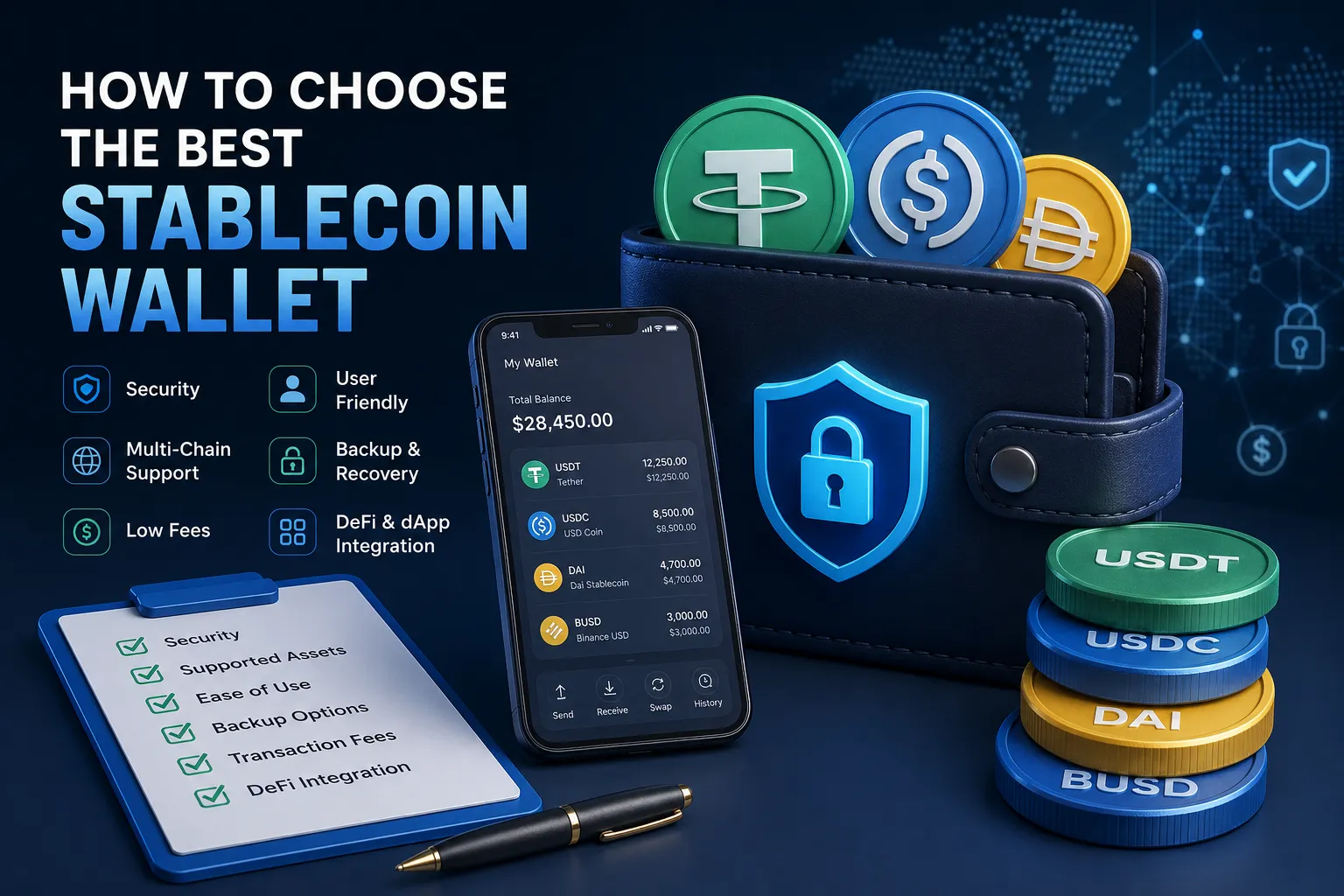

Stablecoins have become an essential part of the cryptocurrency ecosystem, offering the advantages of digital assets without the extreme price volatility associated with traditional cryptocurrencies. Whether you hold USDT, USDC, DAI, or other stablecoins, choosing the right wallet is crucial for keeping your assets secure and accessible. With hundreds of wallets available in the market, selecting the best stablecoin wallet can be challenging.
This guide explains the key factors to consider when choosing the best stablecoin wallet for your needs.
What Is a Stablecoin Wallet?
A stablecoin wallet is a digital application or hardware device that allows users to store, send, receive, and manage stablecoins. These wallets support popular stablecoins such as:
- USDT (Tether)
- USDC (USD Coin)
- DAI
- BUSD
- TUSD
Stablecoin wallets also enable users to interact with decentralized applications (dApps), make payments, and participate in decentralized finance (DeFi) platforms.
Why Choosing the Right Stablecoin Wallet Matters
Your wallet is the gateway to your digital assets. Choosing the wrong wallet can expose you to security risks, poor user experiences, and limited functionality.
A reliable stablecoin wallet offers:
- Strong security features
- Fast transactions
- Multi-chain support
- Easy backup and recovery options
- User-friendly interface
- Low transaction fees
Selecting the right wallet ensures that your funds remain safe while giving you convenient access to your assets.
Key Factors to Consider When Choosing a Stablecoin Wallet
1. Security Features
Security should be your top priority when selecting a stablecoin wallet. Look for wallets that offer:
- Two-factor authentication (2FA)
- Biometric authentication
- Encryption
- Private key ownership
- Backup and recovery options
- Multi-signature support
Non-custodial wallets, where users control their private keys, generally provide better security than custodial wallets.
2. Supported Stablecoins and Blockchains
Not all wallets support every stablecoin. Before choosing a wallet, verify whether it supports the assets you plan to use.
A good stablecoin wallet should support multiple blockchains, including:
- Ethereum
- Binance Smart Chain
- Solana
- Tron
- Polygon
- Avalanche
Multi-chain compatibility allows users to transfer assets across different networks and reduces dependency on a single blockchain.
3. User Experience and Interface
A wallet should be simple enough for beginners while offering advanced features for experienced users.
Consider the following:
- Easy account setup
- Clean dashboard
- Quick transaction process
- Portfolio tracking
- Transaction history
- Mobile and desktop compatibility
An intuitive interface reduces the risk of user errors and improves the overall experience.
4. Custodial vs. Non-Custodial Wallets
Understanding the difference between custodial and non-custodial wallets is essential.
Custodial wallets are managed by third parties, such as cryptocurrency exchanges. They handle private keys on behalf of users.
Non-custodial wallets give users complete control over their private keys and assets.
If security and ownership are your priorities, a non-custodial wallet is usually the better option.
5. Backup and Recovery Options
Losing access to your wallet can result in permanent loss of funds. Choose a wallet that provides secure backup and recovery features, such as:
- Seed phrases
- Cloud backup
- Recovery keys
- Password recovery options
Always store your recovery phrase in a secure offline location.
6. Transaction Fees and Network Costs
Different blockchain networks charge different transaction fees. Before choosing a wallet, evaluate:
- Network fees
- Swap fees
- Withdrawal fees
- Cross-chain transfer costs
Wallets that support multiple blockchains can help users select networks with lower fees.
7. DeFi and dApp Integration
Many stablecoin holders use decentralized finance applications for staking, lending, borrowing, and yield farming.
If you plan to use DeFi services, choose a wallet that offers:
- dApp browser support
- Token swapping
- Staking features
- NFT compatibility
- Cross-chain bridges
Integrated DeFi features can save time and improve convenience.
8. Customer Support and Community
Reliable customer support is often overlooked but can be valuable when issues arise.
Look for wallets that provide:
- Help centers
- Live chat support
- Email assistance
- Active user communities
- Regular updates
Strong community support also indicates that the wallet is actively maintained.
Types of Stablecoin Wallets
There are several types of stablecoin wallets available:
Software wallets: Mobile and desktop applications that provide convenience and accessibility.
Hardware wallets: Physical devices that store private keys offline and offer enhanced security.
Web wallets: Browser-based wallets that allow quick access from any device.
Paper wallets: Offline storage solutions that keep private keys on paper.
Each option has advantages and disadvantages, depending on your security requirements and usage habits.
Final Thoughts
Choosing the best stablecoin wallet development depends on your priorities, whether they are security, convenience, low fees, or advanced DeFi functionality. Evaluate the wallet's security features, supported networks, recovery options, and user experience before making a decision.
A well-designed stablecoin wallet not only protects your digital assets but also provides seamless access to the growing world of cryptocurrencies and decentralized finance. Taking the time to compare your options today can help you avoid risks and manage your stablecoins more effectively in the future.

























Sign in to leave a comment.