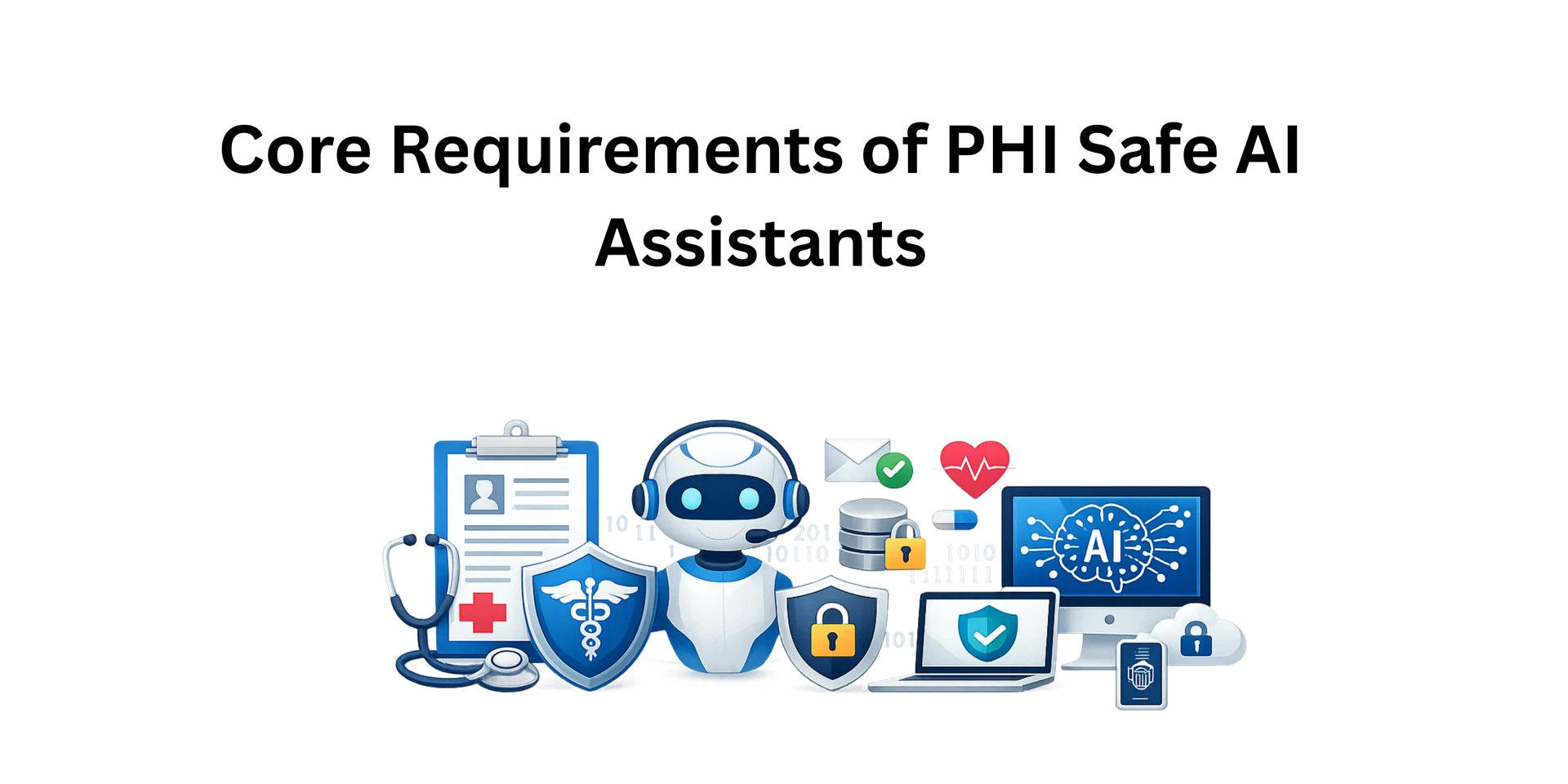

Safeguarding sensitive patient data is more important than ever as artificial intelligence gets more integrated into healthcare processes. Adopting HIPAA Compliant AI Assistants is not just about innovation for companies and CEOs; it's also about upholding compliance, preserving trust, and averting expensive dangers.
However, what precisely qualifies an AI assistant as safe to handle PHI? Let's dissect the essential qualities that any firm should want.
What Does PHI-Safe Really Mean?
Any information that can be used to identify a patient is considered PHI (Protected Health Information), including billing details, medical records, and even appointment schedules. A PHI-safe system guarantees that sensitive information is handled securely, stored appropriately, and accessible only to authorised users.
HIPAA Compliant AI Assistants are appropriate for healthcare settings where compliance is non-negotiable because they are specifically made to satisfy these stringent criteria.
Core Requirements of PHI-Safe AI Assistants
1. Complete Data Encryption
The foundation of any safe system is encryption. Data must be encrypted while it's in transit and at rest for PHI-safe AI assistants.
This guarantees that data cannot be viewed or misused even in the event that it is intercepted. A key component of HIPAA Compliant AI Assistants is robust encryption requirements.
2. Tight Access Restrictions
Not all staff members require access to private patient information. PHI can only be viewed or altered by authorised individuals thanks to role-based access control (RBAC).
HIPAA-compliant AI assistants lower the possibility of internal data breaches by using layered permissions.
3. Monitoring and Audit Trails
Compliance requires transparency. PHI-safe systems need to keep thorough records of who accessed data, when, and what was done.
These audit trails assist businesses in maintaining compliance and promptly identifying questionable activity.
4. Safe Data Hosting and Storage
It concerns where and how data is stored. Secure, compliant cloud or on-premise settings are required for PHI-safe AI assistants.
To give businesses complete control over their data infrastructure, a number of HIPAA-compliant AI assistants provide private deployments.
5. Business Associate Agreements (BAAs)
A Business Associate Agreement must be signed by any third-party provider that handles PHI. They are legally obligated to abide by HIPAA standards as a result.
Businesses must make sure their vendors offer and uphold BAAs before implementing HIPAA Compliant AI Assistants.
6. Data Minimisation and Anonymisation
Risk is decreased by gathering only the information that is required. PHI-safe AI systems frequently employ anonymisation techniques for analytics and adhere to the data minimisation principle.
This guarantees the security of sensitive data while providing insightful information.
7. Architecture Focused on Compliance
Compliance is a fundamental component of PHI-safe AI helpers, not an afterthought. Every layer, from algorithms to infrastructure, is made to adhere to regulations.
This is the difference between generic AI tools and HIPAA Compliant AI Assistants.
Why These Requirements Matter for Businesses
Avoid Expensive Penalties
Serious financial penalties may follow noncompliance with HIPAA. Purchasing AI assistants that comply with HIPAA helps reduce this danger.
Increase Patient Confidence
Patients anticipate responsible handling of their data. Secure AI technologies improve brand reputation and strengthen trust.
Facilitate Scalable Innovation
Businesses can confidently scale AI programs without jeopardising data security if the proper measures are in place.
The Best Implementation Techniques
To make the most of PHI-safe AI assistants:
- Perform routine security audits.
- Educate staff members on data privacy procedures
- Select suppliers who have a track record of compliance.
- Continue to keep an eye on and update systems
Conclusion
The hazards of data breaches and non-compliance are growing along with the implementation of AI in healthcare. Businesses can use AI while protecting sensitive data thanks to HIPAA Compliant AI Assistants, which offer a safe platform for innovation.
CEOs and decision-makers must comprehend these fundamental needs. Organisations that prioritise PHI safety not only maintain compliance but also create a robust, future-ready healthcare environment.

























Sign in to leave a comment.