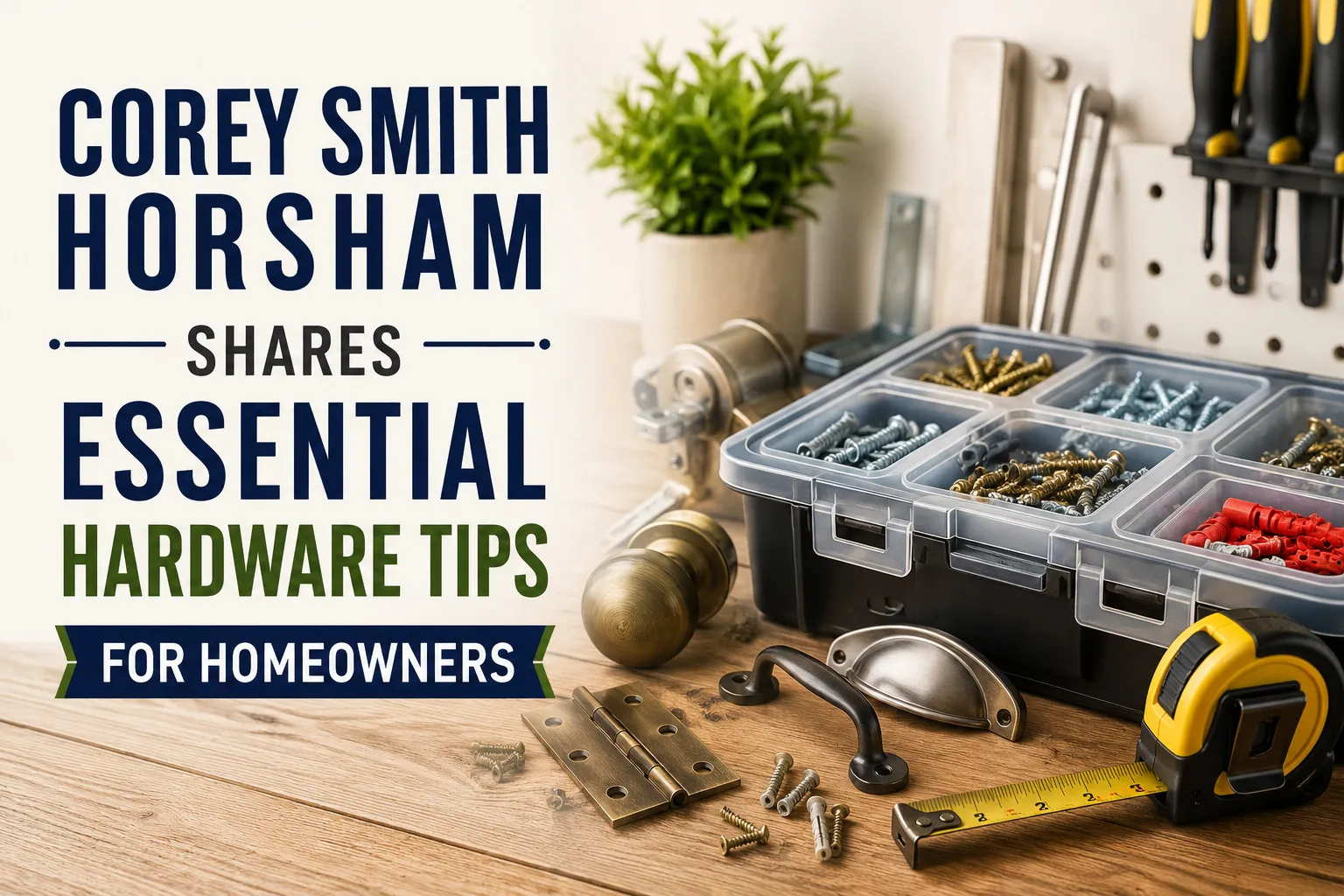

Taking care of a home isn't only about major remodeling projects or expensive upgrades. In many cases, the small details make the biggest difference. A loose cabinet hinge, a worn door lock, or rusty outdoor hardware may not seem urgent today, but ignoring these issues can eventually lead to larger repairs. Corey Smith Horsham believes homeowners can protect both their property and their budget by paying attention to routine hardware maintenance before problems grow.
As more people become comfortable handling simple home projects on their own, understanding the role of quality hardware has become increasingly valuable. Choosing dependable products, keeping a few basic tools nearby, and checking household fixtures from time to time can make everyday living easier while helping a home stay in excellent condition for years.
Start with Reliable Hardware
Not every piece of hardware is built to last. While lower-cost options may seem attractive at first, they often wear out much sooner. Door handles, hinges, cabinet pulls, brackets, and locks are used almost every day, so durability matters.
Corey Smith Horsham encourages homeowners to think beyond the purchase price and consider long-term performance. Hardware made from sturdy materials is less likely to rust, loosen, or fail after regular use. Spending a little more upfront can often reduce future repair costs and save the frustration of frequent replacements.
Every Home Should Have Basic Tools
Unexpected repairs happen in every household. A simple toolkit allows homeowners to deal with many small jobs without waiting for outside help.
Some useful items include:
- Screwdrivers
- Adjustable wrench
- Hammer
- Tape measure
- Cordless drill
- Pliers
- Utility knife
- Level
- Flashlight
- Safety glasses
These tools are useful for everyday tasks like tightening loose screws, hanging shelves, replacing handles, or making small adjustments around the house. Keeping them organized also makes future repairs much quicker.
Regular Checks Prevent Bigger Repairs
One of the easiest habits homeowners can develop is taking a few minutes every few months to inspect hardware throughout the house. These inspections don't require special skills, yet they often reveal small issues before they become expensive ones.
Pay attention to places that receive frequent use, including:
- Entry doors
- Interior doors
- Kitchen cabinets
- Bathroom fixtures
- Windows
- Stair railings
- Outdoor gates
If something feels loose, makes unusual noise, or doesn't move smoothly, it deserves attention. Fixing a small issue today is almost always easier than dealing with a broken fixture later.
Moisture Can Shorten Hardware Life
Water and humidity quietly damage many types of hardware. Bathrooms, kitchens, laundry rooms, garages, and outdoor spaces are especially vulnerable because moisture is part of everyday life in these areas.
Corey Smith Horsham recommends wiping away standing water whenever possible and replacing hardware that begins showing signs of corrosion. Good ventilation also helps reduce moisture buildup, especially in rooms where steam is common. Outdoor fixtures benefit from occasional cleaning to remove dirt and help preserve their finish.
Know Your Limits
Many homeowners enjoy completing projects themselves, and simple repairs can be rewarding. Tightening loose hinges, replacing cabinet handles, installing shelves, or changing weather stripping are all manageable jobs for most people.
However, every repair doesn't belong on a DIY list. Work involving electrical systems, plumbing lines, gas connections, or structural components should be handled by qualified professionals. Knowing when to ask for help protects both the home and everyone living inside it.
Make Maintenance a Routine
Home maintenance becomes much less overwhelming when it's done regularly instead of waiting until something breaks.
A simple routine might include checking doors, locks, windows, and cabinets every few months. Hinges can be lubricated if they begin squeaking, loose screws can be tightened, and worn hardware can be replaced before it completely fails.
These small habits require very little time but often help homeowners avoid costly repairs later.
Small Changes Can Refresh a Home
Improving a home's appearance doesn't always require large construction projects. Replacing outdated hardware is one of the quickest ways to give rooms a cleaner, more modern look.
New cabinet handles, updated door hardware, matching light fixtures, and fresh house numbers can make a noticeable difference without stretching the budget. Besides improving appearance, newer hardware often works more smoothly and provides better everyday performance.
A Practical Approach to Homeownership
According to Corey Smith Horsham, successful homeownership comes down to consistency. Looking after the small things before they become larger problems keeps maintenance manageable and helps protect the value of the property.
Hardware may not receive much attention, but it plays an important role in how every home functions. From opening doors to securing windows and supporting everyday fixtures, these simple components work constantly behind the scenes.
Making time for regular inspections, choosing dependable products, and handling minor repairs as they appear can help homeowners avoid unnecessary expenses while keeping their homes comfortable, safe, and ready for the future. Often, the simplest maintenance habits are the ones that make the greatest difference over time.





























Sign in to leave a comment.