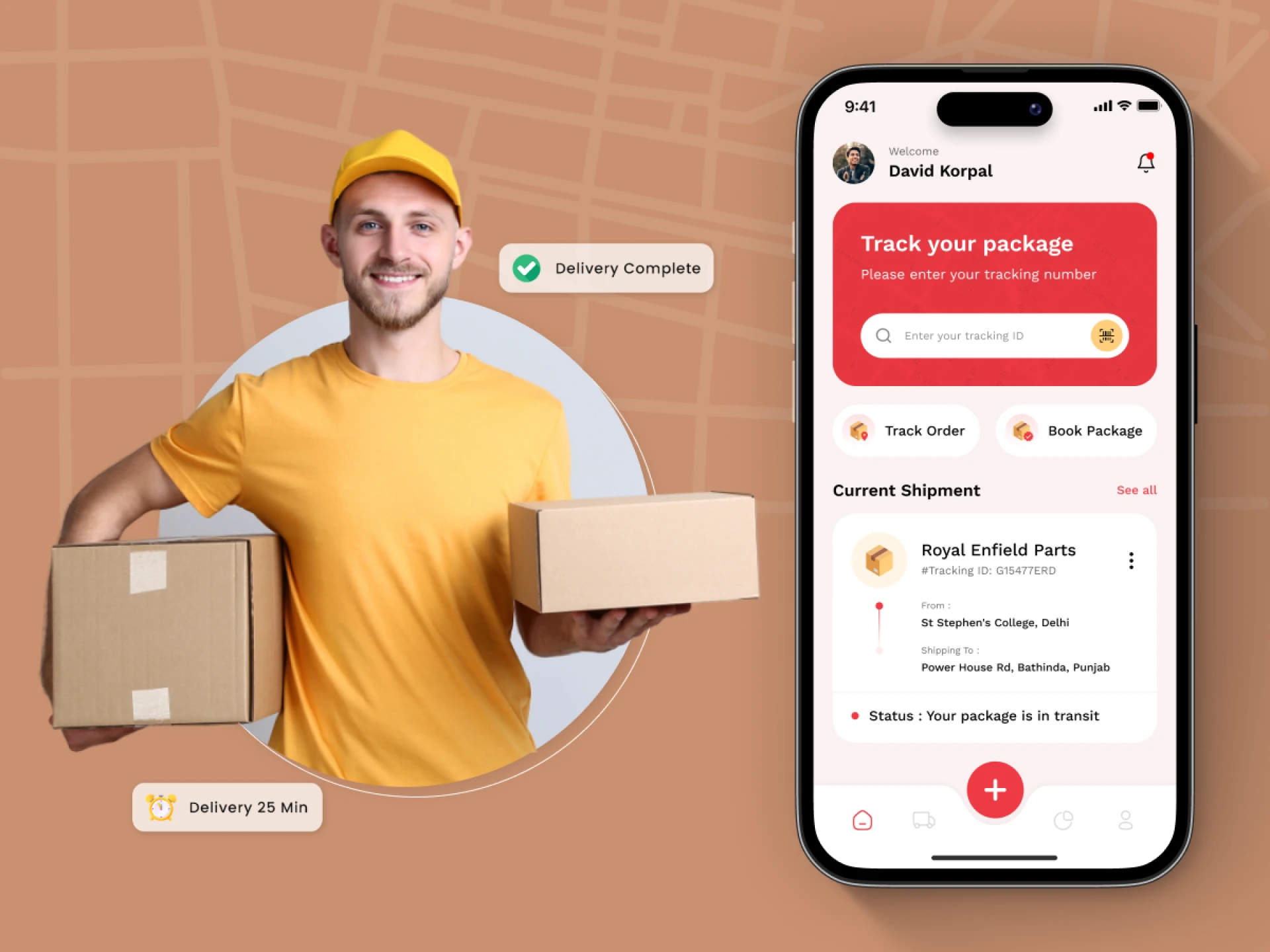

If you're planning to build a courier delivery app, you're not just creating another mobile product—you’re solving one of the most critical challenges in modern logistics: how to move things faster, smarter, and more efficiently.
From eCommerce brands and local businesses to large-scale logistics companies, everyone is racing to meet customer demands for real-time delivery, instant tracking, and seamless digital experiences. The good news? A courier delivery app can do exactly that—and more.
But building a successful courier app isn’t just about putting a map and a booking form into a mobile app. It’s about combining smart business strategy, strong technology, and user-focused design. This guide breaks down every step of the process so you can go from concept to a high-performing, revenue-generating delivery solution.
1. Why Invest in a Courier Delivery App?
Before we talk about the how, let’s answer the why. Courier delivery apps offer huge benefits:
• 24/7 Accessibility: Users can place orders, track shipments, and receive updates anytime.
• Automation: Less paperwork, fewer manual errors, more efficiency.
• Customer Experience: Real-time tracking, ETA notifications, and digital proof of delivery enhance trust.
• Scalability: As your user base grows, the app can easily support more deliveries and agents.
• Competitive Edge: In a saturated logistics market, an intuitive app can set you apart.
2. Must-Have Features for a Courier App
A powerful courier delivery app needs to be user-friendly, reliable, and packed with essential features for all stakeholders. Typically, you’ll need three main panels: User App, Courier/Driver App, and Admin Panel.
User App Features:
• Easy Registration/Login
• Parcel Booking & Scheduling
• Live Tracking
• Multiple Payment Options
• Push Notifications
• Rating & Reviews
Courier/Driver App Features:
• Task Notifications
• Route Optimization with Maps
• Status Updates (Picked, In Transit, Delivered)
• Earnings Dashboard
• In-App Chat/Support
Admin Panel Features:
• User & Courier Management
• Order Management
• Payment & Commission Tracking
• Reports & Analytics
• Promotions & Discounts Control
3. Steps to Build a Courier Delivery App
To ensure successful courier delivery app development, follow these key steps to take your idea from concept to launch.
Step 1: Market Research & Validation
Understand your target audience, study competitors, and find your USP (Unique Selling Proposition). Who are you solving the problem for—eCommerce stores, individuals, or businesses?
Step 2: Define Your Business Model
Will you work with a fleet of independent drivers? Are you targeting hyperlocal delivery? Select a business model that best fits your overall strategy and service scope.
Popular business models include:
• Aggregator Model
• On-Demand Delivery
• Enterprise Solutions for Logistics Companies
Step 3: Choose the Right Tech Stack
Choosing the right technology is crucial for performance and scalability.
Typical stack includes:
• For Android – Kotlin or Java
• For iOS – Swift
• For Frontend – React, Java, Angular, CSS, HTML
• For Backend – Node.JS, Express.JS, Python
• Payment Processing – PayPal, Stripe, Braintree, EWallets
• For Server – AWS
• Push Notifications and in-app messaging – Twilio, Push.io
• For Database – MongoDB, HBase, Postgres
Step 4: Design the UX/UI
Clean design, intuitive navigation, and fast performance should be at the heart of your UX. Focus on minimizing clicks to complete key actions.
Step 5: Development & Testing
Split the process into agile sprints. Test each feature thoroughly. Don’t overlook beta testing with real users to gather valuable feedback.
Step 6: Launch & Marketing
Once the app is polished, launch it on the app stores. Promote via social media, SEO, partnerships, and email campaigns.
4. Monetization Strategies
Want your app to generate revenue? Here are some tried-and-true methods:
• Delivery Charges & Convenience Fees
• Subscription Plans for Regular Users
• Commission from Couriers/Partners
• In-app Ads or Promotions
• Premium Features (e.g., faster delivery, insurance)
5. Challenges to Keep in Mind
Courier app development is promising, but not without hurdles:
• Route Optimization: Delivering faster while using the shortest and most efficient paths.
• Scalability: Ensuring the app performs well under heavy traffic or during peak times.
• Security: Protecting user data, payment info, and delivery logs.
• Courier Tracking Accuracy: GPS drift and data sync issues can be problematic without the right tools.
Pro tip: Work with experienced developers who understand logistics-specific challenges.
Wrapping up
Courier delivery apps are changing the game for businesses across the world. Whether you’re a logistics startup, a growing eCommerce platform, or an enterprise, investing in courier app development could be the smartest move you make this year.
With the right features, a clear business model, and a strong tech foundation, you can create a platform that simplifies logistics and delights customers. The demand is high, the market is ready—now it’s your turn to deliver.


























Sign in to leave a comment.