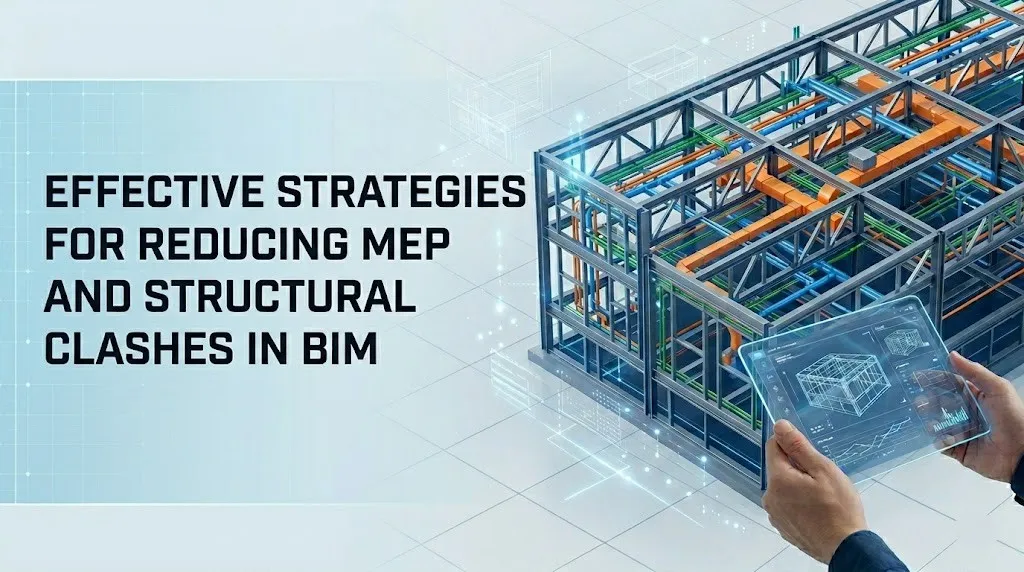

The global construction industry loses billions annually to a completely preventable disease: on-site rework. According to the Navigant Construction Forum, rework accounts for up to 9% of total project costs, with a significant portion stemming from interdisciplinary conflicts. When a 12-inch mechanical exhaust duct is unexpectedly routed directly through a primary load-bearing steel beam, the resulting delays, redesigns, and material waste can shatter a project’s profit margins. In an era of advanced building technology, discovering these spatial conflicts on the physical job site is no longer acceptable.
The architecture, engineering, and construction (AEC) sector is undergoing a massive digital transformation, transitioning from isolated 2D drafting environments to highly coordinated, federated 3D models. However, despite the widespread adoption of Building Information Modeling (BIM), the fundamental tension between structural integrity and MEP (Mechanical, Electrical, and Plumbing) efficiency remains. Structural engineers focus on rigid, load-bearing safety, while MEP detailers must navigate increasingly complex systems through shrinking ceiling plenums and tight mechanical shafts. Bridging the gap between these distinct disciplines requires more than just powerful software; it demands a rigorous, research-driven approach to clash avoidance and resolution.
Here is a comprehensive look at the strategies leading AEC firms are using to reduce structural and MEP clashes in their BIM workflows.
1. Mandating a Precision-Driven BIM Execution Plan (BEP)
The foundation of clash-free coordination is established long before the first digital element is modeled. A comprehensive BIM Execution Plan (BEP) serves as the governing constitution for the project, eliminating the "first-to-model" land grabs that often plague uncoordinated teams.
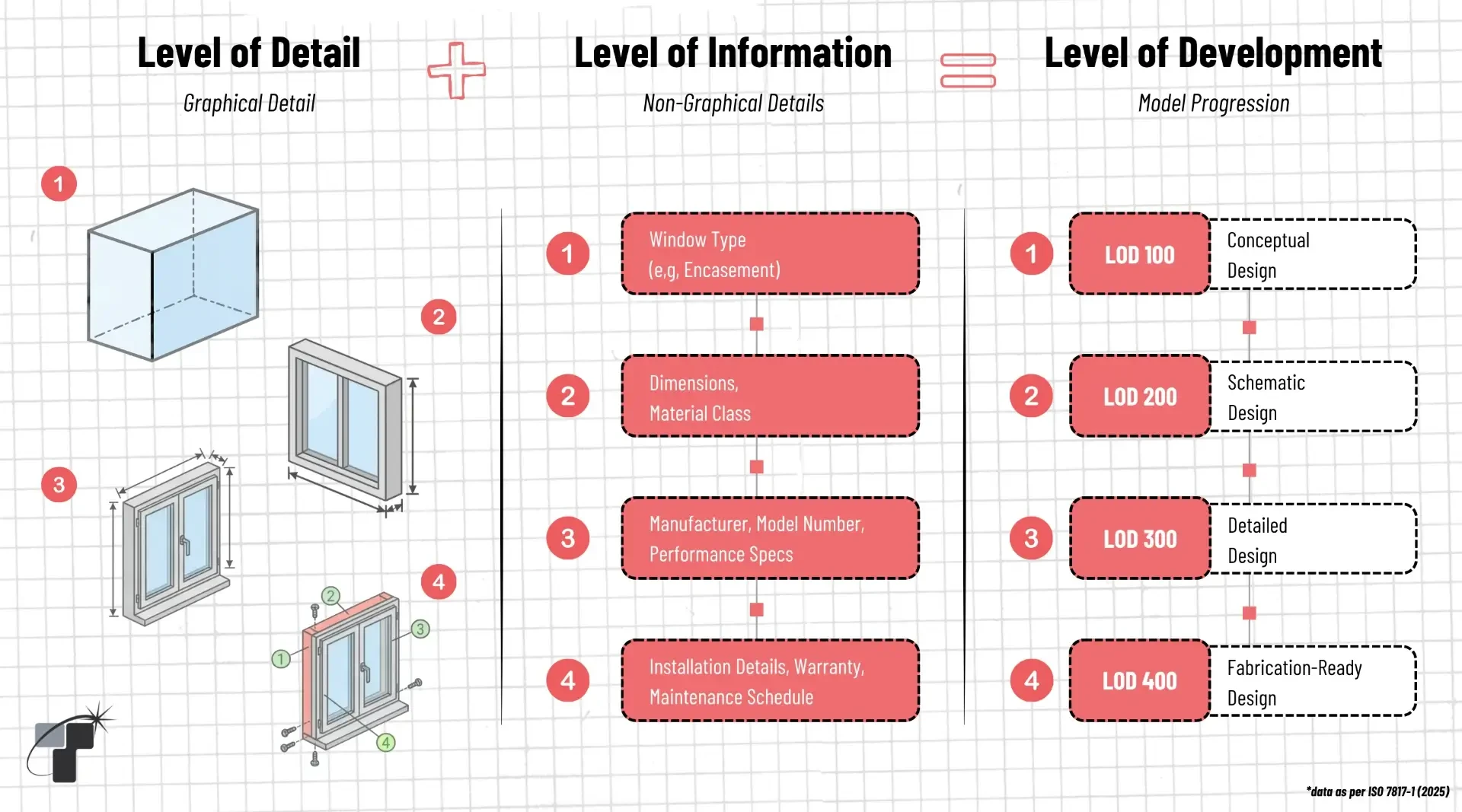
Research from Dodge Data & Analytics consistently shows that projects with highly mandated, detailed BEPs experience significantly fewer structural and mechanical conflicts. The BEP must explicitly define spatial zones for each discipline. For example, assigning the top third of a ceiling plenum exclusively to HVAC ductwork, the middle to electrical cable trays, and the bottom to plumbing and fire protection. Furthermore, the BEP must clearly establish the Level of Development (LOD) requirements at each project phase. When moving from conceptual design (LOD 200) to precise construction documentation (LOD 300 to LOD 400), ensuring all teams are modeling at the same level of geometric accuracy is critical to identifying true physical intersections.
2. Establishing a Strict Coordination Hierarchy
Not all elements in a federated model possess the same level of routing flexibility. A common failure in cross-discipline coordination is treating every clash with equal weight, leading to massive reports filled with thousands of false positives. This induces "clash fatigue" among detailers and project managers.
To combat this, successful firms implement a strict coordination hierarchy. Generally, structural elements—such as primary steel columns, beams, and sheer walls—are immutable. Next in the hierarchy are gravity-reliant systems, like sanitary plumbing, which must maintain specific slopes and cannot be easily rerouted. Flexible systems, such as electrical conduits or smaller-diameter pressurized water lines, must route around the heavier, less adaptable infrastructure. By prioritizing technical accuracy and separating distinct disciplines—ensuring, for instance, that the spatial requirements for structural steel shop drawings are evaluated independently before being overlaid with MEP shop drawings—teams can resolve major, project-halting conflicts first.
3. Integrating Safety and Clash Detection
The benefits of rigorous clash detection extend far beyond protecting the financial budget; they directly impact the physical wellbeing of the on-site workforce. When structural and MEP clashes are discovered in the field, it often forces contractors to execute ad-hoc, unplanned modifications. These on-the-fly workarounds frequently require dangerous hot work, awkward physical positioning, or compromised structural adjustments.
Resolving these interdisciplinary conflicts in the digital environment fundamentally mitigates on-site hazards. Understanding how clash detection improved construction safety and reduced change orders provides a clear view into the operational value of proactive modeling. By ensuring that a mechanical unit has the proper physical clearance not just to fit within the steel framework, but to be safely installed and maintained by human hands, BIM teams directly engineer safety into the project lifecycle.
4. Transitioning from Reactive Detection to Proactive Avoidance
Historically, clash detection has been a reactive process: detailers work in silos, a BIM coordinator merges the models bi-weekly, runs a clash test, and issues a report of errors to be fixed. Leading AEC firms are actively dismantling this workflow in favor of cloud-based, real-time collaboration platforms like Autodesk BIM Collaborate Pro.
When an MEP detailer can see a structural engineer modifying a steel framing layout in real-time, they can proactively route their HVAC systems around the new geometry. This shift from detecting clashes to actively avoiding them drastically reduces the administrative burden of coordination meetings. Furthermore, baking "soft clash" clearances into the Revit families themselves—such as the required maintenance access zones around an Air Handling Unit (AHU)—ensures that these invisible spatial requirements are treated as hard geometry during automated clash tests.
Actionable Takeaways for AEC Professionals
To immediately improve your cross-discipline coordination workflows, implement the following steps:
- Filter Your Clash Matrices: Stop running "model vs. model" global clash tests. Break tests down by specific systems (e.g., Structural Steel vs. Main HVAC Routing) to isolate high-priority conflicts.
- Standardize Clearances: Embed manufacturer-specified maintenance and installation clearances directly into your MEP component families to prevent soft clashes from making it to the construction site.
- Enforce Discipline Separation: Ensure your internal linking and modeling strategies maintain a strict distinction between structural detailing and mechanical drafting, respecting the distinct technical requirements of each.
The Future of Interdisciplinary Coordination
As the AEC industry continues to mature, we are moving toward an era of predictive modeling. Emerging integrations of artificial intelligence and machine learning within BIM platforms are beginning to automatically suggest optimal routing paths for complex MEP systems, navigating around structural constraints before a human detailer even spots the conflict. However, until generative design becomes the universal standard, maintaining rigorous BEPs, enforcing coordination hierarchies, and fostering a culture of proactive communication remain the most effective strategies for delivering clash-free, highly profitable construction projects.
























Sign in to leave a comment.