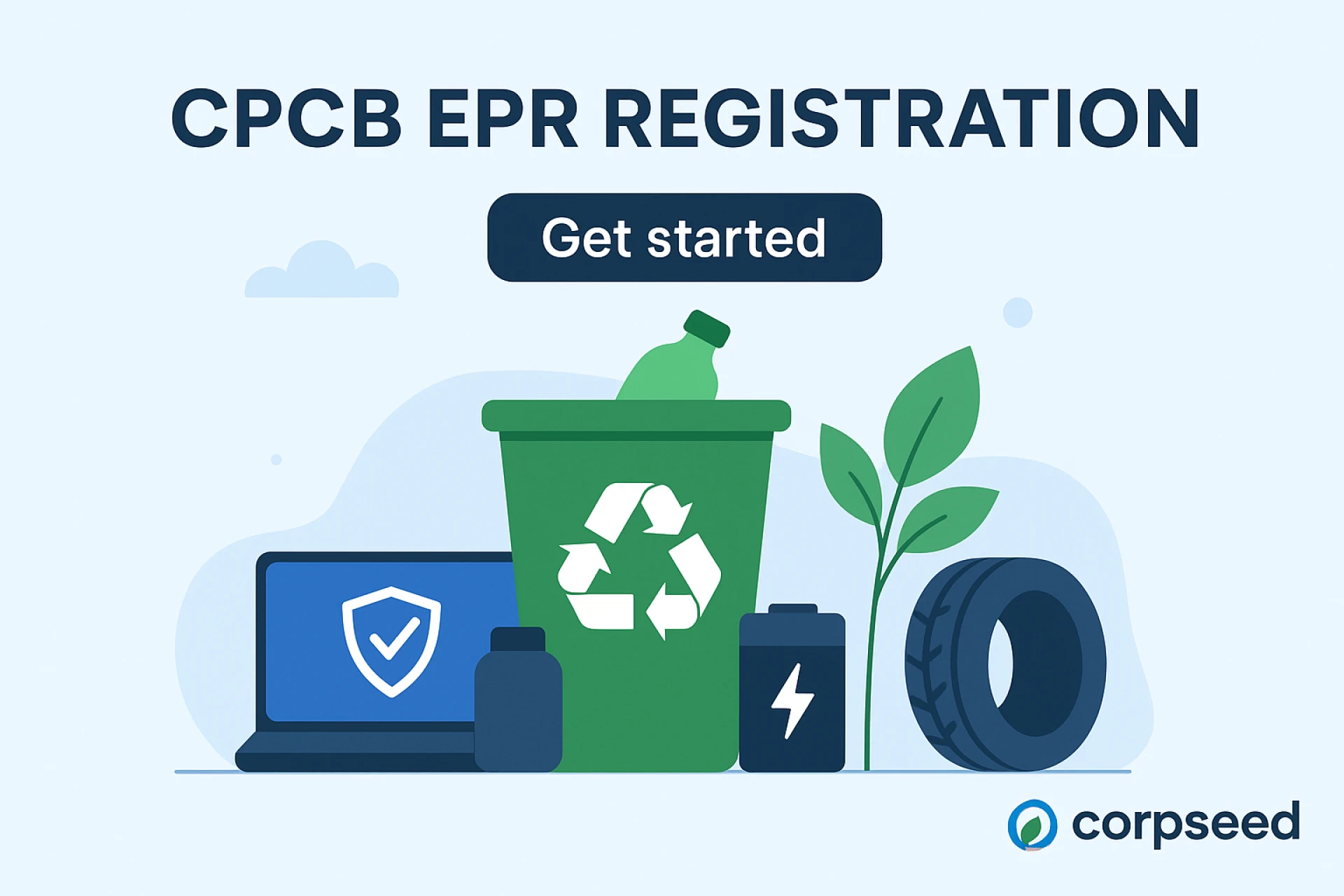

In recent years, India has witnessed a significant rise in environmental awareness and regulatory reforms, particularly in waste management. One of the most important regulatory frameworks in this regard is Extended Producer Responsibility (EPR). If your business is involved in manufacturing, importing, or selling products that generate waste such as plastic, e-waste, batteries, or tyres, then obtaining CPCB EPR Registration is not just a compliance requirement but also a step towards building a sustainable brand image.
At Corpseed, we assist businesses across India in navigating the complex compliance process with the Central Pollution Control Board (CPCB) to ensure smooth and hassle-free EPR registration.
What is CPCB EPR Registration?
CPCB EPR Registration is a mandatory authorization issued by the Central Pollution Control Board under the Ministry of Environment, Forest and Climate Change (MoEF&CC). It requires producers, importers, and brand owners (PIBOs) to take responsibility for the collection, recycling, and disposal of the waste generated from their products after consumer use.
The aim of this regulation is to shift the environmental burden of waste management from the government to the businesses that introduce such products into the market. Simply put, it ensures that companies actively contribute to the circular economy and reduce the impact of waste on the environment.
Who Needs CPCB EPR Registration?
The requirement for EPR registration applies to multiple sectors. Businesses falling under the following categories must obtain CPCB authorization:
- Producers & Manufacturers of plastic packaging, electronic equipment, batteries, or tyres.
- Importers bringing such goods into the Indian market.
- Brand Owners who sell products under their label but outsource manufacturing.
If your company deals with any of these categories, CPCB EPR registration is mandatory before you operate or continue selling in the Indian market.
Why is CPCB EPR Registration Important?
- Legal Compliance – Avoid penalties, bans, or legal action from CPCB and state authorities.
- Sustainability Commitment – Build your brand as environmentally responsible, which is increasingly important to conscious consumers.
- Market Access – Many retailers and e-commerce platforms require proof of EPR compliance from their sellers.
- Environmental Protection – Contributes to reducing landfill waste, pollution, and resource depletion.
Failure to obtain CPCB EPR registration can lead to severe consequences, including hefty fines and suspension of business operations.
Documents Required for CPCB EPR Registration
While the specific list may vary depending on the type of waste, the common documents include:
- Incorporation Certificate / GST Certificate of the business
- PAN and Aadhaar details of authorized signatory
- Product details and category information
- Waste management plan and recycling agreements (if applicable)
- Import-Export Code (for importers)
- Past compliance records (if any)
Process of Obtaining CPCB EPR Registration
The registration process involves several steps, and Corpseed ensures that your application is filed correctly to avoid unnecessary delays:
- Assessment – Identifying the category of waste your business falls under (Plastic, E-waste, Battery, or Tyre).
- Documentation – Preparing and collecting all required documents for submission.
- Application Filing – Submission of the EPR application on the CPCB portal.
- Review by CPCB – The authority reviews your business model, recycling tie-ups, and compliance plan.
- Grant of Authorization – Once approved, CPCB issues your EPR certificate, valid for a defined period.
How Corpseed Helps
The compliance process can be overwhelming, especially with frequent regulatory updates from CPCB. At Corpseed, we provide end-to-end assistance in:
- Assessing your eligibility and category under EPR rules
- Preparing the required documentation
- Filing your CPCB EPR application online
- Coordinating with authorized recyclers and waste processors
- Ensuring timely renewals and annual return filings
Our team of compliance experts ensures that you remain stress-free while we handle the entire process, allowing you to focus on growing your business.
Conclusion
CPCB EPR Registration is not just a regulatory requirement but also an opportunity for businesses to showcase their commitment to sustainability. As consumer awareness grows, companies that prioritize compliance and eco-friendly practices are likely to gain a competitive edge.
If your business falls under the scope of EPR regulations, it is crucial to act early and avoid last-minute hassles. Partner with Corpseed, India’s trusted compliance partner, to simplify the CPCB EPR registration process and stay ahead in your sustainability journey.


























Sign in to leave a comment.