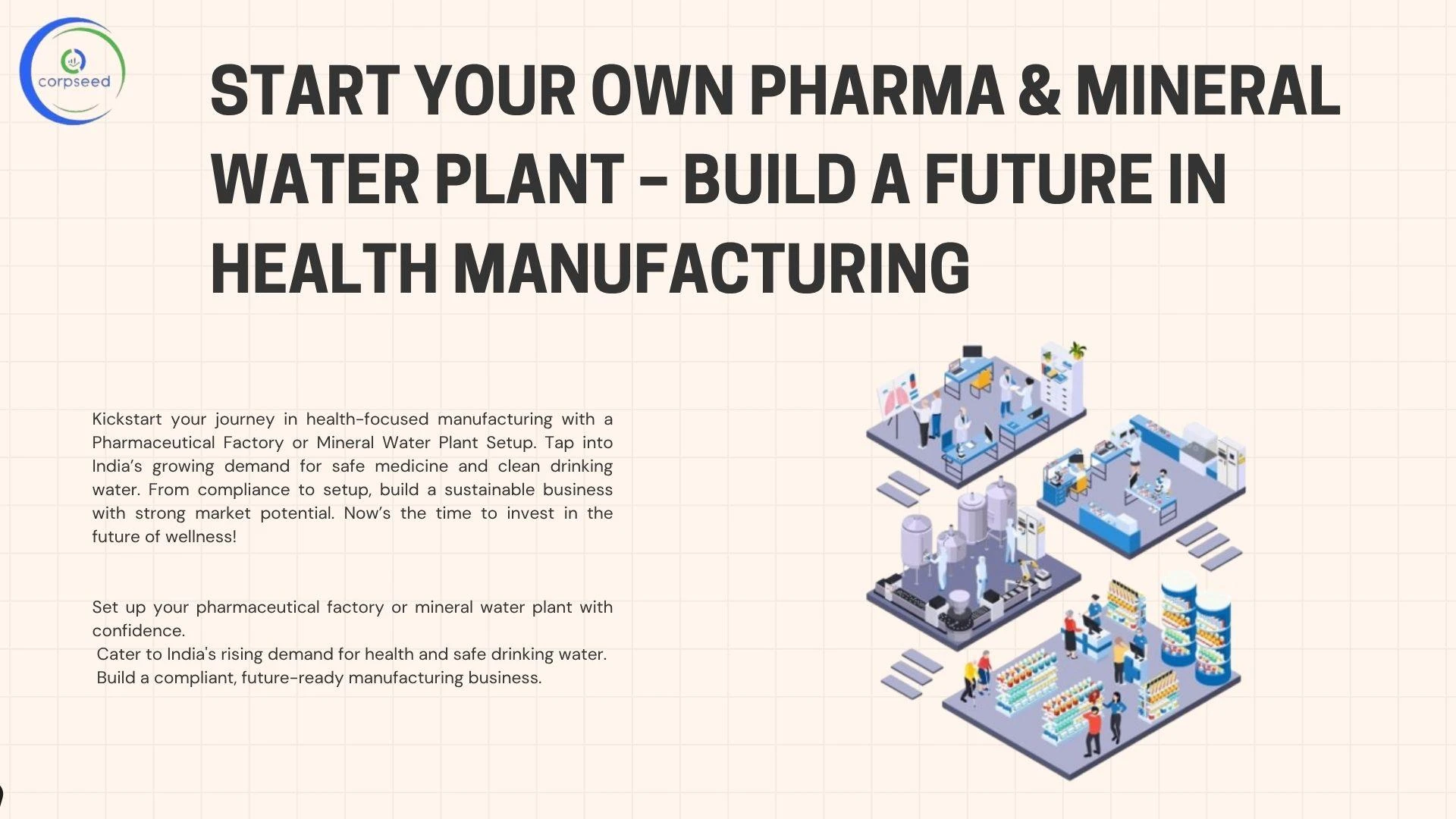

India’s manufacturing sector is experiencing rapid growth, especially in industries related to health and wellness. Two promising ventures for entrepreneurs are pharmaceutical factory setup and mineral water plant setup. While these may seem like different paths, both businesses align with the increasing consumer demand for quality healthcare and safe drinking water.
This blog outlines the key considerations, compliance requirements, and growth potential in both industries for those looking to establish manufacturing units in India.
Pharmaceutical Factory Setup: A High-Compliance, High-Demand Sector
India is among the world’s largest producers of generic medicines, and the pharmaceutical sector continues to expand due to growing domestic and international demand. Setting up a pharmaceutical factory involves a thorough understanding of regulations, infrastructure, and licensing.
Key Steps to Set Up a Pharmaceutical Unit:
- Choose the Product Type: Decide whether the factory will produce tablets, capsules, syrups, ointments, or active pharmaceutical ingredients (APIs).
- Site Selection & Layout: The site must be free from pollution and allow for GMP (Good Manufacturing Practice) compliant design.
- Apply for Licenses:
- Drug Manufacturing License (from State FDA)
- Pollution Control Board NOC
- Factory license and labor compliances
- Install Machinery & Hire Qualified Staff: Automated systems, clean rooms, and air handling units are vital. Staff must include a technical expert (pharmacist or chemist) as mandated.
- GMP and WHO-GMP Certification: To export or gain trust in the domestic market, these certifications are highly recommended.
The pharmaceutical sector is capital-intensive but backed by government incentives under production-linked incentive (PLI) schemes. Return on investment is promising, especially when tapping into both domestic and export markets.
Mineral Water Plant Setup: Meeting the Demand for Purity
Clean drinking water is a fundamental need. With urbanization, health awareness, and rising demand for packaged drinking water, the mineral water plant setup has become a lucrative business opportunity.
Steps to Start a Mineral Water Plant:
- Select Location & Source Water: The site should have access to clean groundwater or municipal supply, with easy transport access.
- Install Purification Systems: These include reverse osmosis (RO), UV treatment, ozonation, and mineral dosing.
- Register the Brand & Product: FSSAI registration is mandatory along with BIS (Bureau of Indian Standards) certification (IS 14543 for packaged drinking water).
- Acquire Licenses:
- FSSAI License
- Factory License
- Groundwater NOC (if applicable)
- Pollution Control Board approvals
- Packaging & Distribution: Bottles, jars, and pouches need proper labeling and tamper-proof sealing. An efficient distribution channel is key to profitability.
Small-scale mineral water plants can be started with moderate investment and scaled gradually. The operational costs are relatively lower than pharmaceuticals, and the entry barrier is less strict in terms of compliance.
Synergy and Growth Potential
Both industries—though distinct in process—fall under the broader umbrella of essential consumer goods. They cater to health-conscious markets and benefit from growing public demand, especially post-COVID.
Entrepreneurs can explore hybrid models too, such as:
- Setting up a health & wellness products manufacturing hub.
- Sharing common utilities like water purification or packaging infrastructure.
While pharmaceutical factories require higher investment and regulatory oversight, mineral water plants offer quicker setup and lower initial risk—making them ideal for new entrepreneurs or those looking to diversify.
Final Thoughts
Whether you’re planning a pharmaceutical factory setup or exploring mineral water plant setup, both ventures offer strong growth opportunities with the right planning and compliance in place. Understanding the regulatory framework, identifying the right market, and ensuring quality are key to long-term success in either domain.
India’s supportive ecosystem for manufacturing, along with rising health and hygiene awareness, makes this the perfect time to invest in these industries. Strategic setup today can pave the way for sustainable and scalable business tomorrow.





























Sign in to leave a comment.