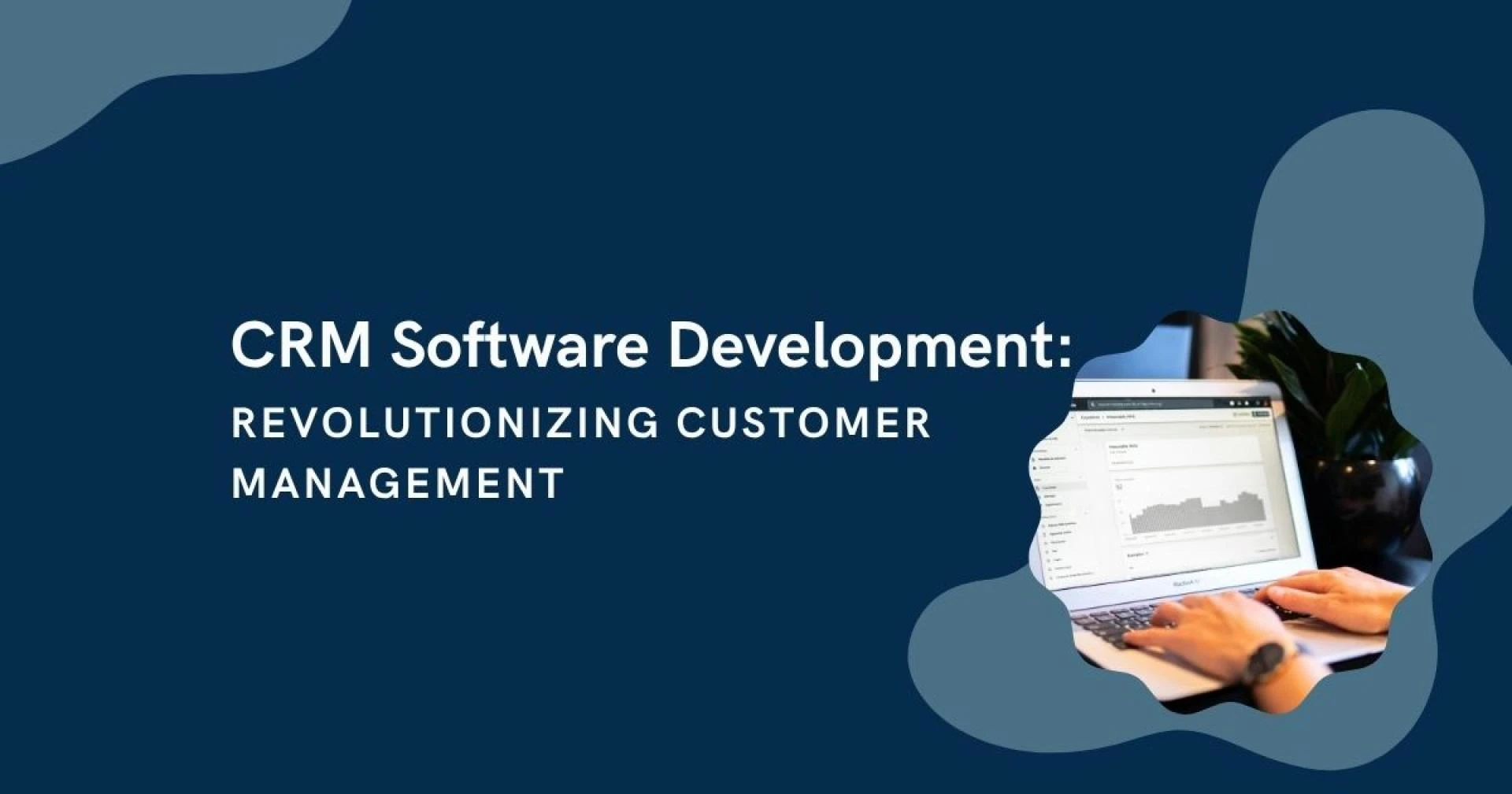

In today’s ultra-competitive market, customers are no longer just buyers—they are long-term assets. This shift has made CRM software development not just a luxury but a strategic necessity for businesses of all sizes. Whether you're a startup or a large-scale enterprise, managing customer relationships effectively can make or break your growth.
What Is CRM Software Development?
CRM (Customer Relationship Management) software development is the process of building customized platforms to manage customer data, interactions, sales, support, and marketing—all under one roof. Instead of juggling spreadsheets and disconnected tools, a well-built CRM system gives businesses a single source of truth.
Why Every Business Needs a Custom CRM
You might be wondering—why build a custom CRM when off-the-shelf options like Salesforce or HubSpot exist? The answer is flexibility and control. A tailor-made CRM aligns with your workflows, scales with your growth, and adapts to your industry-specific needs. It’s like having a suit tailored just for you versus buying one off the rack.
Key Features of a Powerful CRM System
1. Contact Management
Track every customer detail—from names and emails to communication history. A robust CRM acts like a digital Rolodex on steroids.
2. Sales Pipeline Tracking
Visualize your sales funnel and understand where prospects stand. This boosts conversions and shortens sales cycles.
3. Marketing Automation
Automate email campaigns, segment audiences, and personalize marketing—all from one dashboard.
4. Customer Support & Ticketing
Respond to issues promptly, assign tickets, and keep your customers happy.
5. Reporting & Analytics
Turn data into insights with custom dashboards and reports to make informed decisions.
6. Integration Capabilities
Connect seamlessly with third-party tools like payment gateways, email clients, ERP systems, and more.
How a CRM Development Company Adds Value
Hiring a CRM development company brings technical expertise and industry knowledge to the table. They analyze your requirements, identify gaps, and build a scalable solution tailored to your goals.
Benefits of Partnering with Experts
- Custom Solutions: Built exactly for your workflows.
- Scalable Architecture: Designed to grow as your business expands.
- Data Security: Encrypted databases and secure APIs.
- Ongoing Support: Regular updates, bug fixes, and training.
Industries Benefiting from CRM Development
1. Healthcare
Track patient history, schedule appointments, and manage billing.
2. Real Estate
Manage leads, property listings, and client communication.
3. E-Commerce
Monitor customer behavior, automate promotions, and optimize retention.
4. Education
Handle student records, course inquiries, and admissions.
5. Financial Services
Securely manage client portfolios, investment tracking, and communication.
Steps Involved in CRM Software Development
Step 1: Requirement Analysis
Understand your business model, customer journey, and existing pain points.
Step 2: Designing the Architecture
Create wireframes and flow diagrams. Decide whether to build a web-based, mobile-based, or hybrid solution.
Step 3: Development Phase
Back-end logic, APIs, and user interfaces come to life using robust technologies like Node.js, React, Python, and others.
Step 4: Testing and Quality Assurance
Ensure bug-free performance across browsers and devices.
Step 5: Deployment and Training
Launch the CRM and educate your team on how to maximize its potential.
Step 6: Ongoing Maintenance
Regular updates, performance improvements, and customer support.
Cloud-Based vs. On-Premise CRM: What’s Better?
Cloud-Based CRM
- Accessible from anywhere
- Lower upfront cost
- Quick deployment
On-Premise CRM
- More control over data
- Custom server infrastructure
- Better suited for large enterprises
Choose what aligns best with your company’s priorities—security, cost, scalability, or all three.
Cost of CRM Software Development
Cost varies widely based on:
- Feature complexity
- Number of users
- Integration needs
- Design sophistication
You could be looking at anywhere from $10,000 to $100,000+. Partnering with the right CRM development company ensures you get maximum ROI.
Open-Source vs. Custom CRM
Open-Source Pros:
- Free to use
- Active community
- Flexible to some extent
Custom CRM Pros:
- Fully tailored to your needs
- Scalable
- Secure and compliant
Open-source is great for startups. But as you scale, investing in a custom CRM is like trading in a bicycle for a sports car.
Mobile CRM: The New Norm
With the rise of remote teams and on-the-go sales reps, mobile CRM access isn’t optional—it’s essential. A mobile CRM lets your team manage leads, check customer details, and close deals—anytime, anywhere.
Common Mistakes to Avoid
- Overcomplicating features
- Ignoring user experience
- Underestimating training needs
- Poor data migration strategy
Avoid these, and your CRM system will actually get used—which is the whole point!
Future Trends in CRM Software Development
AI-Powered CRM
Predict customer behavior, recommend actions, and automate tasks using machine learning.
Voice & Chat Integrations
Talk to your CRM via Alexa or integrate it with WhatsApp and Slack.
Hyper-Personalization
Customize user experiences down to individual customer preferences.
The future of CRM is smart, intuitive, and hyper-connected. If you’re not evolving, you're falling behind.
Why CRM is the Backbone of Business Growth
Your CRM is not just a tool—it’s the digital brain of your business. It helps you understand your customers, serve them better, and build long-term relationships. Whether you're B2B or B2C, product-based or service-based, CRM software development is the smartest investment you can make.
Conclusion
CRM software development is no longer an option—it’s a necessity for businesses aiming to thrive in a customer-centric world. With features like automation, integration, analytics, and mobility, CRM platforms are empowering businesses to build lasting relationships, increase sales, and streamline operations.
Choosing the right CRM development company can set you on the fast track to business transformation. Whether you need a basic system or an enterprise-grade solution, one thing is clear—custom CRM is the secret weapon behind modern business success.
FAQs
1. How long does it take to develop a custom CRM?
Depending on complexity, it can take anywhere from 2 to 6 months for full development and deployment.
2. Can I integrate CRM with my existing tools?
Absolutely. Most CRMs are built to integrate with ERPs, email clients, payment gateways, and more.
3. Is CRM software secure for storing sensitive data?
Yes, especially when developed with encryption, role-based access, and compliance standards like GDPR or HIPAA.
4. What's the cost difference between open-source and custom CRM?
Open-source is free to use but may need heavy customization. Custom CRM has higher upfront costs but is more tailored and scalable.
5. Do small businesses really need a CRM?
Yes! Even small teams benefit from organizing customer data, automating tasks, and tracking leads more efficiently.























Sign in to leave a comment.