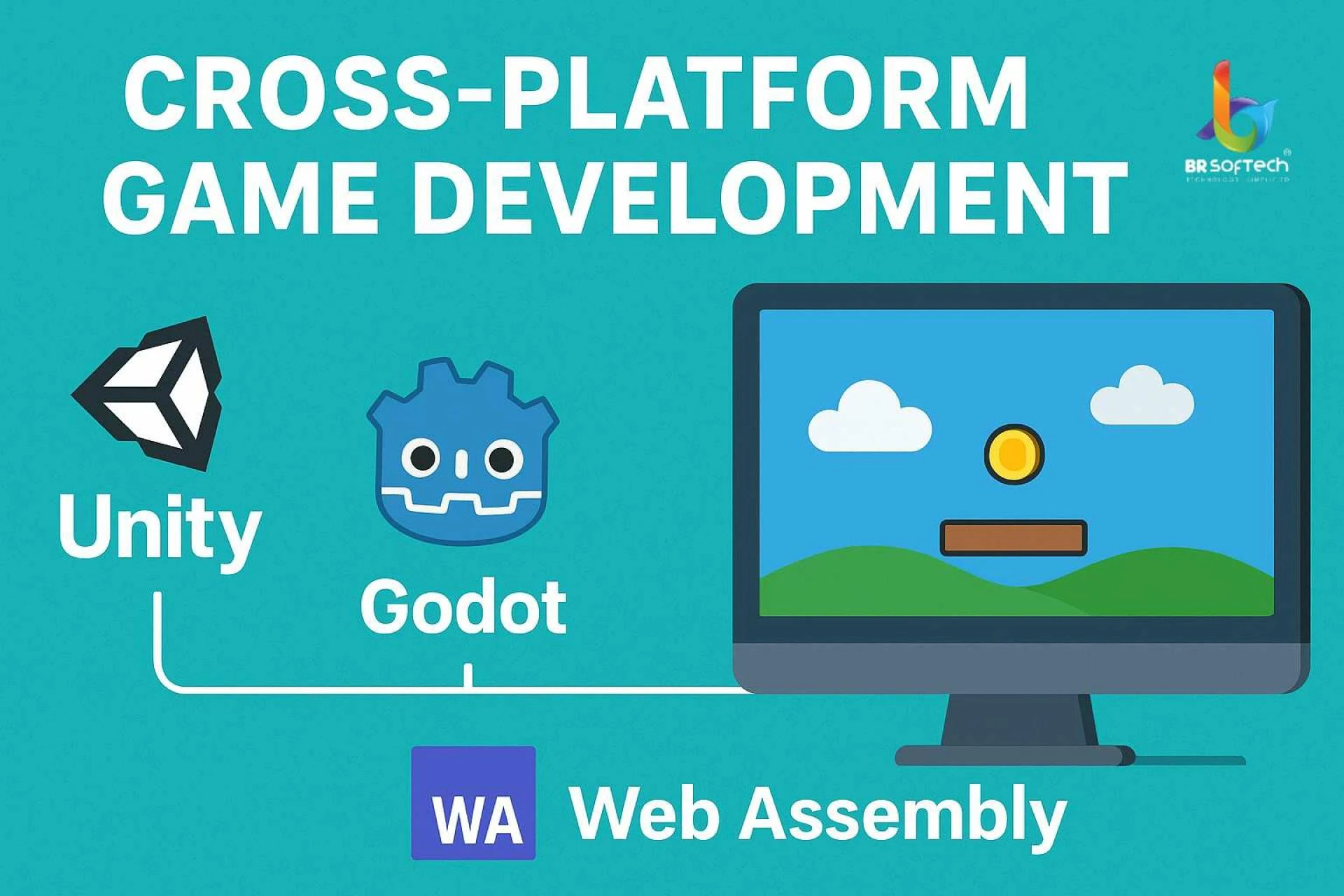

The idea of "write once, run everywhere" has inspired developers for a long time, and in game development, it’s both exciting and a bit tricky. Players hope for smooth, native-like performance on everything, from powerful gaming PCs to smartphones, web browsers, and consoles. Thankfully, three great technologies, Unity, Godot, and WebAssembly, have come into play, each offering special advantages to help make truly cross-platform games that work beautifully across today's diverse devices.
The Cross-Platform Imperative
Modern game developers are navigating a complex landscape with many different platforms to support. A game that does well should work on Windows, macOS, Linux, iOS, Android, PlayStation, Xbox, Nintendo Switch, and web browsers, all with their own unique architectures, input styles, performance needs, and platform rules. Keeping separate code for each one can be really costly and tricky, often leading to frustrating situations where bugs fixed in one place still pop up elsewhere.
- Cross-platform engines provide abstraction layers that manage platform-specific implementations.
- Developers work with unified APIs, simplifying development processes.
- The economic benefits include enabling smaller teams to target larger audiences.
- Updates can be deployed simultaneously across multiple platforms, enhancing efficiency.
- Development cycles are significantly shortened due to this streamlining.
- The main technical challenge is ensuring portability without compromising performance.
- It is also crucial to maintain access to platform-specific features.
- Preserving high user experience quality across different platforms remains a key concern.
Unity: The Industry Standard for Cross-Platform Reach
Unity has established itself as the dominant cross-platform game engine, supporting over 25 platforms from a single codebase. Its strength lies in mature tooling, extensive platform support, and a massive ecosystem of assets and plugins that accelerate development.
- Unity's architecture is built around C# scripting layered on a highly optimized C++ core engine.
- Unity game development company utilizes modern language features that enhance developer productivity.
- It ensures high performance through native compilation for various target platforms.
- The engine automatically manages platform-specific rendering APIs: DirectX on Windows, Metal on Apple platforms, and Vulkan on Android and Linux.
- This abstraction simplifies low-level graphics programming complexities.
Asset Store Ecosystem
The Asset Store ecosystem represents a significant competitive advantage. Developers can integrate pre-built systems for networking, AI, UI frameworks, and platform-specific features without reinventing solutions. This dramatically reduces time-to-market, particularly for indie developers who lack resources for extensive custom development.
Unity's Input System package exemplifies its approach to cross-platform game development challenges. Rather than writing separate input handling for keyboard, gamepad, touch, and motion controls, developers define abstract action maps that automatically adapt to available input methods. A "jump" action works identically whether triggered by a spacebar, an A button, or a screen tap.
The Tradeoffs
Unity's comprehensiveness comes with tradeoffs. The engine's size results in larger build outputs than minimalist alternatives, and licensing costs can be significant for successful titles. Platform-specific optimization sometimes requires diving into platform-dependent compilation and native plugins, adding complexity to otherwise unified codebases.
Godot: Open-Source Flexibility and Lightweight Efficiency
Godot offers a wonderful alternative philosophy: it's a fully open-source engine with no licensing fees, runtime costs, or usage restrictions. This makes it especially appealing for indie developers, educators, and studios looking for complete control over their technology choices.
Intuitive Organization for Game Hierarchies
Godot's scene system and node architecture offer a straightforward way to organize your game elements. Everything in Godot is a node, like characters, UI parts, or game logic, coming together in reusable scenes. This way of building things grows smoothly from simple prototypes to more intricate projects, all while staying easy to understand.
Different Language Support
The engine supports both GDScript, which is a friendly Python-like language designed especially for game development, and C# via Mono. GDScript's seamless integration with the editor makes it easy to iterate quickly, while C# offers a familiar experience for those coming from Unity and unlocks access to robust .NET libraries.
For parts of the code where performance is crucial, Godot also supports C++ via GDNative, giving developers the flexibility to write in native code while enjoying the benefits of cross-platform compatibility.
Lightweight Nature
Godot's lightweight design results in much smaller build sizes compared to Unity, typically 10-20MB for simple games versus 50-100MB. This is especially important for web and mobile platforms, where smaller download sizes can really boost user downloads and engagement. Plus, with its modular architecture, you only export the features you need, helping keep your game lean and efficient.
WebAssembly: Bringing Games to the Universal Platform
WebAssembly (Wasm) brings an exciting change to web-based gaming. Unlike JavaScript, which needs to be interpreted or compiled just-in-time, WebAssembly offers a compact binary instruction format that browsers can run very quickly, almost like native speed. This really transforms the web browser into a true gaming platform, not just a place to host casual games.
Eliminate Installation Friction
Both Unity and Godot support WebAssembly export, allowing your game code to be compiled into Wasm modules that play smoothly in any modern browser. This means players can simply click a link and start playing right away; no installations needed. For marketing, demos, and making games more accessible, this hassle-free experience truly makes a difference.
- Unity's WebGL export compiles the entire engine and game code into WebAssembly.
- It handles graphics via WebGL and audio through the Web Audio API.
- The resulting builds can deliver impressive performance, typically running at 70-80% of native speeds due to browser sandboxing and JavaScript interop overhead.
- Optimization involves careful management of asset compression, code stripping, and memory within browser constraints.
Smaller, Faster-Loading Builds
Godot's HTML5 export similarly targets WebAssembly and generally produces smaller, faster-loading builds than Unity due to its lighter engine footprint. The engine's 2D renderer particularly excels in web contexts, delivering smooth performance for 2D games that rivals native applications.
Offers a Secure Environment
WebAssembly provides a secure environment protecting your games from threats, but has restrictions like limited file system access, threading, and overhead for some tasks. Developers work around these with tools like IndexedDB and efficient memory management, balancing benefits with challenges.
PWA features let Web Assembly games act like native apps, allowing installation, push notifications, and offline play after caching, bridging web and native experiences while keeping deployment benefits.
Final Words
The cross-platform engines and WebAssembly open new opportunities for game developers. Small teams can target major platforms, experimental games can reach audiences on the web, and platform barriers are lowering. Choosing Unity or Godot depends on project needs, team skills, and business models. Unity offers extensive platform support and a mature ecosystem, but involves licensing. Godot offers freedom, transparency, and efficiency, but may need extra work for consoles.
Cross-platform game development has evolved from merely balancing reach and quality into a true best practice that fosters creativity, improves efficiency, and expands market access, resources once limited to the biggest studios. The tools are available, and the opportunities are ready.






















Sign in to leave a comment.